India pitches $10 billion coastal yard hubs to Korean shipbuilders
The shipping ministry offered equity in five coastal clusters Nov. 16 as domestic maritime carriers prepare to order 400 vessels worth $24 billion.
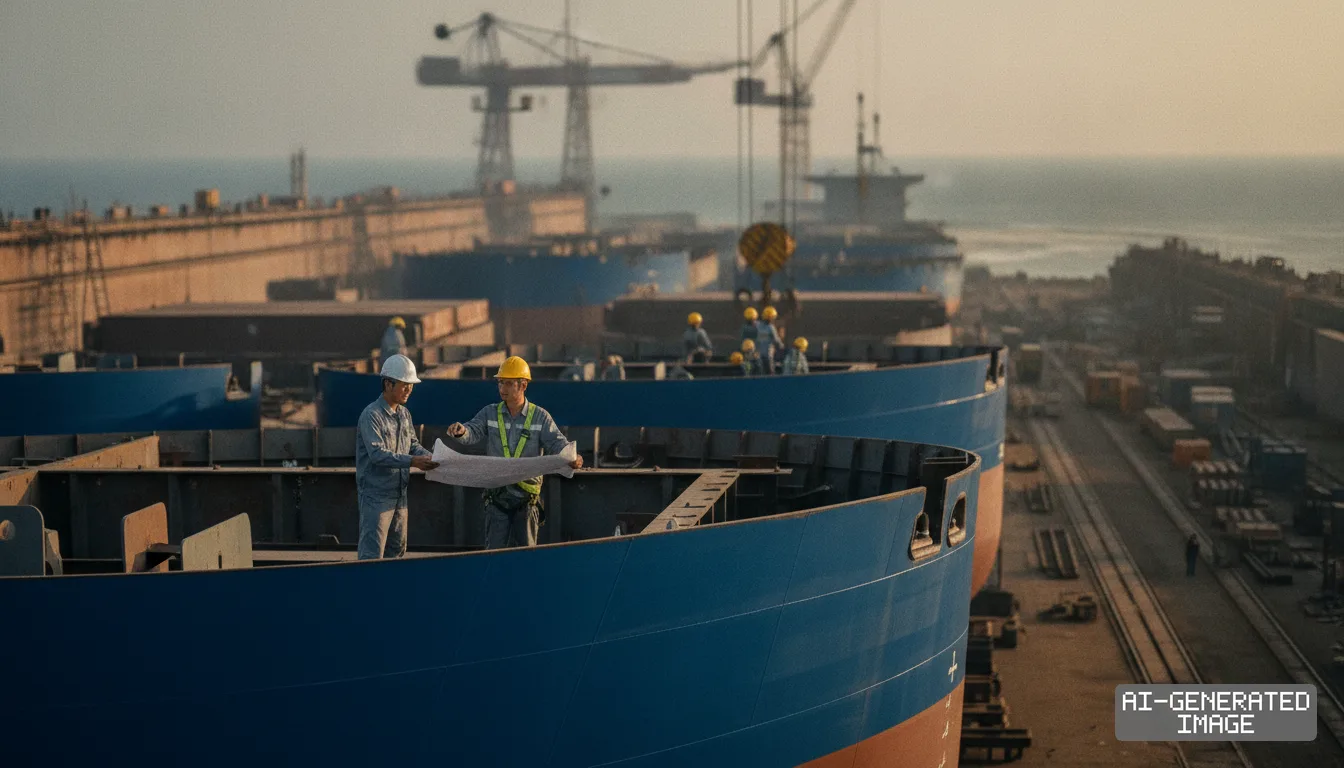
India invited South Korea's three largest shipbuilders to invest in five coastal maritime hubs on Nov. 16, 2026, opening a projected $10 billion yard modernization initiative to foreign equity.
The Ministry of Ports, Shipping and Waterways presented the package during the India Shipbuilding Investment Conclave in New Delhi. Domestic maritime carriers will require more than 400 commercial vessels valued at roughly $24 billion over the coming decade, the ministry said.
Government planners aim to establish greenfield shipbuilding clusters across five coastal locations. The proposed maritime zones include Dugarajapatnam in Andhra Pradesh, Kuchhadi in Gujarat, Dighi in Maharashtra, Kendrapada in Odisha and Thoothukudi in Tamil Nadu.
The investment initiative operates under the bilateral VOYAGES maritime partnership framework. South Korean President Lee Jae-myung and Indian Prime Minister Narendra Modi signed the foundational government agreement in April 2026 to foster shared manufacturing capacity.
Executive delegations from HD Korea Shipbuilding & Offshore Engineering, Samsung Heavy Industries and Hanwha Ocean attended the government proceedings. Flag carrier HMM also joined the South Korean industrial delegation alongside representatives from roughly 30 foreign shipbuilders.
HD Korea Shipbuilding & Offshore Engineering, known as HD KSOE, maintains the largest financial exposure among the participating Korean builders. The group agreed Oct. 28, 2026, to serve as primary strategic partner for a proposed $4 billion mega-shipyard in Thoothukudi.
That project commitment followed negotiations in Seoul between Union Minister Sarbananda Sonowal and HD Hyundai Chairman Chung Ki-sun. Both sides established a bilateral joint working group tasked with defining the equity structure and operational governance of the Tamil Nadu facility.
The Thoothukudi yard plan represents a strategic reallocation of capital for HD KSOE. State-run Cochin Shipyard Limited had signed an initial commercial cooperation memorandum with the South Korean group on July 4, 2025.
HD KSOE subsequently withdrew from an equity joint venture for an intermediate block-assembly facility on Aug. 21, 2026. The company chose instead to concentrate its direct foreign investment on full-scale hull construction at the larger greenfield site in Thoothukudi, project documents show.
South Korean shipbuilders face acute dock congestion across their domestic yards in Ulsan, Geoje and Samho. Production lines remain committed through 2028 to high-margin liquefied natural gas carriers, high-specification container vessels and specialized naval platforms.
Establishing commercial construction partnerships in India offers South Korean yards an operational alternative for mid-tier cargo tonnage. The offshore yards allow parent groups to construct standardized bulkers and chemical tankers without displacing domestic slots reserved for premium export tonnage.
Samsung Heavy Industries evaluated facility licensing and fabrication support options during the conclave sessions. The builder previously initiated preliminary technical discussions with Indian private defense contractor Swan Defence to assess local fabrication capacity.
Hanwha Ocean held separate technical discussions with state-owned yard operator Hindustan Shipyard Limited. The talks focused on maintenance, repair and overhaul capabilities alongside modular sub-assembly techniques for specialized patrol vessels and coastal auxiliaries.
The conclave documents do not state whether Samsung Heavy Industries or Hanwha Ocean entered binding capital commitments, and neither shipbuilder published an investment filing on Nov. 16, 2026. Only Dutch shipbuilder Damen Shipyards entered a formal project memorandum with Cochin Shipyard during the event.
Senior technical teams from 10 foreign delegations will begin comprehensive field surveys of the five proposed coastal zones. Indian authorities designated 3,000 acres of contiguous coastal waterfront land per cluster to accommodate dry docks, gantry cranes and vendor parks.
New Delhi framed the infrastructure package as a solution to chronic domestic shipping deficits. Indian-flagged vessels transport less than 10% of India's international seaborne commerce, requiring domestic firms to spend billions annually on foreign charter fixtures.
To incentivize foreign investment, Indian authorities prepared capital asset subsidy guidelines and customs duty remissions for critical marine components. Regional steel producers signed preliminary supply pledges to furnish certified marine-grade plate to yard developers.
Domestic labor costs remain significantly lower than standard manufacturing wages in South Korea. However, foreign project leads cited persistent infrastructure deficits in regional dredging depths, ancillary marine engineering vendors and complex provincial land title transfers.
The bilateral joint working group for the Thoothukudi mega-shipyard project will complete its comprehensive Detailed Project Report within six months, setting a project review deadline for late April 2027. State authorities will review site allocations across the four remaining coastal hubs during the second quarter of 2027.
Impact map
How this development propagates across the region and out to global buyers.
| Event | Korea | China | Japan | Global impact |
|---|---|---|---|---|
| India $10B shipbuilding initiative | HD KSOE commits to $4B Thoothukudi yard study while Samsung and Hanwha limit exposure to technical talks | CSSC faces mid-tier tanker competition as Indian yards seek South Korean design licenses | Imabari and JMU maintain domestic handysize slots without foreign yard equity exposure | Commercial tanker and bulker newbuilding supply expands outside East Asian dry docks |
| India | — | — | — | — |
| India $10B shipbuilding initiative | HD KSOE commits to $4B Thoothukudi yard study while Samsung and Hanwha limit exposure to technical talks | CSSC faces mid-tier tanker competition as Indian yards seek South Korean design licenses | Imabari and JMU maintain domestic handysize slots without foreign yard equity exposure | Commercial tanker and bulker newbuilding supply expands outside East Asian dry docks |
In this story
- Companies
- HD Korea Shipbuilding & Offshore EngineeringSamsung Heavy IndustriesHanwha OceanCochin Shipyard
- Tickers
- 009540.KS010140.KS042660.KSCOCHINSHIP.NS
- Exposed
- HMM
- Policy
- Subsidies
- Impact
- CapexSupply ChainOrder Book
Track every Subsidies development →
Related briefings
- HD Korea Shipbuilding advances $4B shipyard project in India Also on Cochin Shipyard, HD Korea Shipbuilding & Offshore Engineering, Subsidies
- HD Hyundai inspects Thoothukudi site for greenfield shipyard in India Also on Cochin Shipyard, HD Korea Shipbuilding & Offshore Engineering, Subsidies
- HD Hyundai wins $1.42 billion HMM order for eight LNG ships Also on HMM, HD Korea Shipbuilding & Offshore Engineering, Order Book
- Asyad Shipping orders two MR product tankers at HD Hyundai Also on HMM, HD Korea Shipbuilding & Offshore Engineering, Order Book
Sources
Reporting
Confidence: medium — how we grade this
The documents behind this briefing are linked above. East Asia Brief produces its English text with AI assistance under human editorial review, and does not translate or republish other outlets' articles. See our methodology and AI policy. Spotted an error? Tell us.
The Morning Brief
What changed in Korean, Chinese and Japanese industry overnight — and what it means for your supply chain. One email, weekday mornings, US time. Free.
The Morning Brief is in preparation. Leave your address and we will write to you once — when the first issue is ready. Nothing before that.