Greece's JHI Steamship orders two tankers from K Shipbuilding
The Greek shipowner secured early 2029 delivery slots for the 50,000-dwt vessels, paying roughly $53 million per hull to replace aging fleet capacity.
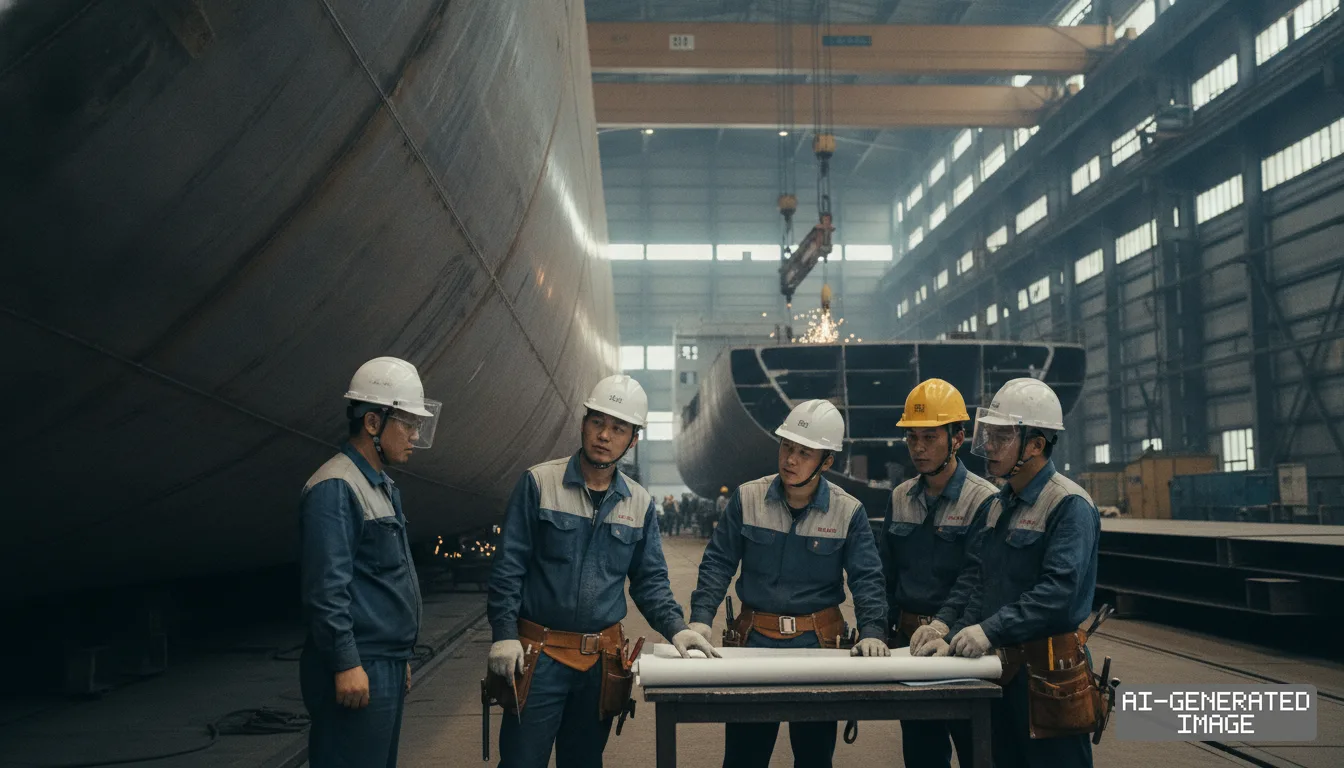
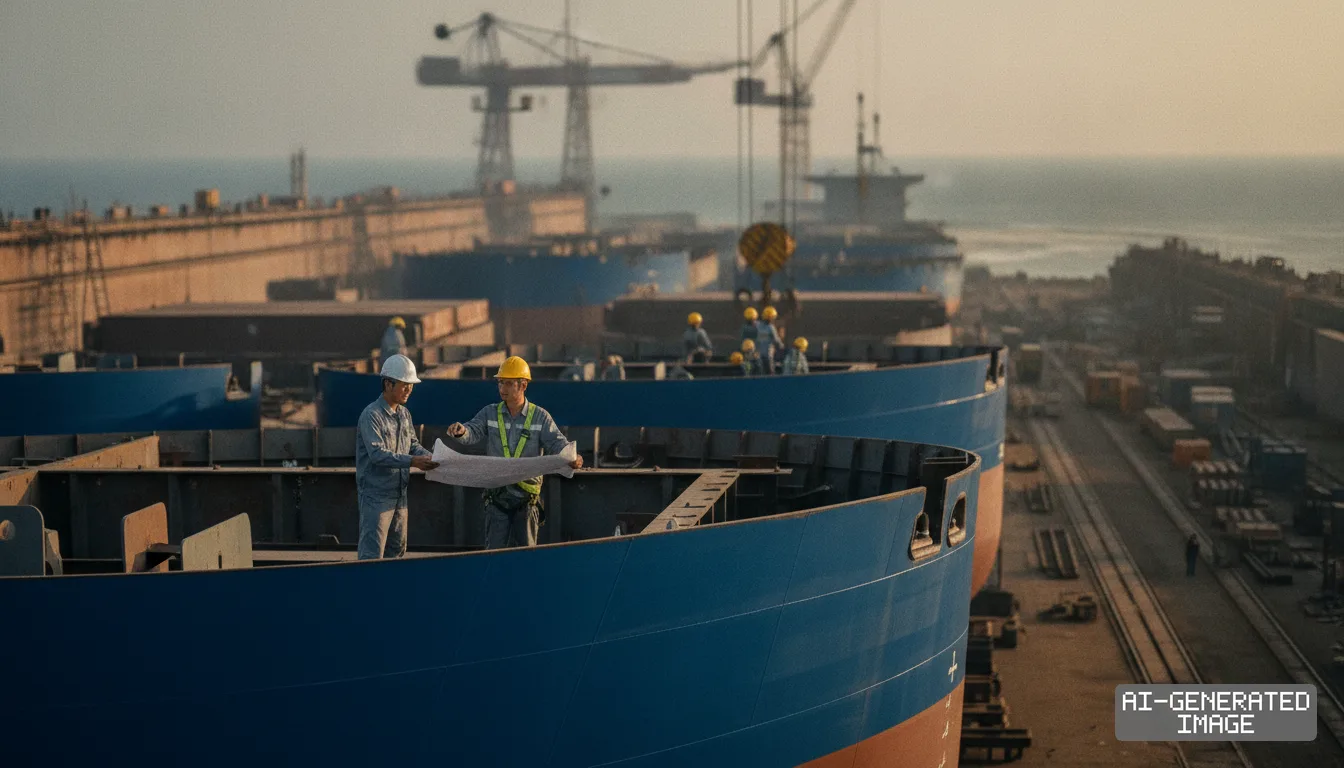
Greek shipowner JHI Steamship ordered two 50,000-deadweight-ton product tankers from South Korea's K Shipbuilding on Nov. 16, 2026, marking the carrier's entry into the medium-range segment.
The agreement secures commercial delivery positions in the first quarter of 2029. It reflects an intensifying push by private tanker operators to replace aging petroleum carriers before global environmental regulations penalize older hulls.
Industry valuations place the two-vessel order at approximately $106 million, or roughly $53 million per ship. The pricing matches prevailing benchmark rates for modern 50,000-dwt product carriers at mid-sized South Korean yards.
The transaction expands JHI Steamship's construction commitments at K Shipbuilding to five vessels. In November 2025, the Athens-based owner contracted three 115,000-dwt Aframax and LR2 tankers at the yard for delivery across 2027 and 2028.
K Shipbuilding will fabricate both medium-range tankers at its facility in Jinhae on South Korea's southeastern coast. The shipbuilder focuses on mid-sized commercial tankers and chemical carriers between 50,000 and 115,000 deadweight tons.
John Inglessis established JHI Steamship in 2025 following the restructuring of the family-controlled Samos Steamship business. The carrier has since moved aggressively to build an independent operating fleet centered on modern crude and clean product carriers.
The latest contract lifts JHI Steamship's total orderbook to nine commercial vessels. South Korean yards account for eight of those hulls, representing roughly 89% of the company's active construction programme.
Beyond K Shipbuilding, the carrier has two 157,000-dwt Suezmax tankers under construction at HD Hyundai Samho and one Very Large Crude Carrier contracted at Hanwha Ocean. Both series deliver through early 2029.
A single 115,000-dwt Aframax tanker at Japan's Imabari Shipbuilding completes the owner's orderbook. The heavy South Korean allocation represents a strategic shift for an owner whose predecessor business historically favored Japanese shipbuilders.
Commercial appetite for medium-range product tankers has surged as global refinery trade flows reconfigure. Longer sailing distances between Middle Eastern export terminals and European import hubs have driven higher utilization across clean tanker fleets.
Tighter environmental standards have accelerated the commercial obsolescence of older tonnage. International Maritime Organization carbon intensity rules and European Union emissions charges place heavy financial penalties on tankers older than 15 years.
Fleet age demographics have created urgent replacement demand across the clean tanker sector. Vessels between 15 and 19 years of age represent the largest single age bracket within the global medium-range fleet.
Global orders for medium-range tankers exceeded 190 vessels through late October. The segment's orderbook-to-fleet ratio reached approximately 16%, outpacing newbuilding contracting rates observed across larger crude carrier categories.
South Korea's three major shipbuilding conglomerates remain largely unavailable for mid-sized tanker slots. Drydocks at HD Hyundai, Hanwha Ocean and Samsung Heavy Industries are heavily occupied with liquefied natural gas carriers through 2028.
That dock congestion has channeled international tanker demand toward mid-tier South Korean shipbuilders. K Shipbuilding has capitalized on the bottleneck to secure high-margin tanker contracts extending into 2029.
The yard had previously won series orders from international tanker operators. Buyers including International Seaways, Sea World Management and Vietnam Ocean Shipping have booked medium-range and long-range product tankers at the Jinhae facility.
Benchmark newbuilding prices for 50,000-dwt product tankers have held near historic highs throughout 2026. Strong contracting demand has kept prices above $51 million per vessel despite softening global steel plate costs.
Shipyards face persistent upward pressure on production costs from skilled labor shortages and wage growth. These operational overheads have reinforced builder discipline, preventing yards from discounting forward delivery slots.
The two JHI Steamship vessels will feature eco-efficient hull forms and electronically controlled main propulsion engines. These technical specifications comply with Energy Efficiency Design Index Phase 3 requirements, reducing fuel consumption at standard operating speeds.
Clean petroleum traders continue to award long-term charters at premium rates to modern, fuel-efficient tonnage. Higher charter earnings allow operators to justify current capital costs for newbuildings scheduled for 2029 delivery.
Conventional marine fuel configurations remain the preferred technical choice for mid-sized product tankers. High capital premiums for dual-fuel systems have limited alternative fuel adoption outside specialized chemical and coastal operations.
The companies did not disclose the contract price, and K Shipbuilding has not published the propulsion supplier or whether options for follow-on hulls were included in the agreement.
JHI Steamship is scheduled to take delivery of its first K Shipbuilding Aframax hull in October 2027. That handover will initiate a sequential fleet expansion culminating in the two product tankers arriving in early 2029.
Impact map
How this development propagates across the region and out to global buyers.
| Event | Korea | China | Japan | Global impact |
|---|---|---|---|---|
| MR tanker replacement wave | K Shipbuilding books five tankers from JHI, filling Jinhae dock capacity into Q1 2029 | rival yards face tightening competition for mid-tier tanker slots as South Korean pricing holds at $53 million | Imabari Shipbuilding retains one Aframax order from JHI while South Korea captures eight of nine fleet hulls | clean tanker fleet renewal accelerates as IMO carbon rules penalize vessels older than 15 years |
| MR tanker replacement wave | K Shipbuilding books five tankers from JHI, filling Jinhae dock capacity into Q1 2029 | rival yards face tightening competition for mid-tier tanker slots as South Korean pricing holds at $53 million | Imabari Shipbuilding retains one Aframax order from JHI while South Korea captures eight of nine fleet hulls | clean tanker fleet renewal accelerates as IMO carbon rules penalize vessels older than 15 years |
In this story
- Companies
- JHI SteamshipK Shipbuilding
- Exposed
- HD Hyundai SamhoHanwha OceanImabari Shipbuilding
- Policy
- Standards
- Impact
- Order BookCapexSupply Chain
Track every Standards development →
Related briefings
- HD Hyundai Samho delivers gas carrier Energy North to Qatar Also on HD Hyundai Samho, Hanwha Ocean, Order Book
- South Korean yards defend VLAC pricing as China grabs berths in 2026 Also on HD Hyundai Samho, Hanwha Ocean, Order Book
- HMM seals $1.44B green containership order with HD Hyundai Also on HD Hyundai Samho, Standards, Order Book
- HD Hyundai Marine Engine inks WinGD pact for dual-fuel units Also on HD Hyundai Samho, Standards, Order Book
Sources
Primary documents
Reporting
Confidence: high — how we grade this
The documents behind this briefing are linked above. East Asia Brief produces its English text with AI assistance under human editorial review, and does not translate or republish other outlets' articles. See our methodology and AI policy. Spotted an error? Tell us.
The Morning Brief
What changed in Korean, Chinese and Japanese industry overnight — and what it means for your supply chain. One email, weekday mornings, US time. Free.
The Morning Brief is in preparation. Leave your address and we will write to you once — when the first issue is ready. Nothing before that.