HD Hyundai deploys physical AI in Ulsan shipyard automation
The shipbuilder joined South Korea's national physical AI alliance and backed sensor startup AIDIN Robotics to automate heavy steel fabrication and safeguard vessel delivery slots.
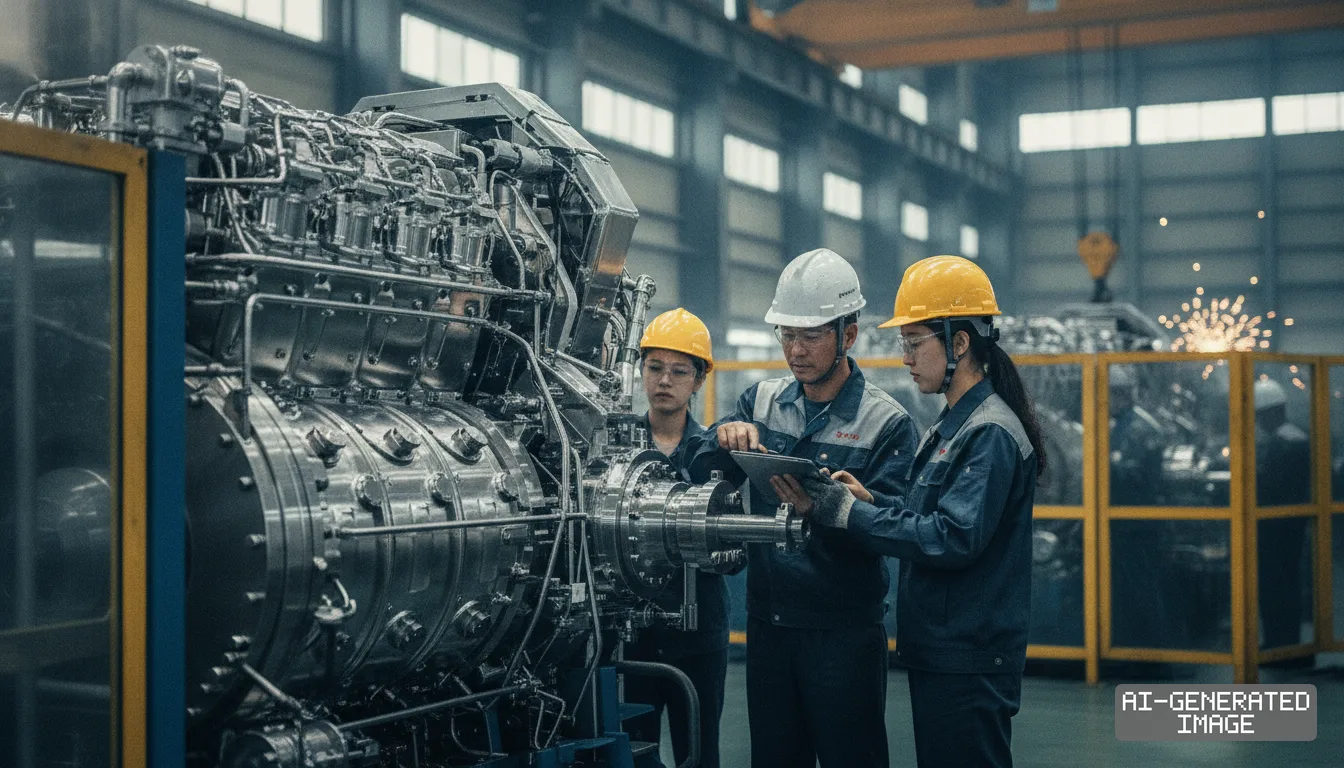
HD Hyundai Heavy Industries joined South Korea's state-backed Physical AI Global Alliance on Sept. 29, 2026, accelerating its push to deploy autonomous industrial robotics across heavy fabrication and block assembly operations in Ulsan.
The initiative pairs South Korea's largest shipbuilder with domestic software and sensor specialists to automate non-standard steel fabrication. Korean shipbuilders face acute shortages of certified welders and tight vessel delivery slots running through 2028.
HD Hyundai Robotics supported the automation drive on Sept. 11 with a 13 billion won ($9.7 million) equity investment in tactile-sensor maker AIDIN Robotics. The funding backs joint engineering of five-fingered robotic hands and force sensors designed for heavy industrial grinding.
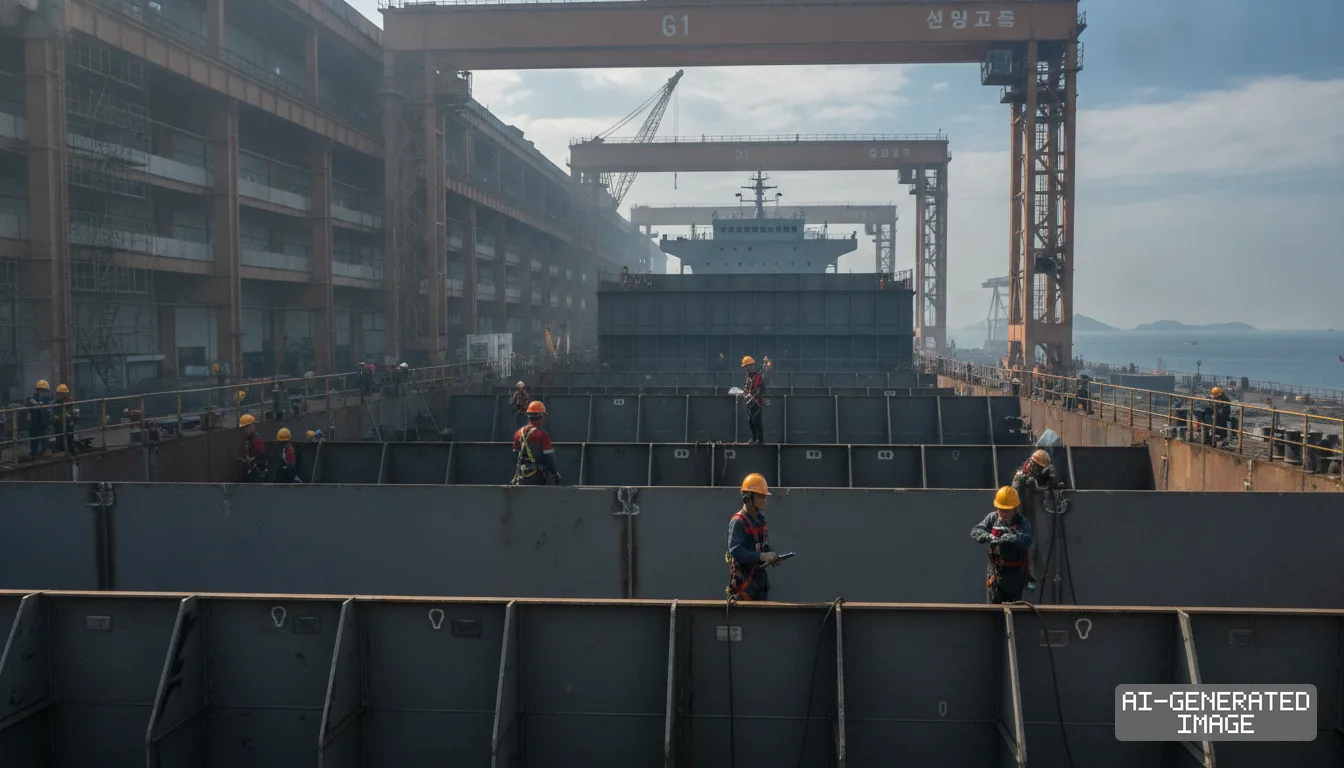
Shipyard fabrication requires handling massive steel structures that vary with each hull design. Fixed factory automation handles flat panels easily, but curved hull sections and internal structural blocks have historically required manual welding and visual inspection.
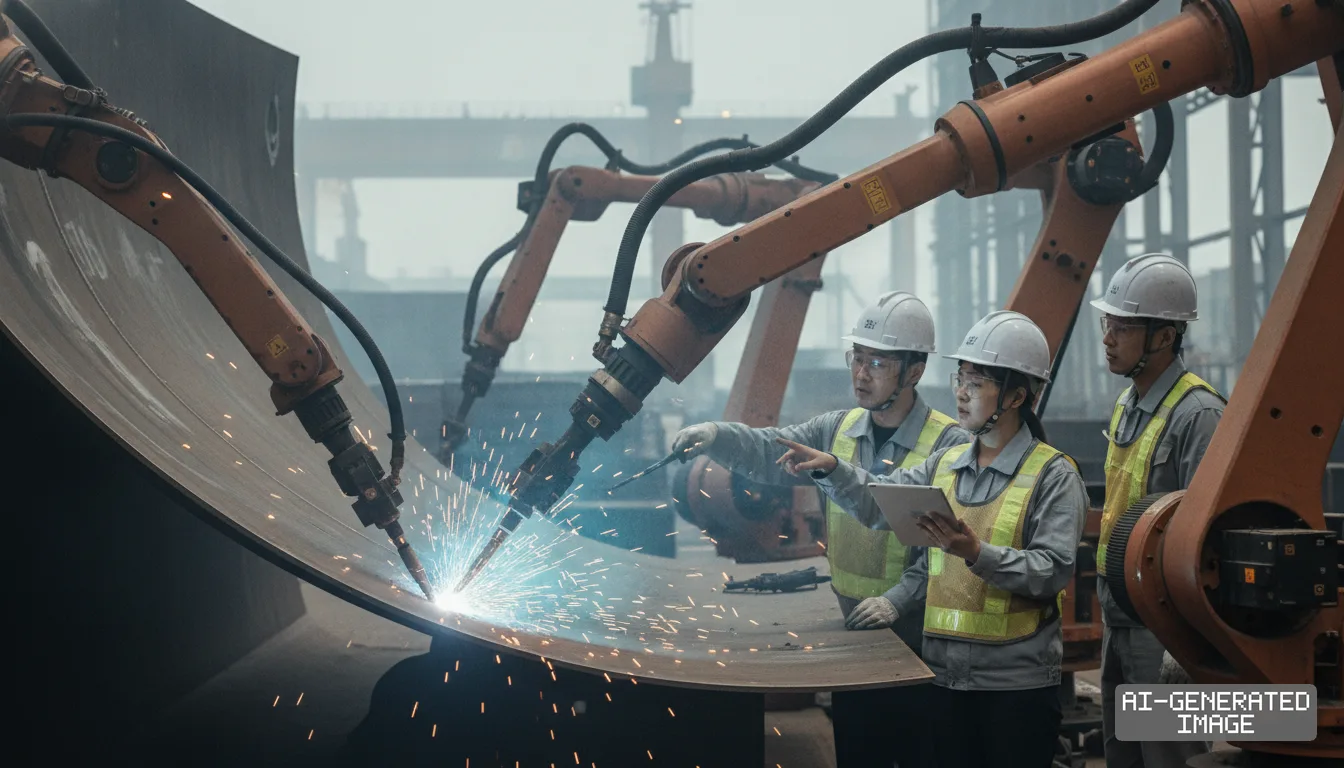
At Assembly Shop 5 in Ulsan, an automated production line for lifting lugs began operating earlier this year. The line uses eight industrial robots and two autonomous mobile robots to fabricate the steel lugs used to hoist vessel blocks.
The automated lug line raised daytime fabrication output from 500 metric tons under manual operation to 750 metric tons, a 50% increase. Operating the line on a 24-hour cycle yields up to 1,000 metric tons of fabricated lugs, the company said.
Physical AI systems combine sensor perception, motion planning and machine learning to let machinery adapt to physical variations in real time. Unlike legacy industrial arms, these systems adjust welding arcs and cutting angles without preprogrammed toolpaths.
HD Hyundai disclosed on Sept. 8 that it is extending physical AI algorithms to shipyard gantry cranes. The software evaluates load shapes independently to balance multi-ton blocks during complex hoisting maneuvers across outdoor assembly docks.
The group also deployed computer vision models to automate fabrication inspection. Welding robots capture seam images immediately after joining steel plates, identifying defect categories and logging coordinates directly into shipyard quality databases.
The automated quality system reduces manual rework inspections while catching welding flaws before blocks move to dry dock. HD Hyundai elevated its dedicated AIX Promotion Office earlier this month to report directly to the chief executive, the company said.
The Ministry of Science and ICT established the Physical AI Global Alliance to anchor industrial AI development in domestic manufacturing plants. HD Hyundai Heavy Industries joined the group alongside Hyundai Motor and LG AI Research as a core demand enterprise.
The alliance provides a coordinated testing ground to evaluate robotics hardware inside active shipyards. Government ministries and industry associations will coordinate regulatory waivers through administrative sandboxes to speed field trials of autonomous machinery.
The equity stake in AIDIN Robotics secures capacitive force and torque sensors for heavy shipyard environments. These sensors measure micro-deflections in robot joints, allowing mechanical arms to gauge applied pressure when grinding rough steel welds.
Human welders spend hours grinding excess metal from curved joint seams before non-destructive testing. Automating surface treatment protects workers from high-dust environments and removes a chronic labor bottleneck across Ulsan's block yards, the company said.
HD Hyundai Robotics and AIDIN Robotics plan to integrate the tactile sensors into humanoid robot prototypes. The companies intend to validate the robotic systems across domestic yards before offering the automation technology to allied shipbuilders in the United States.
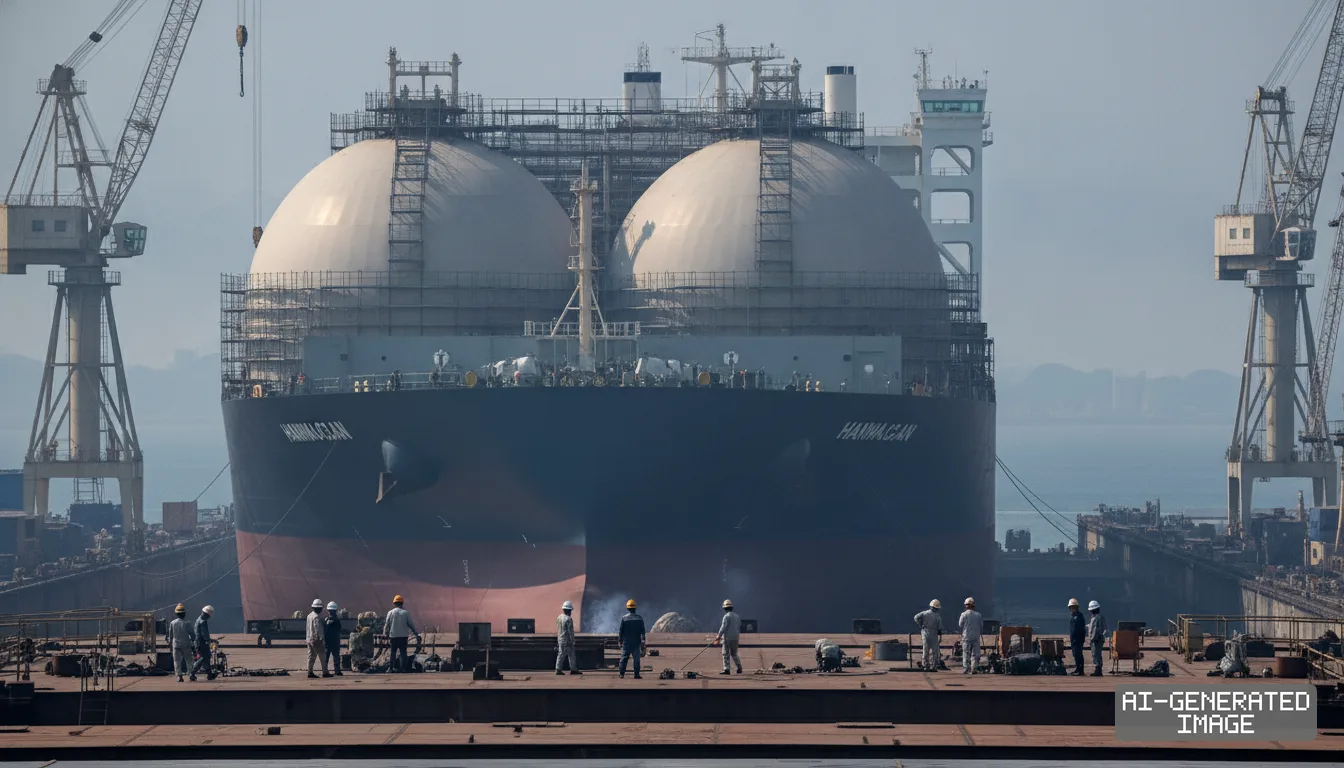
South Korea's major shipyards hold order books spanning more than three years of production capacity, dominated by high-value liquefied natural gas carriers. Yard operators cannot slip delivery schedules without incurring heavy contractual liquidated damages.
Labor availability remains the primary operational constraint across the sector. Aging domestic craft workers, strict immigration quotas for overseas welders and recurring wage negotiations at primary subcontractors threaten assembly schedules across southeastern shipyards.
Substituting robotic cells for scarce manual welders allows yard managers to stabilize block erection pacing. By insulating sub-assembly shops from headcount deficits, shipbuilders aim to preserve scheduled dock launch dates.
The alliance notice does not disclose the specific capital budget allocated to heavy robotics, and the company has not published deployment dates for humanoid welders.
AIDIN Robotics and HD Hyundai Robotics target delivery of specialized robotic hand prototypes by the end of 2026. Joint engineering teams will begin on-site operational testing across Ulsan fabrication shops in early 2027, the companies said.
Impact map
How this development propagates across the region and out to global buyers.
| Event | Korea | China | Japan | Global impact |
|---|---|---|---|---|
| Shipyard Physical AI Deployment | HD Hyundai insulates LNG carrier delivery slots against domestic welder shortages | State yards maintain cost edge via manual labor pools but face widening automation gap | Imabari and Nihon Shipyard accelerate sensor retrofits on standard dry docks | Commercial shipowners face lower risk of contractual delivery slips on Korean LNG orders |
In this story
- Companies
- HD Hyundai Heavy IndustriesHD Hyundai Robotics
- Tickers
- 329180.KS267250.KS
- Exposed
- AIDIN RoboticsHyundai MotorLG AI Research
- Policy
- SubsidiesEconomic Security
- Impact
- Order BookCost StructureCapex
Track every Subsidies development → Track every Economic Security development →
Related briefings
- HD Hyundai Robotics backs sensor maker AIDIN in $12M round Also on HD Hyundai Robotics, AIDIN ROBOTICS, Order Book
- Samsung Medical Center tests dual humanoid surgical robots Also on Aidin Robotics
- Hyundai tests used EV battery storage on South Korea's grid Also on Hyundai Motor, Cost Structure
- Chinese EVs capture 35% Korea market share under 8% tariff Also on Hyundai Motor, Order Book, Cost Structure
Sources
Primary documents
Reporting
Confidence: high — how we grade this
The documents behind this briefing are linked above. East Asia Brief produces its English text with AI assistance under human editorial review, and does not translate or republish other outlets' articles. See our methodology and AI policy. Spotted an error? Tell us.
The Morning Brief
What changed in Korean, Chinese and Japanese industry overnight — and what it means for your supply chain. One email, weekday mornings, US time. Free.
The Morning Brief is in preparation. Leave your address and we will write to you once — when the first issue is ready. Nothing before that.