Aidin Robotics sets 2026 debut for Gen2 tactile robot hand
The South Korean startup confirmed a year-end rollout for its 16-degree-of-freedom hand, integrating miniature force-torque sensors for heavy assembly and medical tasks.
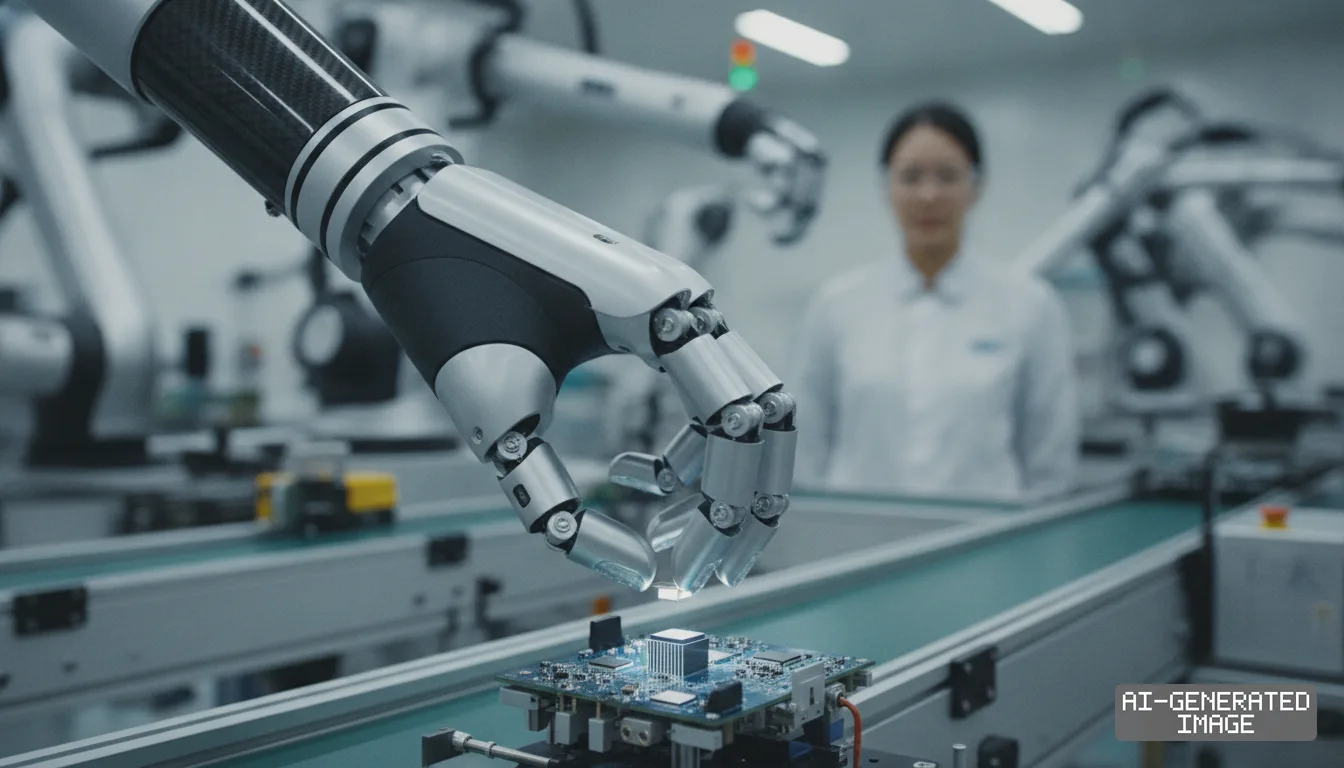
Aidin Robotics confirmed Nov. 2, 2026 that it will commercially release its second-generation dexterous hand by the end of December, targeting precision assembly across industrial production lines.
The AIDIN Hand Gen2 incorporates 16 degrees of freedom and proprietary micro force-torque sensors. These direct-contact sensors measure contact loads across each finger joint without requiring bulky external load cells.
HD Hyundai Robotics invested 13 billion won ($9.4 million) as the lead backer in Aidin's 16 billion won Series C round on Sept. 11. That transaction gave the industrial giant a direct pipeline for shipyard automation tools.
Aidin Robotics first displayed the mechanical design on Feb. 24, 2026 ahead of the Smart Factory and Automation World exhibition in Seoul. The company had initially scheduled customer delivery for the first half of the year.
Engineering adjustments pushed commercial availability to late 2026 as field engineers refined sensor durability under continuous shift work. The internal sensors capture multi-axis force vectors, identifying the exact direction and magnitude of mechanical resistance.
Electronics manufacturing services and semiconductor backend packaging facilities require continuous tactile awareness to seat fragile microchips without cracking brittle silicon substrates. Conventional pneumatic grippers apply uniform force, which often damages sensitive connectors during high-speed insertion steps.
The Gen2 hand solves this friction by adjusting gripping firmness in real time across individual fingers. Each finger can independently alter its pitch and yaw to match odd-form factory components.
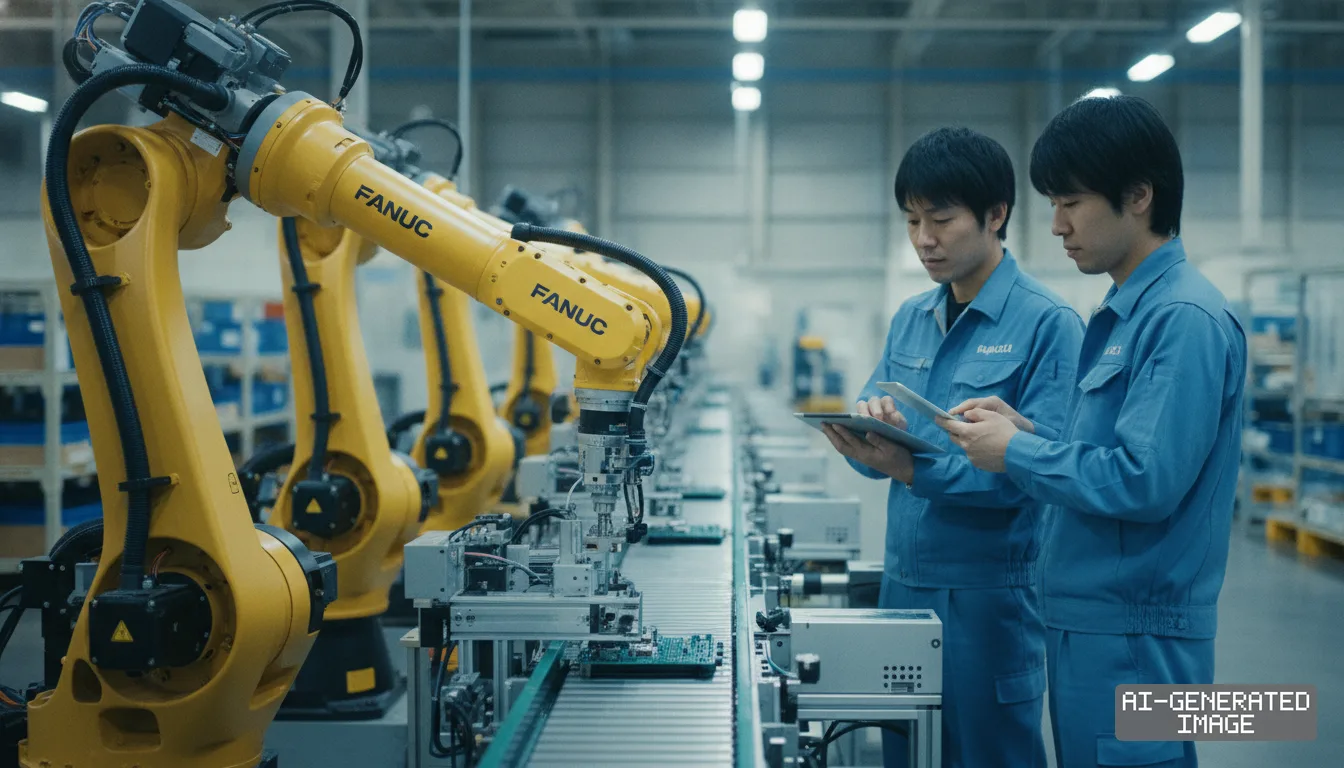
Heavy industrial manufacturers are also adapting the hardware for harsher manufacturing cells. HD Hyundai Robotics is working directly with Aidin to adapt the multi-jointed fingers for automated grinding, surface polishing and weld inspection in shipyards.
Polishing curved metal plates requires steady surface pressure over extended cycles. Human operators suffer repetitive strain during manual grinding, while rigid robotic arms risk gouging structural steel without dynamic force compensation.
Medical robotics represents a parallel commercial testbed for the sensor package. Aidin demonstrated the Gen2 hand Sept. 16 and Sept. 17 at a robotics showcase organized by Samsung Medical Center.
During the demonstration, the gripper operated at the wrist of an RB-Y1 mobile dual-arm robot built by Rainbow Robotics. The integrated arm completed precision surgical tool transfers as part of the Orchestra research initiative managed under the Korea ARPA-H program.
Surgical and hospital logistics tasks require delicate handling of irregular sterile containers. The multi-axis tactile fingertips register slippage instantly, allowing the robot controller to tighten its grip before objects fall.
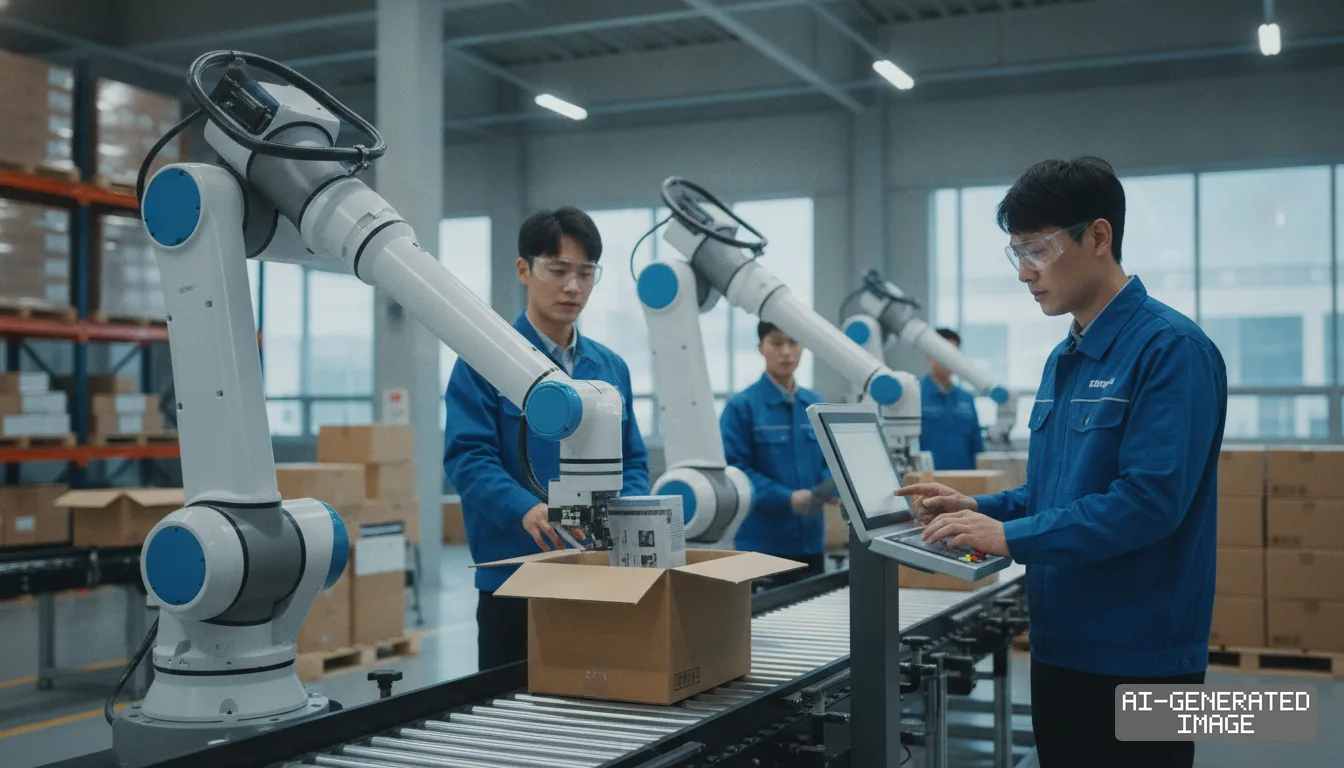
Logistics operators are examining the same mechanism to automate mixed-case depalletizing. CJ Logistics has deployed earlier iterations of Aidin's tactile grippers to pick unstructured courier parcels from intake conveyor belts.
High-mix fulfillment centers handle boxes of varying weights and fragile packaging daily. Tactile grippers prevent package deformation while ensuring rapid throughput during sorting shifts.
Government research consortia are funding wider integration of these miniature components. South Korea's Ministry of Trade, Industry and Energy selected Aidin on Oct. 1 to participate in its on-device artificial intelligence semiconductor development program.
Doosan Robotics serves as the lead organizer for that consortium, which operates on an R&D timetable running through December 2030. The joint venture focuses on building sensor-integrated two-finger and multi-finger grippers for next-generation collaborative robots.
South Korean robot builders have historically imported precision force-torque sensors and harmonic drive reduction gears from Japanese suppliers. Japanese component manufacturers such as Nitta and MinebeaMitsumi maintain dominant market shares in industrial load sensors across East Asia.
Aidin Robotics manufactures its multi-axis capacitive sensors domestically, lowering per-unit procurement costs for regional robot integrators. Embedding sensor dies directly into the finger pads eliminates external wiring harnesses that frequently break during high-speed joint rotations.
The elimination of external transducer boxes reduces wrist mass on collaborative arms. Lighter end-effectors increase payload capacity and allow robotic arms to move faster without triggering safety stops.
Factory managers measure automated assembly productivity by cycle time and component scrap rates. Integrating tactile sensing directly into the end-of-arm tooling lowers insertion failures on dense printed circuit boards.
Industrial robotics makers in Japan and China are accelerating their own dexterous hand programs to supply emerging humanoid robot platforms. Chinese component developers have reduced prices on basic electric grippers, intensifying competition across low-end factory automation hardware.
Aidin is positioning the Gen2 system to compete on precision measurement accuracy rather than price alone. The hardware package includes embedded firmware that calculates multi-axis force vectors at kilohertz sampling frequencies.
Commercial shipments and system deliveries of the AIDIN Hand Gen2 begin before Dec. 31, 2026.
The company did not publish commercial catalog prices, unit production targets, or official spec sheets in an independent release on Nov. 2.
Impact map
How this development propagates across the region and out to global buyers.
| Event | Korea | China | Japan | Global impact |
|---|---|---|---|---|
| Gen2 robot hand rollout | HD Hyundai Robotics secures tactile gripping tools for shipyard grinding lines | Domestic gripper vendors face higher technical threshold in precision force sensing | Nitta and component suppliers face Korean competition in multi-axis tactile cells | Assembly lines gain 16-DoF dexterous hand alternative for micro-electronics insertion |
In this story
- Companies
- Aidin RoboticsHD Hyundai Robotics
- Tickers
- 267250.KS
- Exposed
- Rainbow RoboticsDoosan Robotics
- Impact
- CapexSupply ChainOrder Book
Related briefings
- HD Hyundai Robotics unveils dual-arm robot for assembly work Also on Aidin Robotics, HD Hyundai Robotics, Doosan Robotics
- HD Hyundai Robotics backs sensor maker AIDIN in $12M round Also on AIDIN ROBOTICS, HD Hyundai Robotics, Order Book
- HD Hyundai deploys physical AI in Ulsan shipyard automation Also on AIDIN Robotics, HD Hyundai Robotics, Order Book
- Doosan Robotics shifts sales focus to auto and chip plants Also on AIDIN Robotics, Doosan Robotics, Order Book
Sources
Reporting
Confidence: medium — how we grade this
The documents behind this briefing are linked above. East Asia Brief produces its English text with AI assistance under human editorial review, and does not translate or republish other outlets' articles. See our methodology and AI policy. Spotted an error? Tell us.
The Morning Brief
What changed in Korean, Chinese and Japanese industry overnight — and what it means for your supply chain. One email, weekday mornings, US time. Free.
The Morning Brief is in preparation. Leave your address and we will write to you once — when the first issue is ready. Nothing before that.