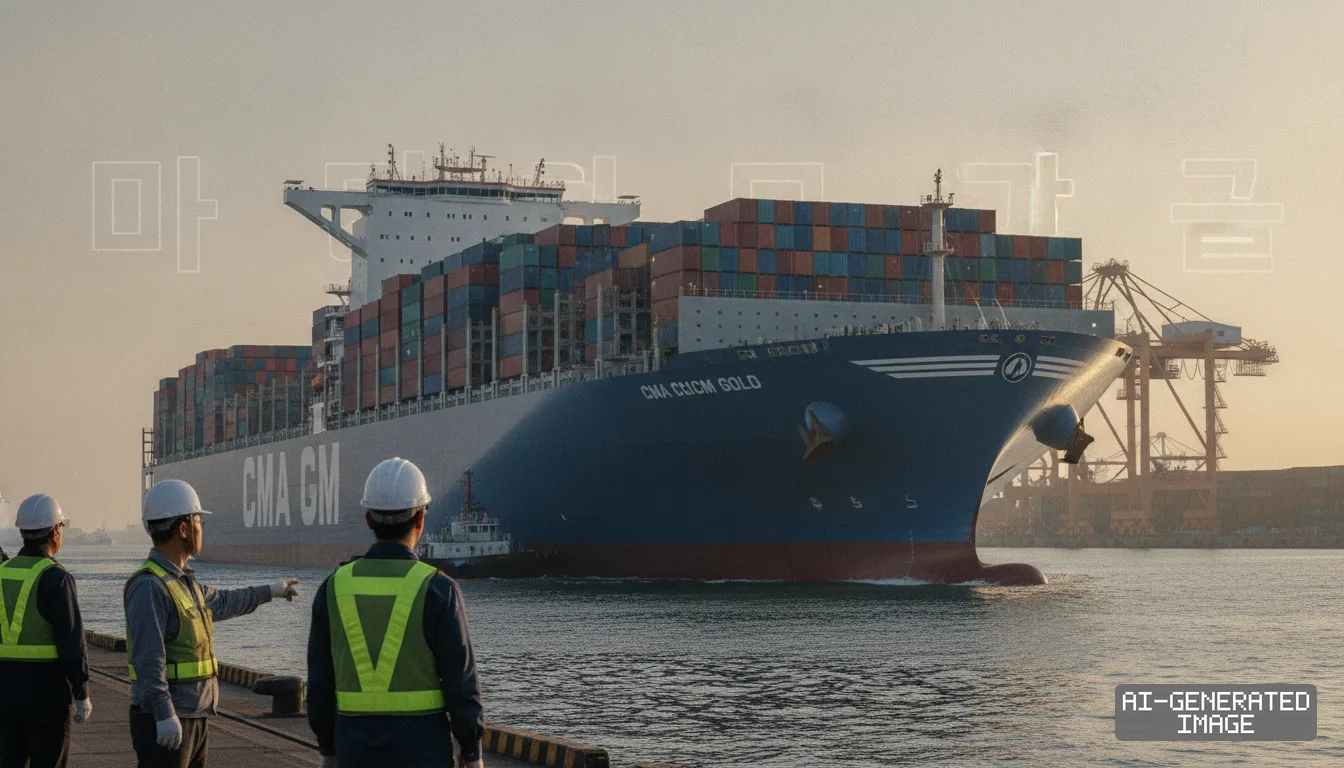
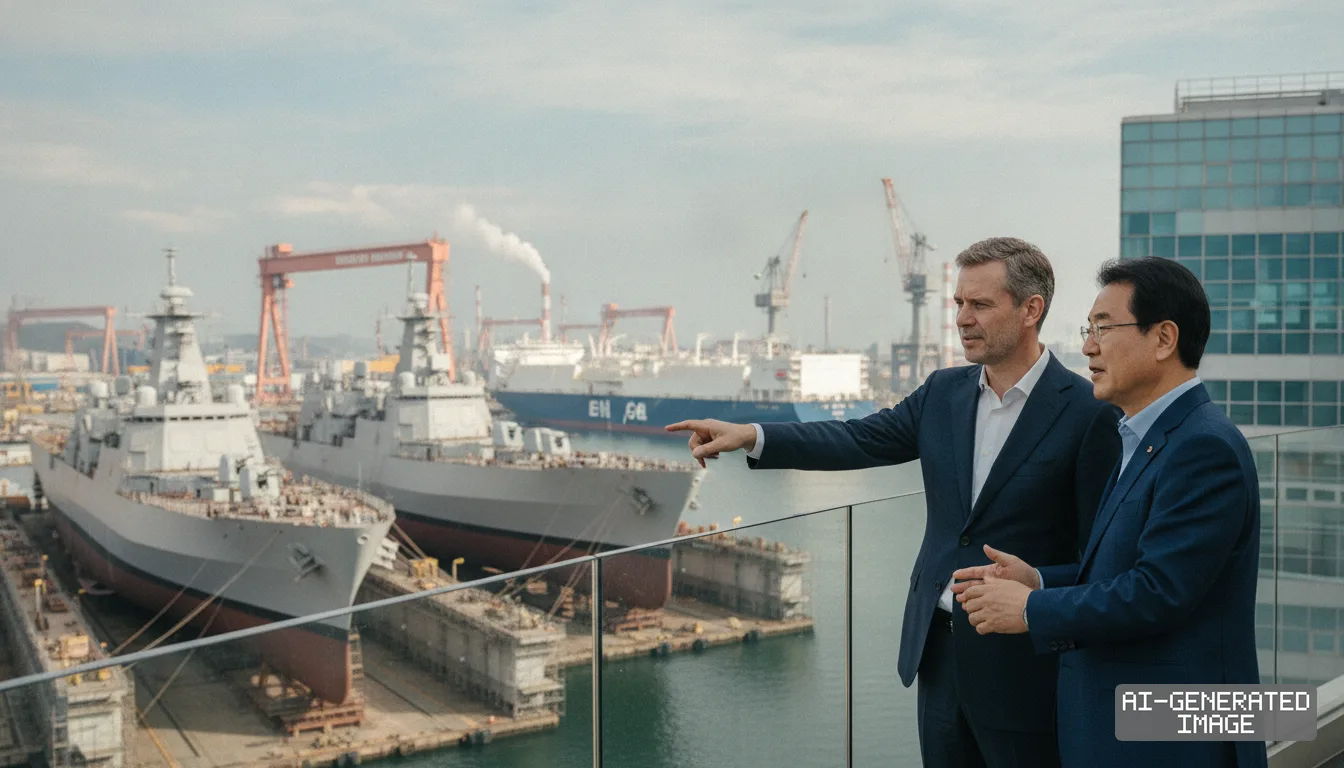
Hanwha Engine signs $99M engine order with Samsung Heavy
The 132.25 billion won supply agreement secures propulsion systems through late 2028 for the yard, which operates without an internal engine foundry.
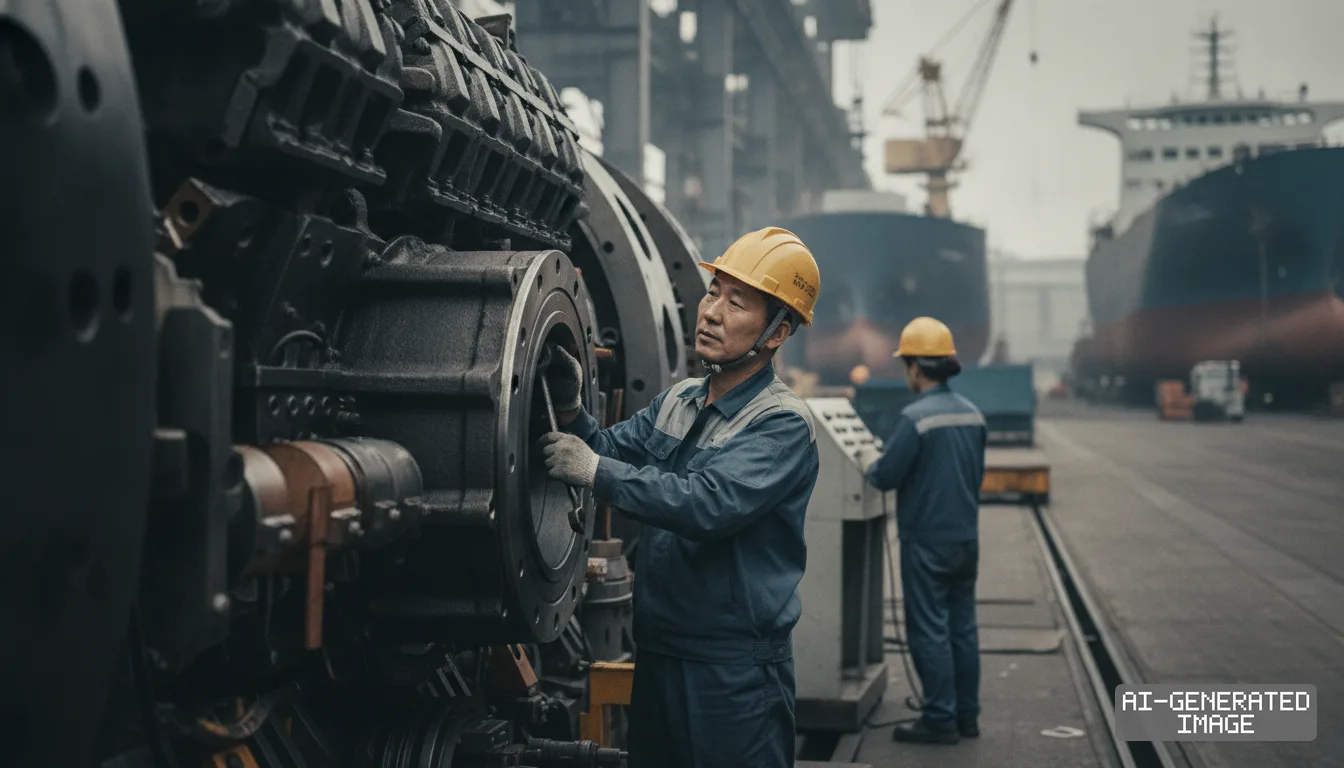
Hanwha Engine said Oct. 16 it signed a 132.25 billion won ($98.8 million) contract with Samsung Heavy Industries to supply marine engines for newly ordered commercial vessels.
The agreement is worth 9.6% of Hanwha Engine's consolidated revenue of 1.37 trillion won ($1.02 billion) reported for the 2025 financial year. The transaction formalizes an earlier letter of intent signed between the two companies into a binding commercial contract.
Deliveries will run from Oct. 15, 2026 through Nov. 15, 2028, establishing a production schedule spanning 762 days. The terms stipulate an advance payment of 15%, with the remaining 85% paid upon physical equipment delivery.
The regulatory filing does not state the vessel category, individual engine power ratings or the total number of propulsion units, citing corporate confidentiality. Construction timelines at Samsung Heavy Industries will determine the final factory acceptance and delivery dates.
The contract provides production visibility across seven quarters for Hanwha Engine's assembly lines in Changwon. The manufacturer converted the commercial agreement using a foreign exchange benchmark of 1,338.60 won per dollar set on the contract date.
Samsung Heavy Industries remains the only member among South Korea's three major shipbuilding groups that operates without an internal engine foundry. The shipbuilder procures all two-stroke propulsion machinery from independent commercial engine builders.
Rival shipbuilder HD Hyundai Heavy Industries manufactures low-speed propulsion machinery through its in-house engine division. That internal facility supplies group shipyards HD Korea Shipbuilding & Offshore Engineering, HD Hyundai Samho and HD Hyundai Mipo.
Hanwha Group built a similar captive supply chain after acquiring the former HSD Engine in early 2024. The industrial conglomerate rebranded the diesel engine specialist as Hanwha Engine to support affiliated shipbuilder Hanwha Ocean.
Samsung Heavy Industries relies on external engine manufacturers to satisfy delivery slots across its merchant order book. Securing manufacturing capacity at independent facilities prevents assembly bottlenecks on high-specification gas carriers and container vessels.
External machinery sourcing has weighed on overall profitability at Samsung Heavy Industries. The company posted an operating profit margin of 9.8% in the first half of 2026, gaining 3.5 percentage points from the previous year.
Margins at fully integrated shipbuilders expanded faster over the same six months. HD Hyundai Heavy Industries recorded an operating margin of 15.9%, while Hanwha Ocean achieved 13.6% on captive machinery sourcing.
Marine engine manufacturing commands operating margins above 20% on high-specification propulsion plants, industry financial filings show. Captive engine divisions protect yard margins by retaining machinery profits and mitigating component inflation.
Hanwha Engine has maintained third-party buyer relationships across the global shipbuilding market. Samsung Heavy Industries remains one of its core customers alongside private shipbuilders in China, including Yangzijiang Shipbuilding and New Times Shipbuilding.
Hanwha Engine held an order backlog of 5.98 trillion won ($4.47 billion) at the end of June 2026. The total expanded 44% compared with 4.14 trillion won recorded at the end of 2025.
Operating profit at Hanwha Engine reached 89.3 billion won ($66.7 million) in the first half of 2026, rising 59% year-on-year. Increased deliveries of high-margin alternative-fuel propulsion plants supported that operating profit growth.
Dual-fuel propulsion machinery accounted for 85% of Hanwha Engine's marine engine order book at the end of the first quarter of 2026. Container vessel machinery represented 66% of new contract bookings during that three-month period.
Shipyards across East Asia face tight manufacturing capacity for low-speed dual-fuel propulsion machinery. Engine builders must configure assembly bays for cryogenic fuel injectors and methanol handling systems required under international maritime emissions standards.
Hanwha Engine will disclose full third-quarter operating earnings on the Korea Exchange later this month. Samsung Heavy Industries is scheduled to release its third-quarter financial results in early November.
Impact map
How this development propagates across the region and out to global buyers.
| Event | Korea | China | Japan | Global impact |
|---|---|---|---|---|
| Marine engine supply contract | Samsung Heavy Industries secures machinery delivery slots through late 2028 | Private yards face tighter Korean low-speed dual-fuel engine delivery allocations | Shipbuilders experience ongoing component cost divergence versus integrated Korean builders | Commercial vessel delivery slots remain constrained by two-stroke engine manufacturing capacity |
In this story
- Companies
- Hanwha EngineSamsung Heavy Industries
- Tickers
- 082740.KS010140.KS
- Exposed
- Hanwha OceanHD Hyundai Heavy Industries
- Impact
- Order BookSupply ChainPricing
Related briefings
- HD Hyundai and Hanwha win China dual-fuel engine contracts Also on Hanwha Engine, HD Hyundai Heavy Industries, Pricing
- South Korea engine builders expand methanol test benches for 2027 ship handoffs Also on Hanwha Engine, HD Hyundai Heavy Industries, Order Book
- HD Hyundai and Hanwha Ocean Lock In LNG Carrier Berth Slots Through 2029 Also on Samsung Heavy Industries, Hanwha Ocean, HD Hyundai Heavy Industries
- J.P. Morgan adds two Samsung Heavy VLGCs to expand gas fleet Also on Samsung Heavy Industries, Hanwha Ocean, HD Hyundai Heavy Industries
Sources
Reporting
Confidence: medium — how we grade this
The documents behind this briefing are linked above. East Asia Brief produces its English text with AI assistance under human editorial review, and does not translate or republish other outlets' articles. See our methodology and AI policy. Spotted an error? Tell us.
The Morning Brief
What changed in Korean, Chinese and Japanese industry overnight — and what it means for your supply chain. One email, weekday mornings, US time. Free.
The Morning Brief is in preparation. Leave your address and we will write to you once — when the first issue is ready. Nothing before that.