DRC freezes 96,600-ton cobalt quota in four-month export ban
The strategic minerals regulator halts all industrial and artisanal shipments from Nov. 30, disrupting feedstocks from a nation supplying 70% of global mined cobalt.
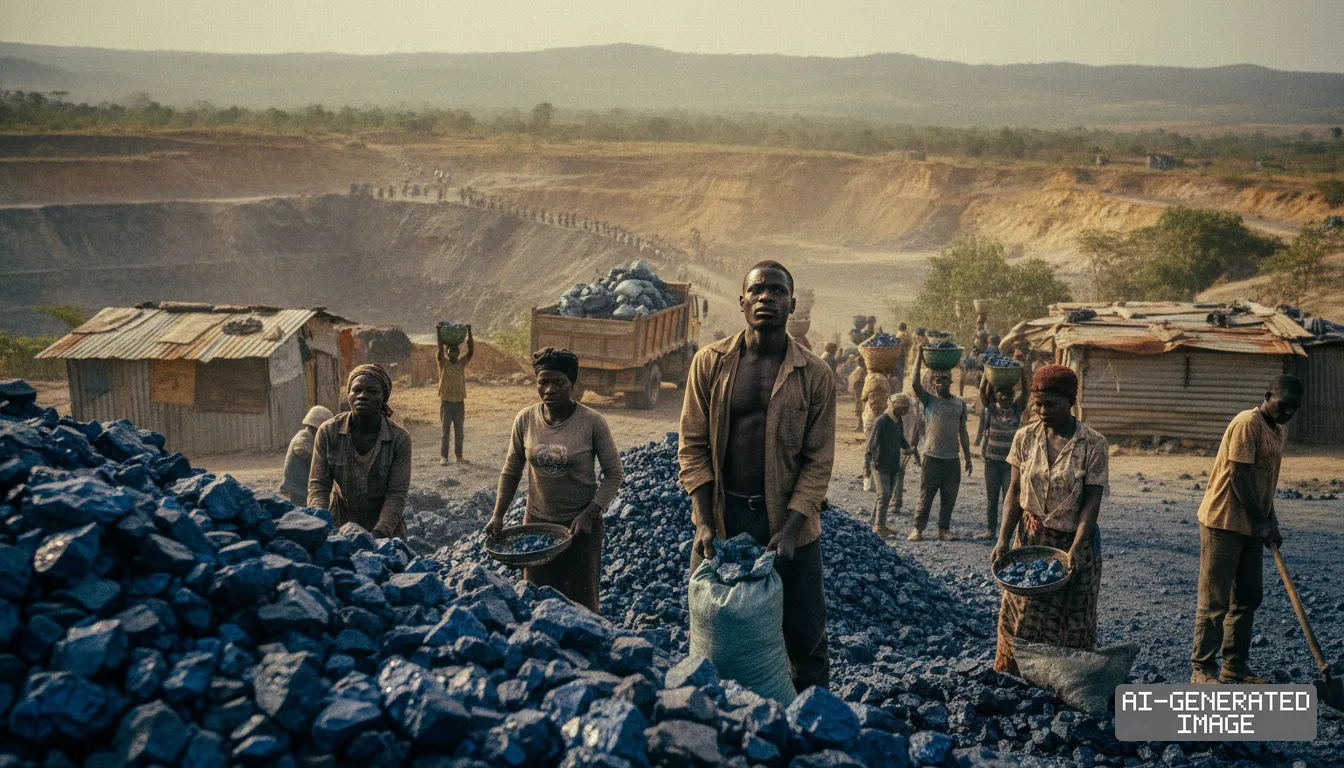
The Democratic Republic of the Congo's strategic minerals regulator halted all cobalt exports on Nov. 23, 2026, suspending an annual quota system that regulated outbound shipments from the world's top producing nation.
The measure takes effect Nov. 30, 2026, and covers both industrial concessions and artisanal extraction sites across the country, according to the Autorité de Régulation et de Contrôle des Marchés des Substances Minérales Stratégiques (ARECOMS).
The central African nation accounts for roughly 70 percent of global mined cobalt output, supplying the primary raw material used in nickel-manganese-cobalt (NMC) electric vehicle batteries.
Kinshasa established an annual export ceiling of 96,600 tonnes for 2026 under Decision No. 004/ARECOMS/2025, which allocated an 87,000-tonne base quota to commercial miners alongside a 9,600-tonne strategic reserve.
The regulatory agency said slumping international prices, rising warehouse inventories and speculative trading since June 2026 forced the intervention to restore supply discipline to global markets.
Cobalt hydroxide prices fell by more than 40 percent between July and October 2026, dropping to $14.50 per pound of contained cobalt as export flows overwhelmed battery manufacturing demand.
The suspension marks Kinshasa's second blanket trade halt in two years, following a temporary export freeze in February 2025 that transitioned into restrictive quotas eight months later.
Industrial mining operators in the Katanga copper-cobalt belt face immediate logistical disruptions, stranding intermediate materials at inland facilities and bonded logistics depots near regional borders.
China's CMOC Group produced 99,694 tonnes of cobalt during the first nine months of 2026 but sold only 12,661 tonnes under the previous quota regime, accumulating an 87,033-tonne inventory backlog.
Glencore produced 13,700 tonnes of cobalt over the same nine-month period, reducing output by more than half year-on-year by retaining cobalt in liquid solution at its hydrometallurgical circuits.
Eurasian Resources Group also holds major production assets in the country, leaving its refining operations subject to the total export standstill from the end of the month.
The supply cut lands directly on Chinese chemical processors, which refine more than three-quarters of Congolese hydroxide into battery-grade cobalt sulfate and precursor active materials.
South Korean cathode manufacturers rely heavily on Chinese precursor imports to supply high-nickel cells to North American and European automakers.
LG Energy Solution and Samsung SDI consume thousands of tonnes of cobalt annually across their ternary battery lines, exposing cell packaging schedules to upstream raw material delays.
Higher spot feedstock costs will travel through supply contracts linked to benchmark intermediate indexes, lifting precursor synthesis expenses within two to three quarters.
Cathode makers EcoPro BM and POSCO Future M face wider price spreads between existing inventory and replacement shipments of intermediate refined salts.
ARECOMS said it will formally review market inventories, supply balances and allocation mechanisms four months after the ban takes effect, scheduling an initial assessment for late March 2027.
The regulator stated that the four-month review will not trigger an automatic resumption of outbound shipments, requiring a separate decree to establish future quotas, allowable tonnages and operational compliance conditions.
The regulatory notice does not state the specific quantitative cost increase that the export freeze will impose on finished battery packs or electric vehicles.
Impact map
How this development propagates across the region and out to global buyers.
| Event | Korea | China | Japan | Global impact |
|---|---|---|---|---|
| DRC cobalt export freeze | LG Energy Solution and Samsung SDI face intermediate precursor cost inflation on high-nickel ternary battery lines | Refiners holding 75% of global processing capacity face immediate feedstock deficit as CMOC stockpiles 87,033 tonnes locally | Panasonic and Sumitomo Metal Mining absorb raw material price swings on automotive cylindrical cell deliveries | Supply deficit widens by 29,000 tonnes in 2027 as Kinshasa freezes 70% of global mined cobalt production |
In this story
- Companies
- CMOC GroupGlencoreEurasian Resources GroupLG Energy SolutionSamsung SDIEcoPro BMPOSCO Future M
- Tickers
- 603993.SSGLEN.L373220.KS006400.KS247540.KS003670.KS
- Policy
- Export Controls
- Impact
- Supply ChainPricingCost Structure
Track every Export Controls development →
Related briefings
- Mineral stockpiling strategies split across US, EU and East Asia Also on Glencore, Cost Structure
- Japanese trading houses expand cobalt refining ties to counter supply risk Also on Eurasian Resources Group
- CATL buys 20,000 tons of cathode copper in $320 million pact Also on CMOC Group, LG Energy Solution, Pricing
- China waives tariffs on African trade with no political terms Also on CMOC Group, Cost Structure
Sources
Primary documents
Reporting
Confidence: high — how we grade this
The documents behind this briefing are linked above. East Asia Brief produces its English text with AI assistance under human editorial review, and does not translate or republish other outlets' articles. See our methodology and AI policy. Spotted an error? Tell us.
The Morning Brief
What changed in Korean, Chinese and Japanese industry overnight — and what it means for your supply chain. One email, weekday mornings, US time. Free.
The Morning Brief is in preparation. Leave your address and we will write to you once — when the first issue is ready. Nothing before that.