BASF signs Nanjing pact to build semiconductor chemicals site by 2028
The German chemical group plans commercial operations by late 2028 in Jiangsu province, expanding local materials supply for Chinese wafer fabs facing Western equipment restrictions.
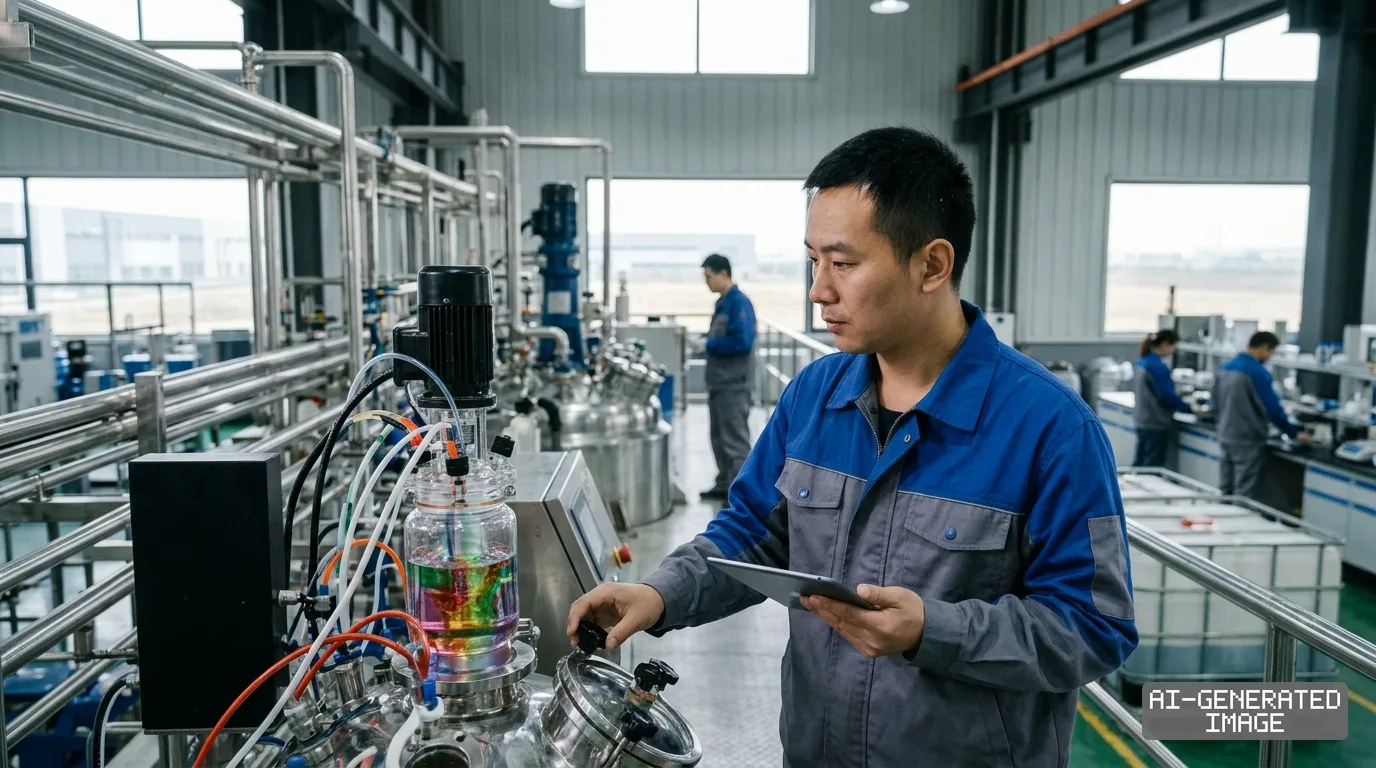
BASF signed an investment agreement on Nov. 3, 2026, to establish a dedicated electronic materials manufacturing facility in eastern China to supply domestic semiconductor fabrication lines.
The plant will be built inside the Materials High-Tech Park of the Nanjing Jiangbei New Area in Jiangsu province. Commercial operations are scheduled to start by the end of 2028.
BASF did not disclose the financial size of the Nanjing capital expenditure or its planned nameplate volume. The project expands the company's footprint across Greater China, where it employed 12,452 workers across 29 major production subsidiaries at the close of 2025.
The facility will supply high-purity process chemicals and advanced formulated solutions directly to wafer fabs across mainland China. These materials are consumed during wafer cleaning, photolithography etching and chemical mechanical planarization steps.
The project marks an expansion of the group's "local-for-local" manufacturing model, Senior Vice President Jens Liebermann said. Liebermann heads BASF's Global Electronic Materials business unit.
Local production strengthens supply chain reliability and improves technical response times for regional chipmakers, Global Operating Division President Gops Pillay said.
The Nanjing agreement follows a separate deal in Taiwan two weeks earlier. BASF signed a letter of intent with Taiwan's Ministry of Economic Affairs on Oct. 20 to expand its Kuanyin plant in Taoyuan.
The Taoyuan expansion supplies chemicals for leading-edge nodes below 2 nanometers and adds an analytical testing center. Taiwan Semiconductor Manufacturing Co. accounts for more than 50% of worldwide foundry revenue from that regional cluster.
The dual investments illustrate a split strategy across the Taiwan Strait. BASF is aligning its Taiwan operations with cutting-edge foundry nodes while anchoring its mainland Chinese capacity around expanding legacy wafer plants.
United States and Dutch export controls have barred Chinese fabs from buying advanced extreme ultraviolet scanners and select immersion lithography tools. Those rules do not prohibit the domestic sale of wet process chemicals.
Chinese chipmakers responded to tool bans by pouring capital into mature process nodes at 28 nanometers and above. Semiconductor Manufacturing International Corp. operates 300-millimeter fabs in Shanghai, Beijing, Tianjin and Shenzhen, holding roughly 6% of global foundry capacity.
Hua Hong Semiconductor runs three 200-millimeter fabs and three 300-millimeter fabs across Shanghai and Wuxi. Its manufacturing lines ran at 105% capacity utilization during the second quarter of 2026.
Operating those production lines requires large volumes of electronic-grade chemicals. Process engineers use high-purity sulfuric acid, ammonium hydroxide, specialty thinners and formulated cleans to strip residue and prevent micro-defects.
These chemicals degrade during extended transport, and foreign shipments carry contamination risks. Sourcing wet materials from regional plants reduces shipping lead times from months to days.
Local sourcing also shelters wafer producers from transport disruptions and foreign customs inspections. Chinese fab operators have made domestic material availability a core qualification criterion for chemical suppliers.
BASF already operates a large manufacturing base in Nanjing. The company runs an integrated Verbund chemical complex in the Jiangbei district through a 50-50 joint venture with China Petroleum & Chemical Corp., known as Sinopec.
The existing petrochemical complex provides integrated utilities, steam and raw chemical feeds. Building the new electronics unit nearby lowers civil engineering costs and shortens installation schedules.
Japanese materials producers have also expanded local Chinese operations to serve mature fabs. Tokyo Ohka Kogyo and JSR maintain packaging and formulation lines in eastern China to supply mainland foundries.
Domestic Chinese suppliers have captured market share in basic wet chemicals. Zhejiang Jiangshan Chemical and Jiangyin Jianghua Microelectronics Materials supply low-purity etching acids to domestic fabs, but multinational producers retain advantages in ultra-clean grades.
The Nanjing site gives BASF a base to co-develop custom formulations with Chinese engineers, Liebermann said. Customization helps lock in multi-year purchase agreements across new fab phases.
Engineering work and regulatory reviews for the Jiangbei site will continue through 2027. Commercial deliveries to fabrication lines are scheduled to begin by the end of 2028.
The investment agreement does not state the project capital expenditure, and BASF has not published the specific chemical formulations or volume targets planned for the site.
Impact map
How this development propagates across the region and out to global buyers.
| Event | Korea | China | Japan | Global impact |
|---|---|---|---|---|
| BASF Nanjing Electronic Materials Expansion | Korean memory fabs face stiffer competition as Chinese fabs secure localized wet-chemical feeds | SMIC and Hua Hong secure shorter chemical delivery times and lower contamination risks | JSR and Tokyo Ohka face intensified competition in local Chinese formulation supply | European chemical majors bifurcate operations between Western export rules and China legacy scale |
In this story
- Companies
- BASF
- Tickers
- BAS.DE
- Exposed
- Hua Hong SemiconductorSinopec
- Policy
- Export Controls
- Impact
- Supply ChainCapexCompliance
Track every Export Controls development →
Related briefings
- Trump signs sanctions act authorizing 100% tariffs on oil buyers Also on Sinopec, Export Controls, Compliance
- US House advances 100% tariff bill on Russian crude buyers Also on Sinopec, Export Controls
- SMIC narrows foundry gap with Samsung as Q2 sales surge 20% Also on Hua Hong Semiconductor, Export Controls
- China Gas buys US LNG from Venture Global under 20-year pact Also on Sinopec, Compliance
Sources
Reporting
Confidence: medium — how we grade this
The documents behind this briefing are linked above. East Asia Brief produces its English text with AI assistance under human editorial review, and does not translate or republish other outlets' articles. See our methodology and AI policy. Spotted an error? Tell us.
The Morning Brief
What changed in Korean, Chinese and Japanese industry overnight — and what it means for your supply chain. One email, weekday mornings, US time. Free.
The Morning Brief is in preparation. Leave your address and we will write to you once — when the first issue is ready. Nothing before that.