China permanent magnet controls squeeze motor supply as alloy research stalls
Export licensing and refining bottlenecks keep electric drive makers tied to standard rare-earth grades despite laboratory trials of multi-element alloys.
MGBy Mei-lin Guo, China correspondent, critical minerals and energy··Updated August 31, 2026·4 min read
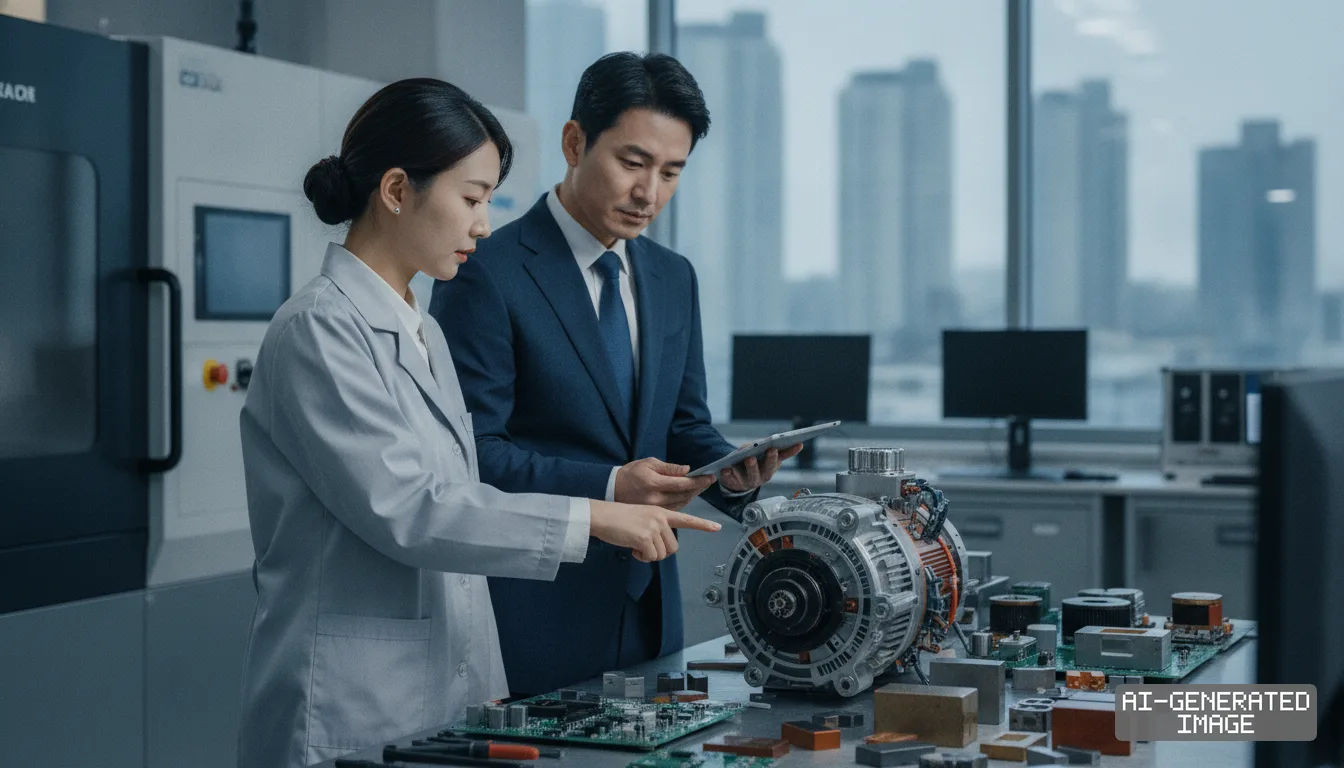
ShareLinkedInXWhatsAppEmailResearchers examine an electric motor assembly and circuit components in a laboratory as manufacturers assess drive technologies. (AI-generated image)
China's Ministry of Commerce maintained strict export licensing on rare-earth permanent magnets as automotive motor and industrial drive manufacturers assessed the limits of multi-principal high-entropy alloy research, according to ministry regulatory records on Sept. 1, 2026.
The International Energy Agency reported on June 1, 2026 that China controls 91% of global rare-earth refining capacity and 94% of sintered permanent-magnet production. That processing concentration leaves Western powertrain developers and robotics suppliers dependent on Chinese metal converters and sinter facilities for high-performance drive components.
The documents behind this briefing are linked above. East Asia Brief produces its English text with AI assistance under human editorial review, and does not translate or republish other outlets' articles. See our methodology and AI policy. Spotted an error? Tell us.
China correspondent, critical minerals and energy — Mei-lin Guo reports on rare earth separation, lithium refining and the licensing decisions that determine what leaves the country.