SK On signs 18 GWh US battery storage pact with NeoVolta
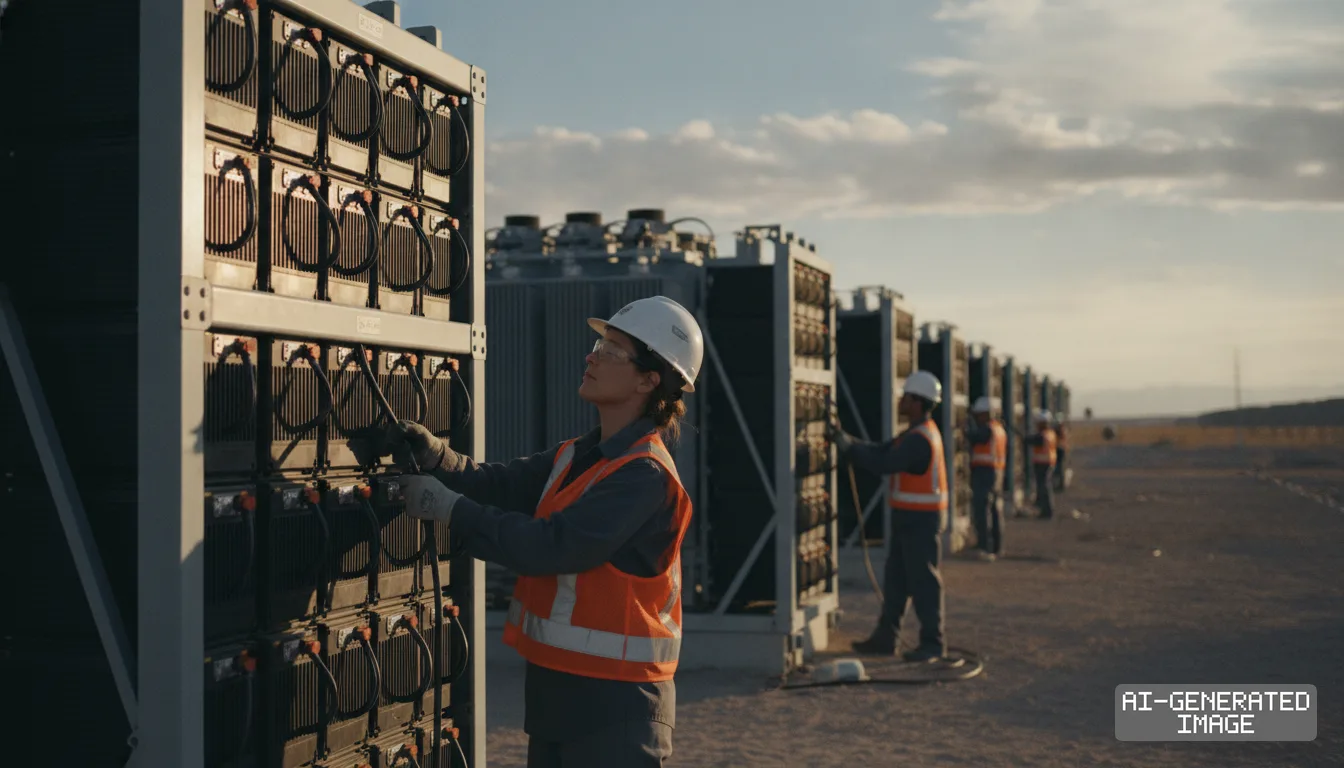
The five-year framework converts unallocated EV pouch cell lines in Georgia to lithium iron phosphate stationary storage for commercial and utility grids.
SK On finalized an 18 gigawatt-hour battery supply framework with NeoVolta Power on Sept. 27, shifting unallocated electric-vehicle cell capacity in Georgia into commercial and utility-scale energy storage.
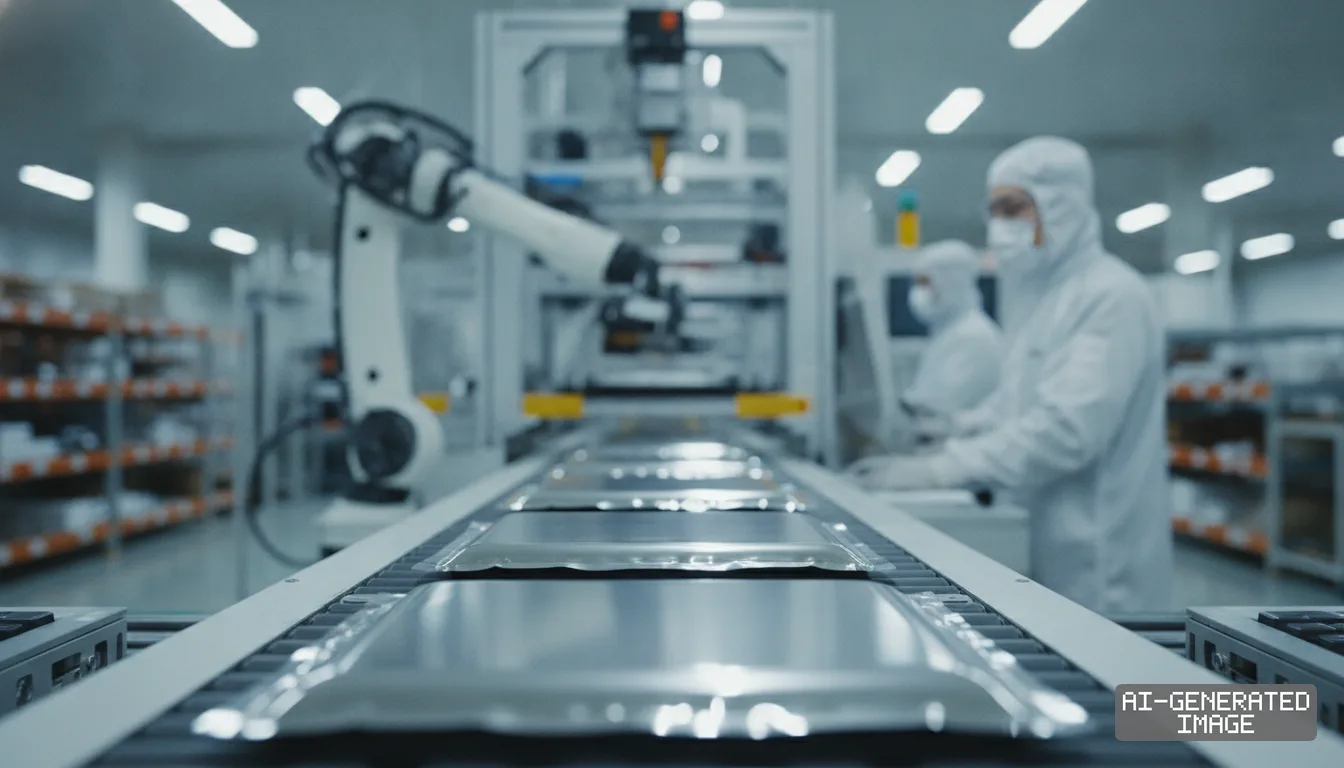
The core agreement commits SK On to deliver 9 gigawatt-hours of lithium iron phosphate pouch cells between 2027 and 2031. Deliveries will represent roughly 45% of the company's 20-gigawatt-hour annual energy storage target.
NeoVolta Power, a subsidiary of Nasdaq-listed NeoVolta Inc., will assemble the cells at its manufacturing facility in Pendergrass, Georgia. The site sits less than 15 miles from SK On's battery gigafactory in Commerce.
A second 9-gigawatt-hour arrangement establishes a consignment model between the two manufacturers. Under that plan, NeoVolta Power will build packaged systems using SK On cells for the South Korean producer to buy back.
The combined 18-gigawatt-hour volume will absorb production lines that SK On originally built for automotive clients. Slower electric-vehicle adoption across North America has left several high-nickel pouch lines running below optimal utilization.
Daejin Choi, head of energy storage at SK On, signed the pact with NeoVolta Power President Steve Bond. The initial signing took place at SK On's Gwanhun Campus in central Seoul.
NeoVolta Power operates a 2-gigawatt-hour facility in Pendergrass. The SK On supply agreement will support an expansion to a two-line platform with 8 gigawatt-hours of annual containerized battery capacity by 2028.
Stationary batteries store power from wind and solar plants or relieve peak electrical loads. Lithium iron phosphate chemistry offers lower thermal runaway risk and longer life cycles than nickel-rich automotive chemistries.
SK On operates roughly 100 gigawatt-hours of global cell production capacity across South Korea, China, Hungary and the United States. Its Commerce facility comprises two plants capable of producing 21.5 gigawatt-hours annually.
The South Korean battery maker began modifying equipment in Commerce during late 2025. Engineers are converting lines from nickel-manganese-cobalt formulations to lithium iron phosphate pouch cells to serve American clean energy developers and utilities.
The contract marks SK On's second major utility-scale storage deal in the United States. The company secured a 1-gigawatt-hour supply agreement with Texas-based Flatiron Energy Development in 2025 with extension options.
SK On also took 284 megawatts, or 50.3% of the allocated capacity, in South Korea's second national energy storage tender earlier this year, reinforcing its strategic shift away from an exclusive EV focus.
South Korean battery producers face intensifying pressure to diversify their revenue bases. LG Energy Solution and Samsung SDI have also repurposed domestic and overseas pouch and prismatic lines toward grid-tied energy storage units.
Grid storage demand in North America is expanding rapidly as utilities modernize transmission networks. The buildout of energy-hungry artificial intelligence data centers has added urgent commercial requirements for round-the-clock backup power and load shaving.
Federal industrial policies are driving developers toward domestic suppliers. The Inflation Reduction Act offers an additional 10% domestic content bonus tax credit for developers sourcing clean energy equipment from domestic battery assembly plants.
United States tariffs on imported Chinese stationary storage cells will jump to 25% under revised Section 301 rules. That tariff wall creates a cost shelter for domestic producers despite higher American factory overhead.
SK On will gain manufacturing tax credits worth up to $35 per kilowatt-hour under Section 45X for cells produced in Commerce. Those production credits help offset higher domestic material and labor expenses.
NeoVolta Inc. reported in regulatory filings that the five-year arrangement gives it guaranteed access to domestic cells. Securing domestic supply shields the system integrator from geopolitical disruptions and future tariff adjustments on Asian imports.
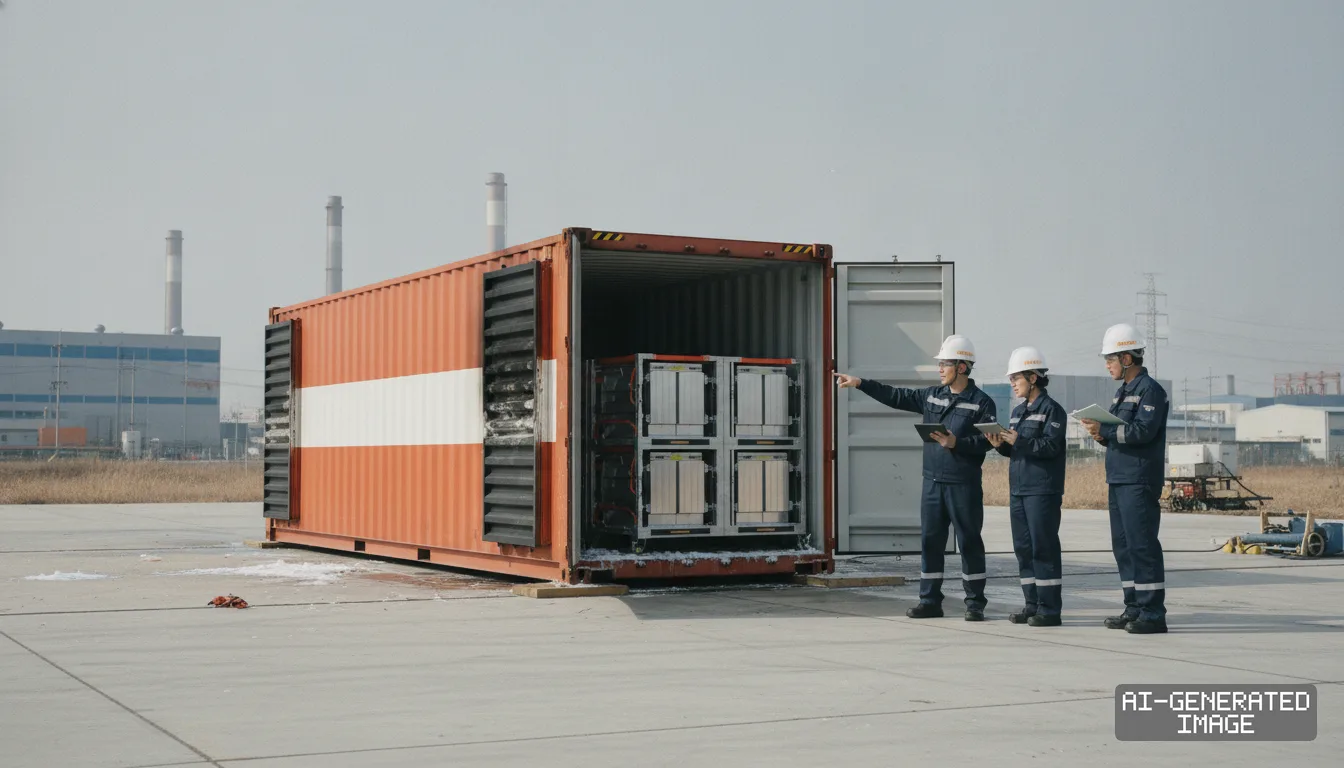
SK On introduced its dedicated containerized storage brand, GRIDON, to the North American market in Houston in June. The modular system uses liquid cooling and advanced thermal insulation designed for extreme weather environments.
The reallocation of equipment follows a sharp reduction in electric-vehicle capital spending across the automotive sector. Automakers including Ford Motor Co. scaled back battery joint ventures after retail electric-vehicle sales growth slowed.
The tolling agreement structure allows SK On to sell complete containerized systems without building separate pack assembly lines in Georgia. NeoVolta Power will handle module assembly, system enclosures and power conversion integration in Pendergrass.
Lithium iron phosphate cells eliminate reliance on expensive cobalt and nickel supply chains. The chemistry lowers raw material price volatility for project developers, although energy density remains lower than high-nickel ternary automotive formulations.
Commercial battery cell deliveries under the first contract are scheduled to begin during the first quarter of 2027. SK On aims to finalize the binding tolling agreement for the remaining 9 gigawatt-hours before Dec. 31, 2026.
Neither company disclosed the contract value or pricing terms in their corporate filings. South Korean industry estimates placing the total transaction value at 1.5 trillion won ($1.09 billion) remain unverified.
Impact map
How this development propagates across the region and out to global buyers.
| Event | Korea | China | Japan | Global impact |
|---|---|---|---|---|
| SK On NeoVolta ESS supply deal | SK On repurposes idle US EV lines to capture ~45% of annual 20 GWh ESS target | Chinese LFP cell exporters face 25% US tariffs and IRA domestic content exclusion | Japanese battery suppliers remain focused on automotive ternary cells, yielding US ESS share | US utility and data center BESS supply expands by 18 GWh from domestic Georgia production |
In this story
- Companies
- SK OnNeoVolta
- Tickers
- 096770.KSNEOV
- Exposed
- LG Energy SolutionSamsung SDIFord Motor Co.
- Policy
- TariffsSubsidies
- Impact
- Supply ChainCapexOrder Book
Track every Tariffs development → Track every Subsidies development →
Related briefings
- SK On Secures 18 GWh US LFP Battery Supply Deal with NeoVolta Power Also on NeoVolta, SK On, Samsung SDI
- SK On signs 9 GWh US storage battery deal with NeoVolta Power Also on NeoVolta, SK On, Order Book
- CATL holds 314Ah storage cell prices steady at 0.423 yuan Also on SK On, Samsung SDI, LG Energy Solution
- Chinese EVs capture 35% Korea market share under 8% tariff Also on SK On, Samsung SDI, LG Energy Solution
Sources
Primary documents
Reporting
Confidence: high — how we grade this
The documents behind this briefing are linked above. East Asia Brief produces its English text with AI assistance under human editorial review, and does not translate or republish other outlets' articles. See our methodology and AI policy. Spotted an error? Tell us.
The Morning Brief
What changed in Korean, Chinese and Japanese industry overnight — and what it means for your supply chain. One email, weekday mornings, US time. Free.
The Morning Brief is in preparation. Leave your address and we will write to you once — when the first issue is ready. Nothing before that.