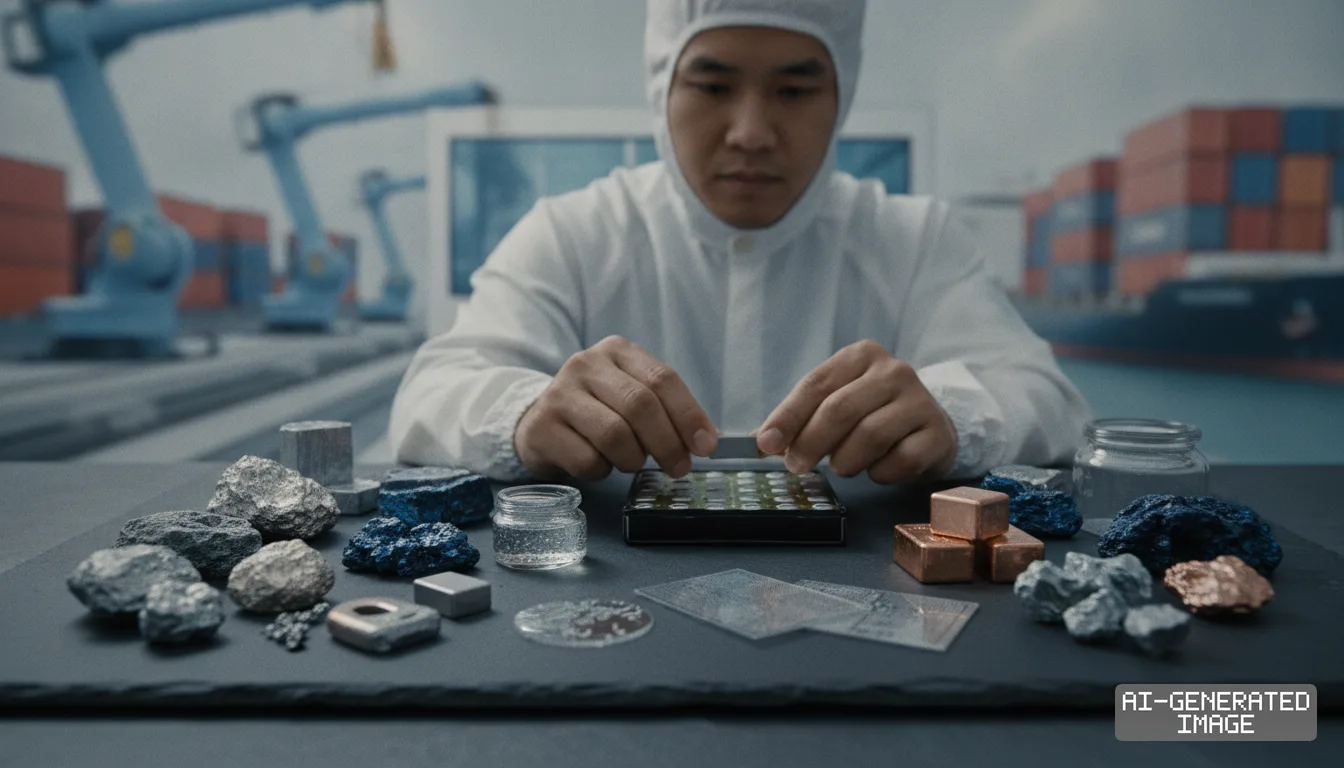
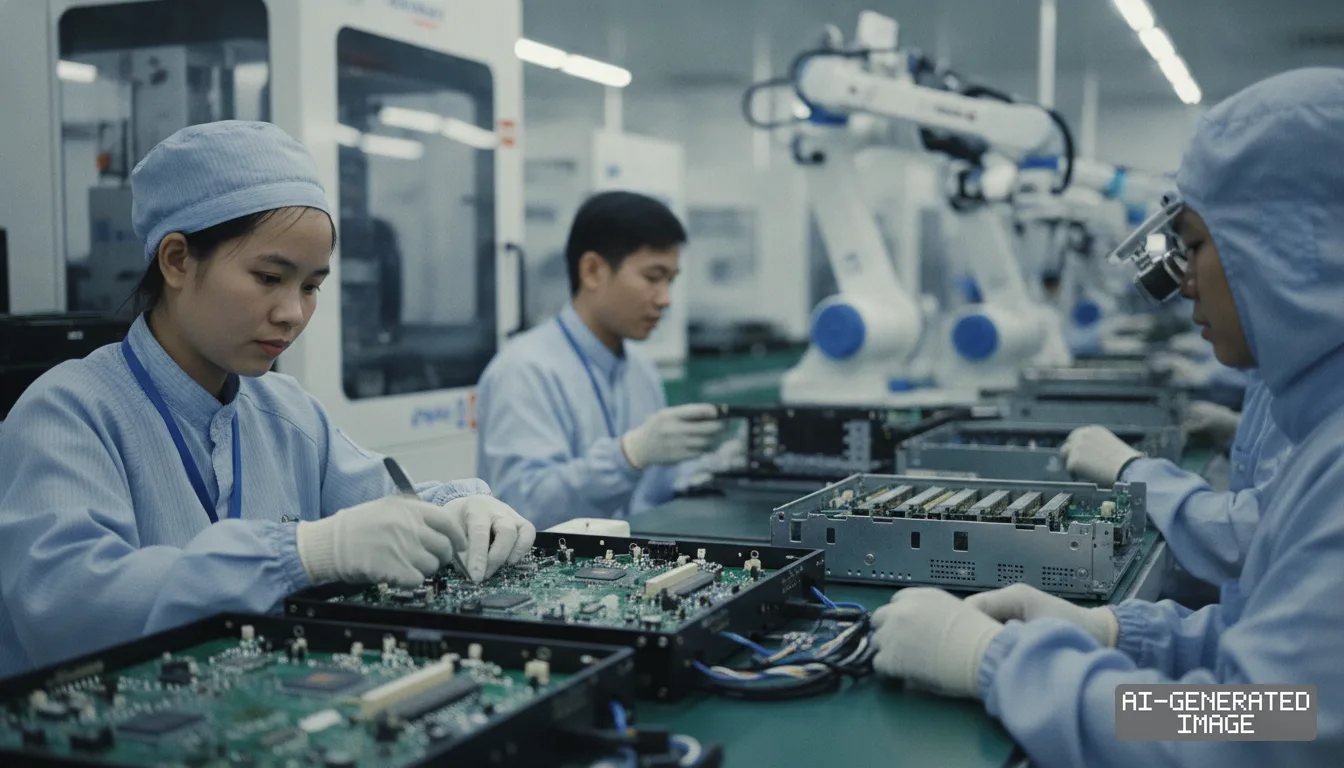
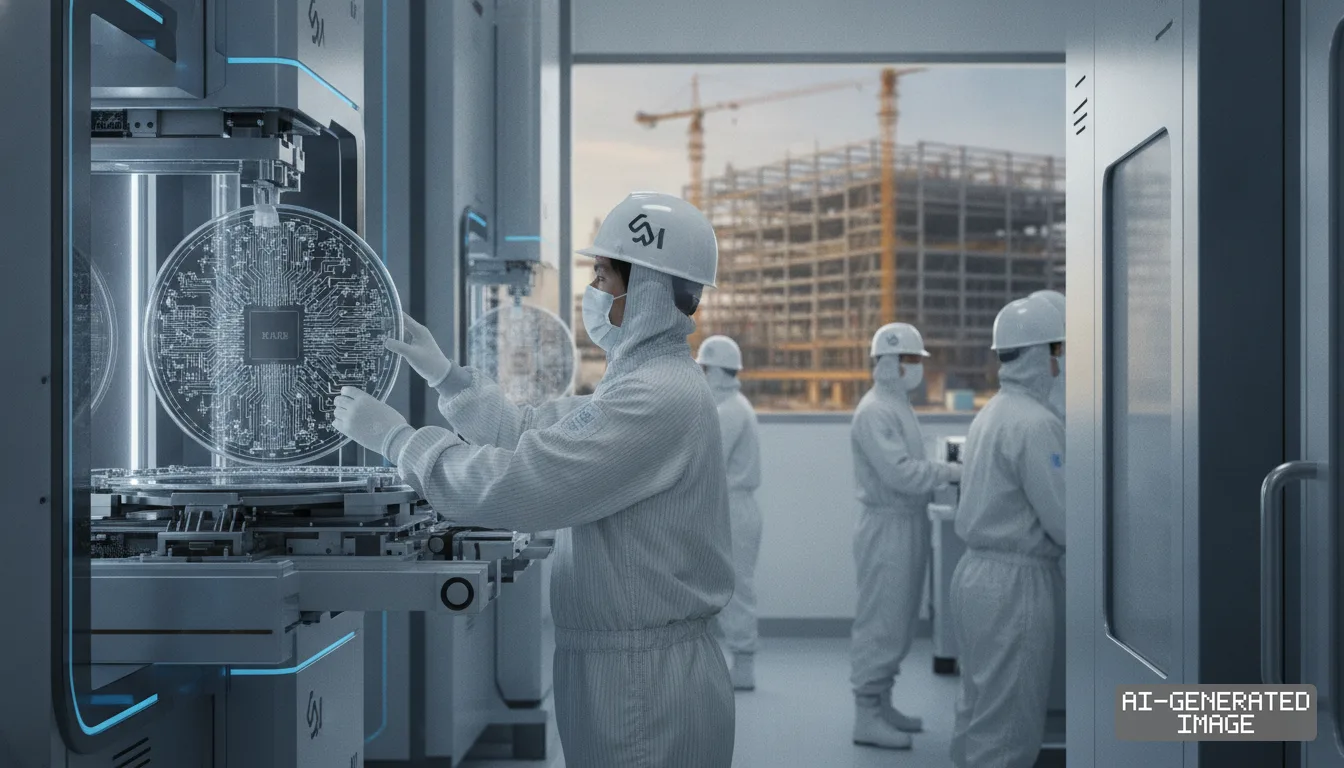
Taiwan reserves 531-hectare Shalun site for sub-1.4nm fabs
NSTC selects the Tainan site as Southern Taiwan Science Park expansion while island-wide leasable high-tech industrial land shrank to 119.95 hectares.
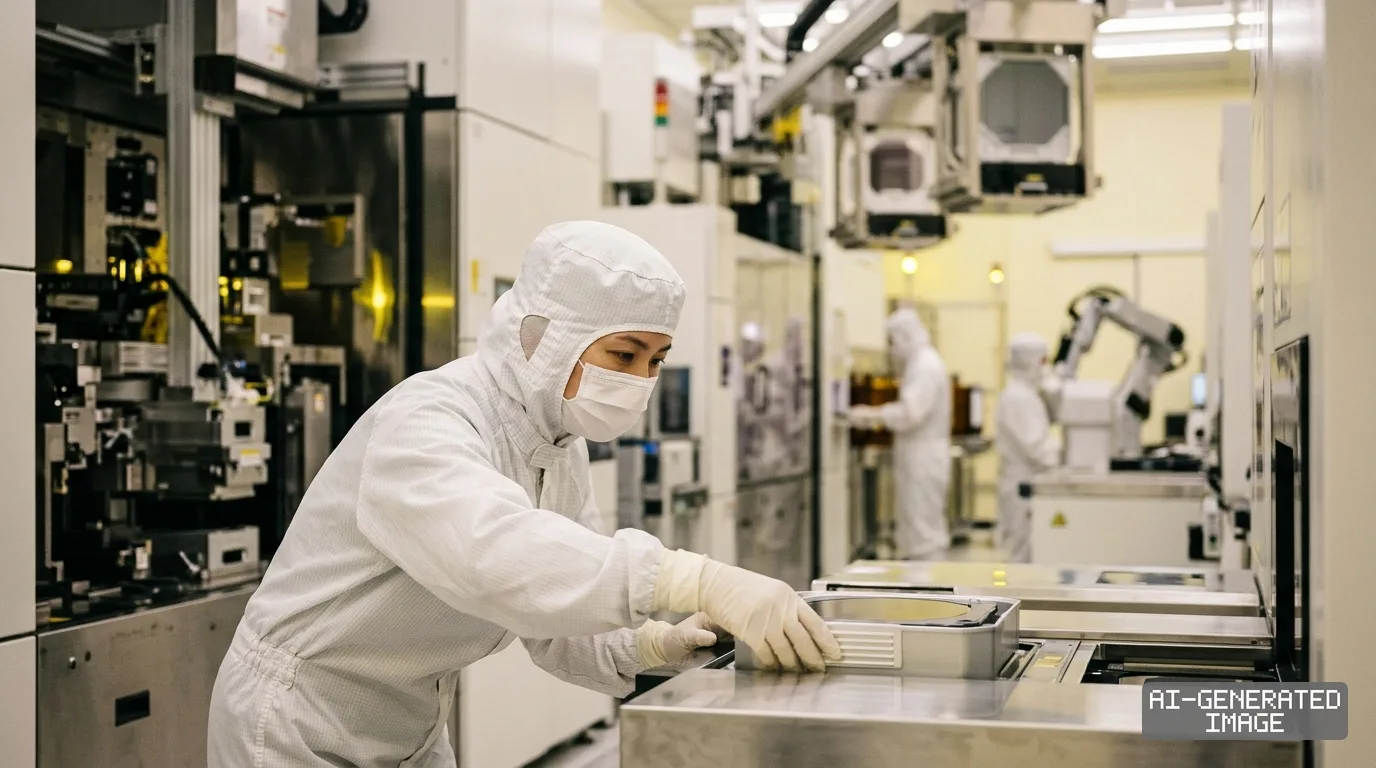
Taiwan designated the 531-hectare Shalun Ecological Science Park as its future production site for 1-nanometer chips on Nov. 5, 2026.
National Science and Technology Council Minister Wu Cheng-wen announced the selection during a legislative committee hearing in Taipei. The site serves as the fourth expansion phase of the Southern Taiwan Science Park.
The decision addresses a severe land shortage across the island's three major high-tech science corridors. Leasable industrial land fell to 119.95 hectares by Sept. 30, according to council records.
State planners designed the site to host wafer fabrication plants below the 1.4-nanometer node. Central Taiwan Science Park in Taichung currently prepares infrastructure for 1.4-nanometer production lines, Wu said.
The National Development Council already approved the feasibility assessment for the Gueiren District property. The Ministry of Economic Affairs cleared the required power and water allocation plans, Wu said.
The property now faces a second-stage environmental impact assessment. The review evaluates ecological protections for the eastern grass owl, an endangered raptor inhabiting the local grasslands.
The review must finish before July 2027 to allow ground clearance, Wu said. Meeting that mid-2027 target will allow civil construction to begin on schedule.
The government intends to build an integrated manufacturing cluster rather than an isolated semiconductor enclave. The park will accommodate intelligent robotics, advanced biotechnology and space technology hardware enterprises, Wu said.
Southern Taiwan hosts dense clusters of traditional metalworking, precision machining and industrial tooling factories. The policy aims to link these legacy suppliers directly to advanced satellite and spacecraft programs.
Small hardware producers can transition toward high-reliability aerospace components using artificial intelligence manufacturing tools, Wu said. Even traditional screw and fastener makers can enter satellite structural supply chains, he said.
TSMC operates its most advanced volume production lines in Tainan, Hsinchu and Taichung. The company fabricates all of its sub-5-nanometer wafers on domestic production lines.
Market analysts anticipate TSMC will build its planned Fab 25 complex at the Shalun park. The multi-phase facility would house six large fab modules running 1-nanometer manufacturing lines.
Government planners aim to shield advanced foundry lines from infrastructure bottlenecks in northern Taiwan. Southern regions offer larger contiguous land parcels and dedicated industrial water recycling plants.
TSMC has not issued a regulatory filing confirming the site, and the council did not disclose an estimated capital expenditure figure for the complex. The science park administration maintains that final site tenancy depends on corporate disclosures.
Central authorities previously endorsed the general development framework for the Gueiren property in December 2025. That administrative approval enabled utility planners to map high-voltage transmission feeds and raw water pipelines.
Industrial power supply remains a central constraint for cutting-edge lithography tools. Next-generation high-numerical-aperture extreme ultraviolet systems draw substantially more electricity than earlier optical scanners.
The Ministry of Economic Affairs secured power generation allocations through regional transmission upgrades. The agency also arranged treated industrial effluent to meet water reclamation mandates.
Taiwan plans to maintain domestic leadership in foundry operations even as domestic chipmakers build overseas factories. TSMC operates or constructs contract fabs in Arizona, Kumamoto and Dresden.
Domestic fabs will continue to lead offshore facilities by two process generations under national policy rules. Retaining 1-nanometer technology within Tainan preserves Taiwan's core manufacturing base, Wu said.
The council will submit its updated conservation mitigation plan to environmental regulators before the end of this year. Formal public hearings on the grass owl reserve boundaries will follow in early 2027.
Impact map
How this development propagates across the region and out to global buyers.
| Event | Korea | China | Japan | Global impact |
|---|---|---|---|---|
| Shalun 1nm science park designation | Samsung foundry faces wider node gap as Taiwan commits domestic land for sub-1.4nm lines | Domestic foundries remain cut off from leading EUV tools while Taiwan maps 1nm infrastructure | Tool suppliers including Tokyo Electron and Canon gain long-term delivery targets in Tainan | AI chip designers secure a designated production corridor for 1nm silicon tied to space hardware |
In this story
- Companies
- TSMC
- Tickers
- 2330.TW
- Impact
- CapexSupply Chain
Related briefings
- SMIC hits record $9.33B revenue as legacy nodes mask 7nm lag Also on TSMC
- Apple deploys TSMC 2nm nanosheet silicon across A20 Pro processor dies Also on TSMC
- Musk Yields to TSMC on Operating Control of $119B Terafab Plant Also on TSMC
- Nvidia halts H200 chip lines, shifting TSMC output to Rubin Also on TSMC
Sources
Reporting
Confidence: medium — how we grade this
The documents behind this briefing are linked above. East Asia Brief produces its English text with AI assistance under human editorial review, and does not translate or republish other outlets' articles. See our methodology and AI policy. Spotted an error? Tell us.
The Morning Brief
What changed in Korean, Chinese and Japanese industry overnight — and what it means for your supply chain. One email, weekday mornings, US time. Free.
The Morning Brief is in preparation. Leave your address and we will write to you once — when the first issue is ready. Nothing before that.