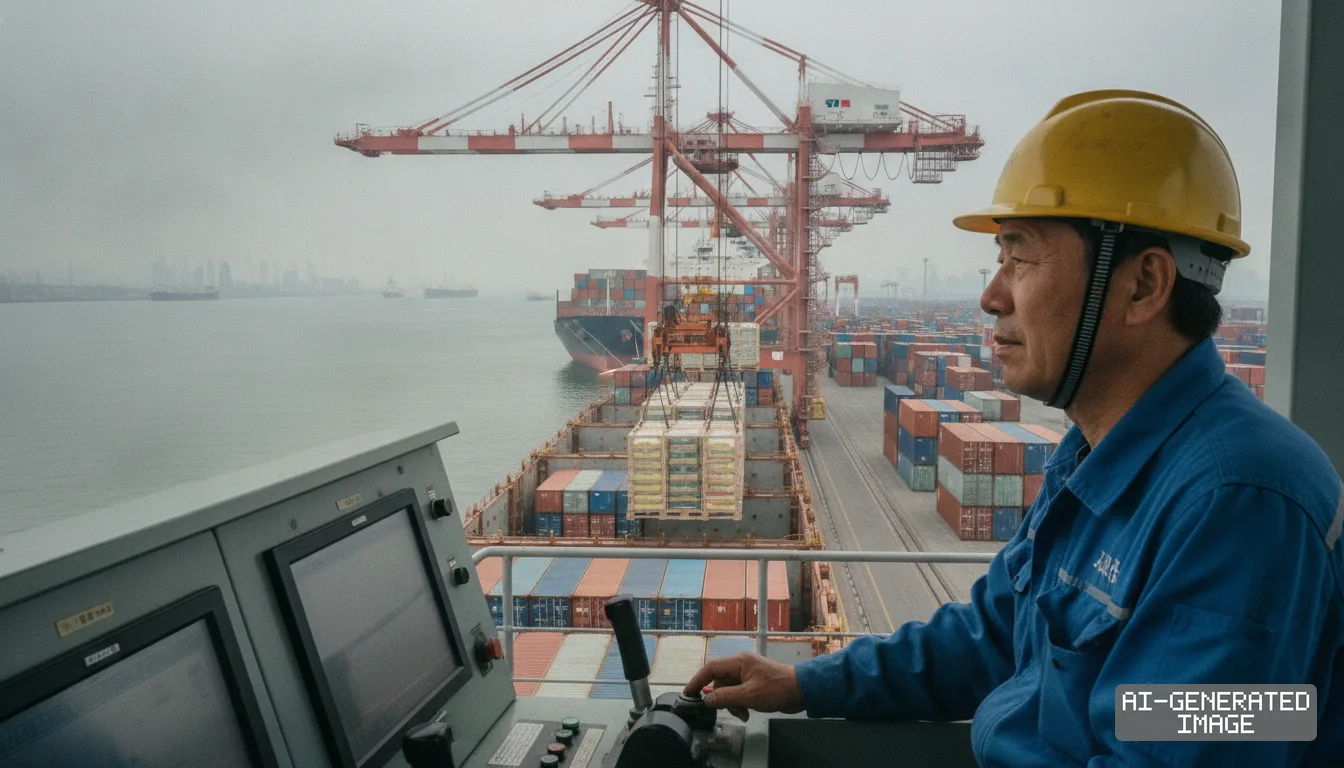
Syntec shares fall to daily limit despite export control reprieve
Taiwan's top CNC maker slid to 1,490 New Taiwan dollars as cross-strait trade jitters outweighed official exemptions for industrial tools.
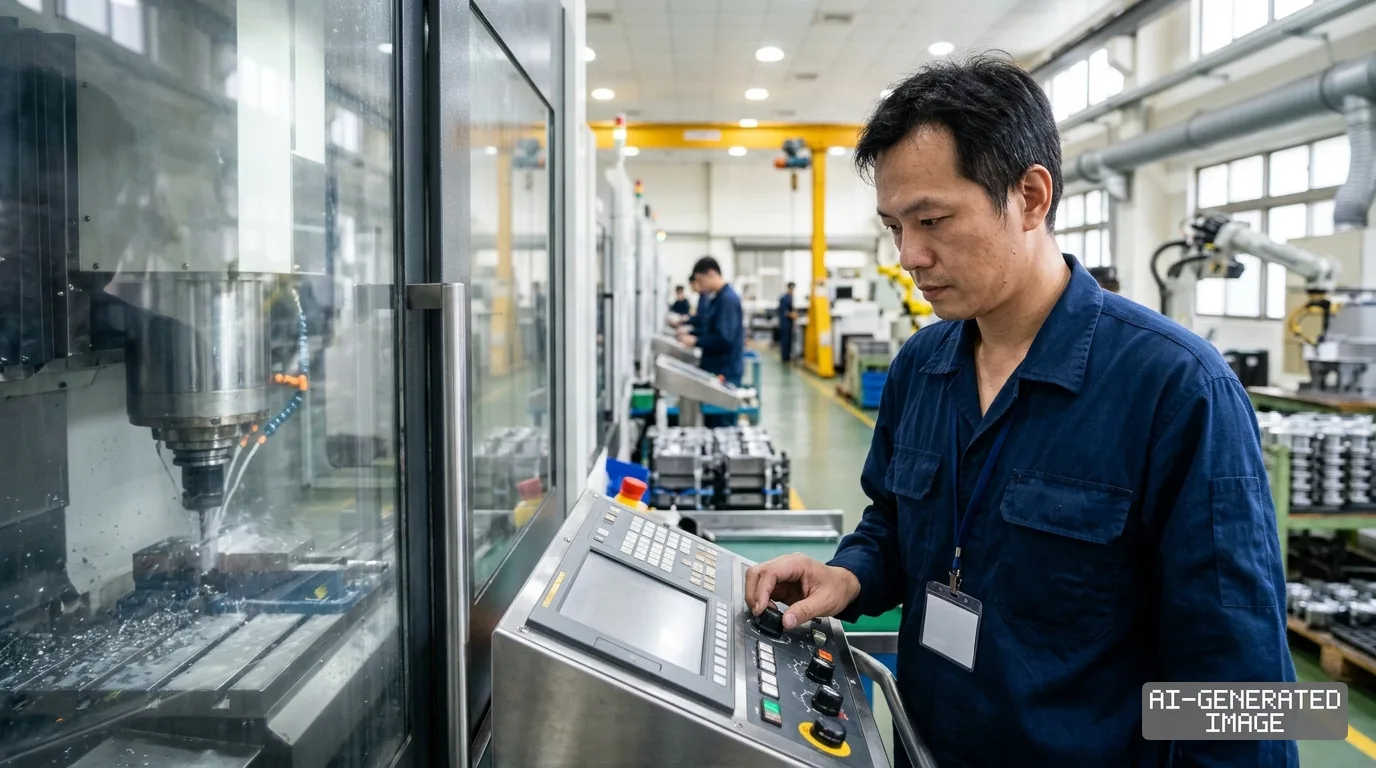
Syntec Technology shares plunged to Taiwan's daily 10% limit on Nov. 4, 2026, marking a second consecutive session of declines despite regulatory assurances on export rules.
The stock dropped 9.97%, or 165 New Taiwan dollars, to close at 1,490 TWD ($46.20). The slump followed an earlier slide to 1,835 TWD on Nov. 2, wiping out roughly 19% of the manufacturer's market capitalization across 48 hours.
Syntec controls the largest market share in Taiwan for computer numerical control systems, supplying motion controllers and servo drives that run precision industrial lathes and milling machines. The company generates the majority of its sales from equipment builders in mainland China.
The sell-off began after Taiwan's Ministry of Economic Affairs outlined plans to expand outbound export controls on advanced technology to China. The trade package aligns with bilateral commitments under the US-Taiwan Agreement on Reciprocal Trade and revisions to Taiwan's Foreign Trade Act.
Market participants reacted to initial briefings that referenced high-end machining gear, sparking fears of an impending ban on precision controllers. Peer machinery makers Tongtai Machine & Tool, Goodway and Awea Mechatronic also retreated during trading.
Taiwan's International Trade Administration stepped in on Nov. 2 to counter the panic. The agency clarified that the first wave of controlled items covers advanced semiconductors and related equipment rather than machine tools or general mechanical hardware.
Syntec issued a formal statement on Nov. 4 to address shareholder concerns. The company stated that outbound shipments consist of modular controllers and servo motors rather than completed, assembled machine tools.
Because Syntec supplies internal control systems and core subassemblies to local machine builders in China, the direct exposure to trade restrictions remains limited, the company said. Its components integrate directly into localized production lines across Jiangsu and Zhejiang provinces.
The sell-off highlights deep supply-chain anxieties across East Asian machinery corridors. Motion controllers act as the digital brain of modern automated tools, directing multi-axis cutting heads and precision spindle motors.
Precision machine tools have faced heightened scrutiny under multilateral control regimes like the Wassenaar Arrangement. Regulators treat five-axis simultaneous machining systems as dual-use goods because of their role in aerospace, missile and defense-tier manufacturing.
Taiwanese component suppliers have historically operated as cost-effective alternatives to Japanese incumbents such as Fanuc and Mitsubishi Electric. A regulatory freeze on Taiwanese control boards would compel Chinese machine builders to lean heavily on domestic substitutes.
Domestic Chinese controller specialists like Inovance and Huazhong CNC have expanded production lines, yet premium factories still rely on imported systems for sub-micron tolerance metal cutting. Any future export license bottleneck would raise retooling costs for regional manufacturers.
To insulate operations against trade friction, Syntec disclosed an overseas manufacturing migration plan. The company is building new operational plants across Asia to diversify production away from single-territory compliance barriers.
The expansion includes a second manufacturing site in Suzhou, a second plant in Malaysia and an assembly facility in India. These facilities will raise Syntec's overall output capacity to 2.6 times its current operating baseline.
Phased handovers for the new plants will commence in February 2027, the company said. The geographic footprint aims to serve growing automotive and electronics supply bases across Southeast Asia and South Asia.
Regional buyers are watching whether export screening criteria will expand beyond bare wafers and fabrication machinery to encompass precision factory hardware. Washington and its Asian partners have steadily widened the definition of sensitive manufacturing infrastructure.
The Ministry of Economic Affairs has not published the full schedule of Harmonized System tariff codes for future regulatory phases, and authorities have not settled whether digital motion controllers will face export licensing in subsequent revisions.
Syntec will hold its third-quarter investor conference on Nov. 13, 2026, where executive management plans to provide detailed divisional revenue breakdowns and direct cross-strait delivery figures.
Impact map
How this development propagates across the region and out to global buyers.
| Event | Korea | China | Japan | Global impact |
|---|---|---|---|---|
| Cross-strait motion control trade risks | CNC component importers assess secondary sourcing from Japan and domestic suppliers | Equipment builders face heightened compliance screening on Taiwanese controller modules | Fanuc and Mitsubishi Electric see increased inquiries for mid-tier automation controllers | Factory automation lead times risk extending if precision motion controls face export licensing |
In this story
- Companies
- Syntec Technology
- Tickers
- 7750.TW
- Exposed
- Tongtai Machine & ToolGoodway MachineAwea MechatronicFanucMitsubishi Electric
- Policy
- Export Controls
- Impact
- Supply ChainCompliancePricing
Track every Export Controls development →
Related briefings
- Japan accelerates grants for rare-earth-reduced robot motor magnets under economic security act Also on Mitsubishi Electric, Fanuc, Compliance
- China bars dual-use exports to Japan citing military end-use Also on Mitsubishi Electric, Export Controls, Compliance
- Mitsubishi Heavy Industries refines Mogami frigate design for Oceanian naval tenders Also on Mitsubishi Electric, Export Controls
- East Asia accelerates 8-inch silicon carbide capacity race as power chip makers scale output Also on Mitsubishi Electric, Pricing
Sources
Reporting
Confidence: medium — how we grade this
The documents behind this briefing are linked above. East Asia Brief produces its English text with AI assistance under human editorial review, and does not translate or republish other outlets' articles. See our methodology and AI policy. Spotted an error? Tell us.
The Morning Brief
What changed in Korean, Chinese and Japanese industry overnight — and what it means for your supply chain. One email, weekday mornings, US time. Free.
The Morning Brief is in preparation. Leave your address and we will write to you once — when the first issue is ready. Nothing before that.