TSMC probes rare-earth alternatives for fab automation tools
Taiwan's ITRI plans a 500-ton demonstration plant by 2030 to supply half of domestic demand as foundries assess supply risks from Chinese export controls on critical minerals.
Taiwan Semiconductor Manufacturing Company declined to comment Oct. 29 on inquiries into whether the foundry asked equipment vendors to eliminate rare-earth permanent magnets from fab automation systems.
China controls roughly 90% of global rare-earth refining and 95% of finished permanent magnets found in industrial machinery, according to International Energy Agency data.
Taiwan imports approximately 3,000 metric tons of rare-earth elements annually but produces none domestically, with more than 95% of those shipments originating from China.
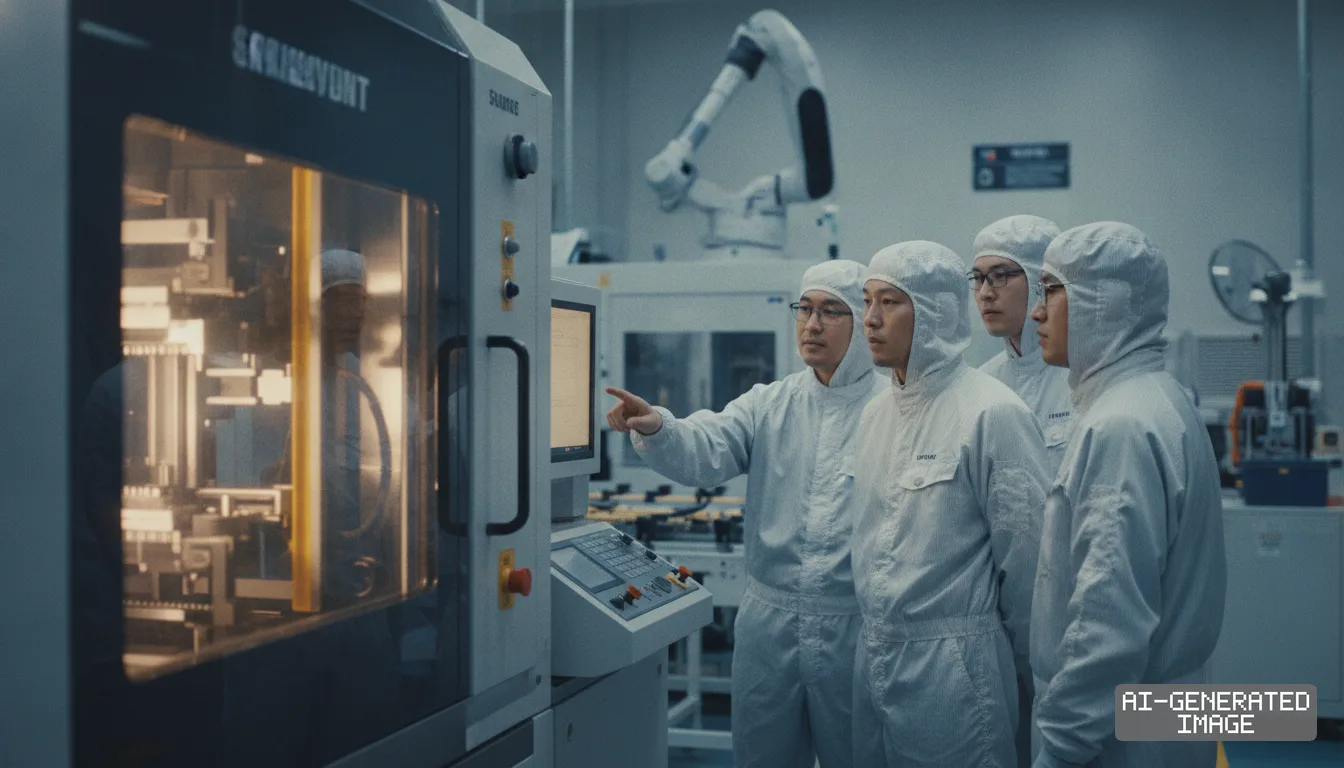
The foundry approached equipment suppliers to evaluate whether cleanroom automation machinery can run without rare-earth components, three executives familiar with the discussions said.
The supplier consultations reflect broader supply-chain reviews following Beijing's export licensing rules on heavy rare earths and permanent magnet technologies, according to international trade records.
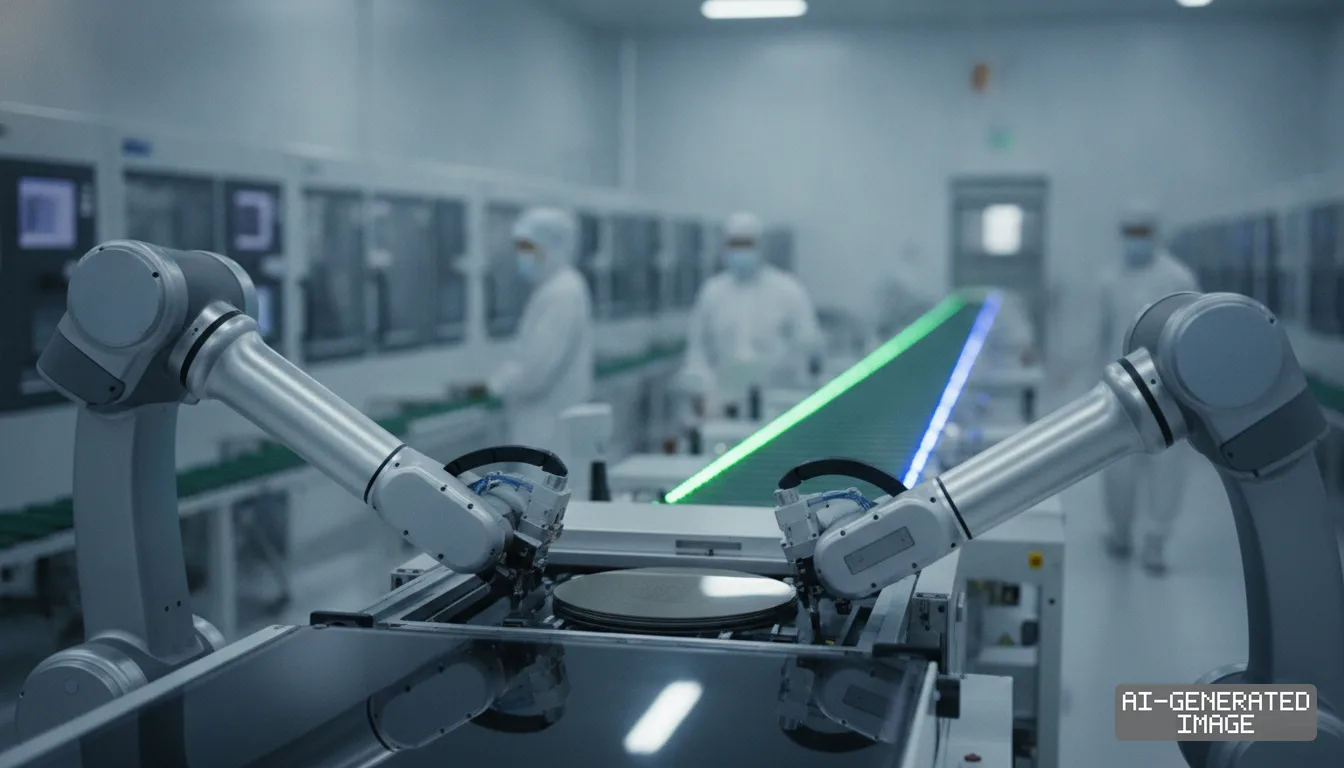
Semiconductor fabrication relies on overhead automated material handling tracks that ferry wafer containers across cleanrooms, according to factory automation engineers. The specialized transport vehicles operate continuously inside fabrication bays.
Electric servomotors in those vehicles depend on permanent magnets made from neodymium, dysprosium and terbium, industry technical disclosures show. The elements provide high torque in compact motor housings.
A scarcity of replacement motors or magnetic components could disrupt cleanroom operations even though silicon wafers consume very little rare-earth material directly, toolmakers said. Fab machinery remains the primary vulnerability.
Wafer fabrication itself uses small quantities of cerium compounds for chemical-mechanical planarization — the polishing step that levels wafer topography — and select dielectric films. Those chemical volumes remain modest compared to motor magnet requirements, researchers said.
Equipment vendors evaluated alternative motor designs that avoid rare-earth magnets, including induction systems and switched-reluctance motors, engineering documentation shows. Both approaches generate motion through electromagnetic induction rather than permanent magnetic fields.
Those alternatives carry operational trade-offs for high-precision cleanroom environments, tool engineers said. Induction motors generate higher heat and demand larger mechanical casings than permanent-magnet systems.
Ferrite magnets offer another design option without rare-earth elements, suppliers said. However, weaker magnetic flux density requires larger drive units that complicate tight cleanroom overhead layouts.
The vendor surveys remain exploratory, and TSMC has not launched a fleet-wide equipment replacement program across its domestic fabrication plants, three supplier executives said.
TSMC monitors the availability of rare earths, gallium and cobalt under its enterprise risk management framework, according to the company's regulatory filings. The foundry conducts periodic reviews of chemical and equipment sourcing.
The company has not published target volumes, procurement budgets or execution timetables for any critical mineral stockpiling initiative, public filings show. TSMC declined to confirm specific vendor discussions.
Taiwan's Ministry of Economic Affairs is subsidizing domestic separation and processing capacity to insulate the island's advanced industries from external export restrictions, government documents show.
The state-backed Industrial Technology Research Institute operates an experimental rare-earth processing line producing 5 metric tons annually at its Hsinchu campus. The facility tests chemical separation techniques and magnetic alloy formulas.
The research institute plans to build a demonstration plant capable of producing 500 metric tons per year, ITRI President Chang Pei-jen said. The project represents a hundredfold capacity expansion over current pilot output.
The planned 500-metric-ton output would meet roughly 50% of Taiwan's domestic industrial demand for targeted magnetic materials, Chang said. Demand across the island remains small in absolute tonnage but critical for electronics.
ITRI situated chemical separation and metal conversion equipment at its northern headquarters in Hsinchu, while placing high-grade magnet fabrication machinery at its southern campus in Tainan. Both facilities support pilot manufacturing trials.
Separating individual rare earths presents severe technical hurdles because adjacent lanthanide elements share nearly identical chemical properties, institute researchers said. Commercial purification requires hundreds or thousands of liquid-liquid extraction stages.
ITRI has demonstrated extraction technology that yields rare-earth oxides and refined metals at 99.9% purity in laboratory testing, according to institute technical papers. Pilot teams are now refining recovery rates.
The research institute developed recycling processes that recover neodymium and dysprosium from industrial waste streams, ITRI Materials and Chemicals Research Institute Managing Director Tsao Shen said. The method cuts chemical usage by 40%.
The research institute plans to construct the demonstration facility inside an established industrial park and eventually transfer operations to a private enterprise, institute officials said. Private operators will manage commercial delivery contracts.
Taiwan's National Science and Technology Council is reviewing funding for the facility, while officials evaluate government price guarantees for commercial investors to offset raw material price swings.
Taiwan and the United States broadened bilateral consultations on critical mineral resilience this year, American Institute in Taiwan officials said. Both sides seek diversified sources for rare-earth processing and magnet production.
ITRI scheduled construction of the demonstration processing facility for completion by the end of 2028, according to project timetables. The institute expects to refine chemical separation recipes through late 2030.
The government notice does not state which commercial partners will acquire the demonstration site, and TSMC has not published detailed engineering specifications for future equipment procurements.
Impact map
How this development propagates across the region and out to global buyers.
| Event | Korea | China | Japan | Global impact |
|---|---|---|---|---|
| TSMC fab equipment review | domestic fabs monitor cleanroom motor supply chains | controls 95% of magnet supply, maintains licensing rules | precision motor makers test non-rare-earth architectures | foundries face indirect machinery chokepoints from critical mineral curbs |
In this story
- Companies
- Taiwan Semiconductor Manufacturing Company
- Tickers
- 2330.TW
- Policy
- Export Controls
- Impact
- Supply ChainCapex
Track every Export Controls development →
Related briefings
- Taiwan bans illicit AI chip exports to China under revised trade act Also on Taiwan Semiconductor Manufacturing Company, Export Controls
- SMIC narrows foundry gap with Samsung as Q2 sales surge 20% Also on Taiwan Semiconductor Manufacturing Company, Export Controls
- TSMC Resumes SRAM Scaling with Sub-0.017 Micron Cell on A14 Node Also on Taiwan Semiconductor Manufacturing Company
- Samsung funds Texas chip labor with $22.8 million fab grant Also on Taiwan Semiconductor Manufacturing Company
Sources
Primary documents
Reporting
Confidence: high — how we grade this
The documents behind this briefing are linked above. East Asia Brief produces its English text with AI assistance under human editorial review, and does not translate or republish other outlets' articles. See our methodology and AI policy. Spotted an error? Tell us.
The Morning Brief
What changed in Korean, Chinese and Japanese industry overnight — and what it means for your supply chain. One email, weekday mornings, US time. Free.
The Morning Brief is in preparation. Leave your address and we will write to you once — when the first issue is ready. Nothing before that.