Makino Asia deploys AI machining centers from Singapore hub
The unit, which yields over 40% of Makino Milling Machine sales, is expanding Southeast Asian capacity to supply regional chip packaging lines.
Singapore's Economic Development Board detailed on Nov. 27 Makino Asia's deployment of AI-guided precision machining centers, anchoring regional machine-tool production to defend Japanese supply lines across Southeast Asia.
Makino Asia generates more than 40% of parent Makino Milling Machine's consolidated revenue, logging S$1 billion ($740 million) in annual sales across its regional manufacturing hub.
The Singapore base operates the Japanese builder's only international research center outside Japan, backed by S$75 million in initial development capital and over S$320 million in local capex across the past decade.
Tokyo-headquartered toolmakers face mounting pressure to shorten delivery timelines as global chip assemblers expand advanced packaging and testing capacity in Malaysia, Vietnam and Singapore.
Machine tools — computer-controlled cutting devices that shape metal molds and chip test sockets to micron tolerances — require local engineering support to prevent plant downtime.
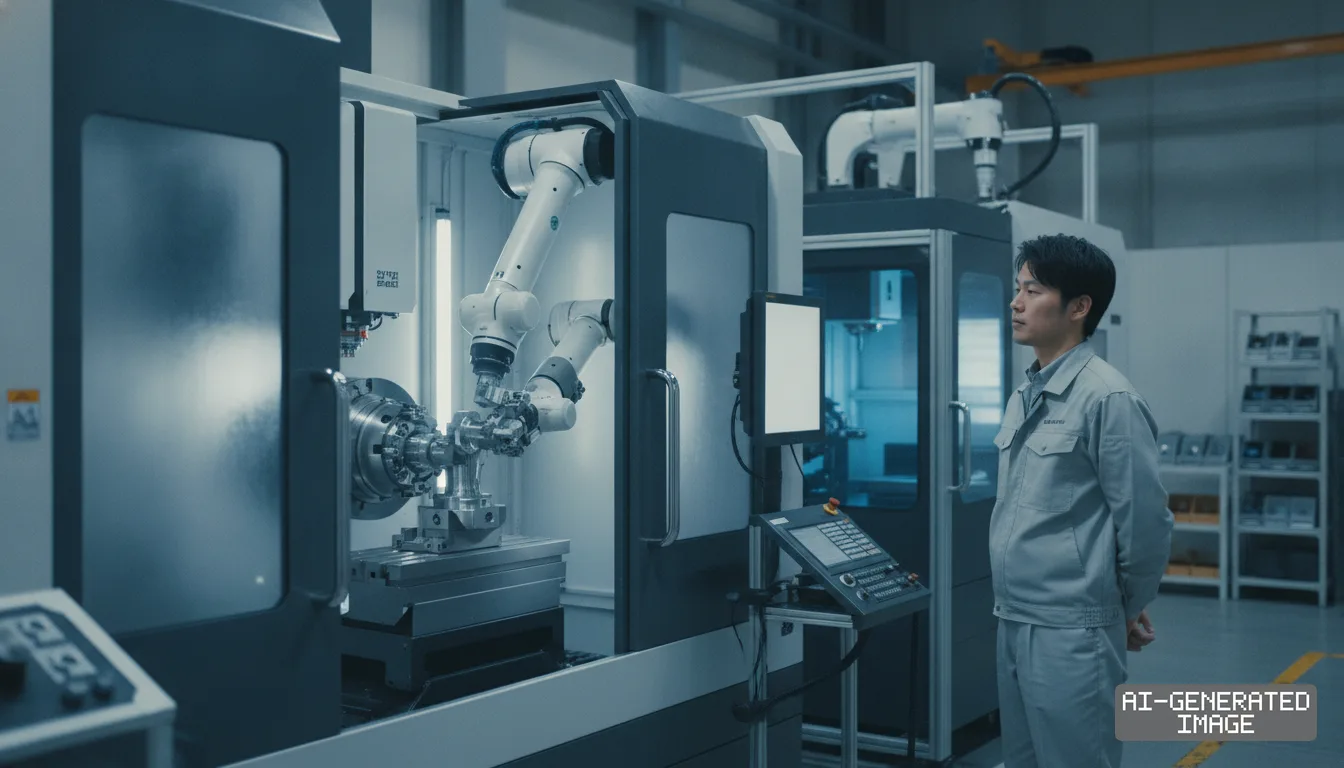
Makino Asia's flagship machine, the S50 vertical machining center, integrates digital sensory controls and automated thermal compensation to mill complex components for semiconductor equipment and electric vehicle components.
The tool runs proprietary algorithms to adjust spindle speed dynamically, cutting machining cycle errors in high-density lead frames and wafer handling systems.
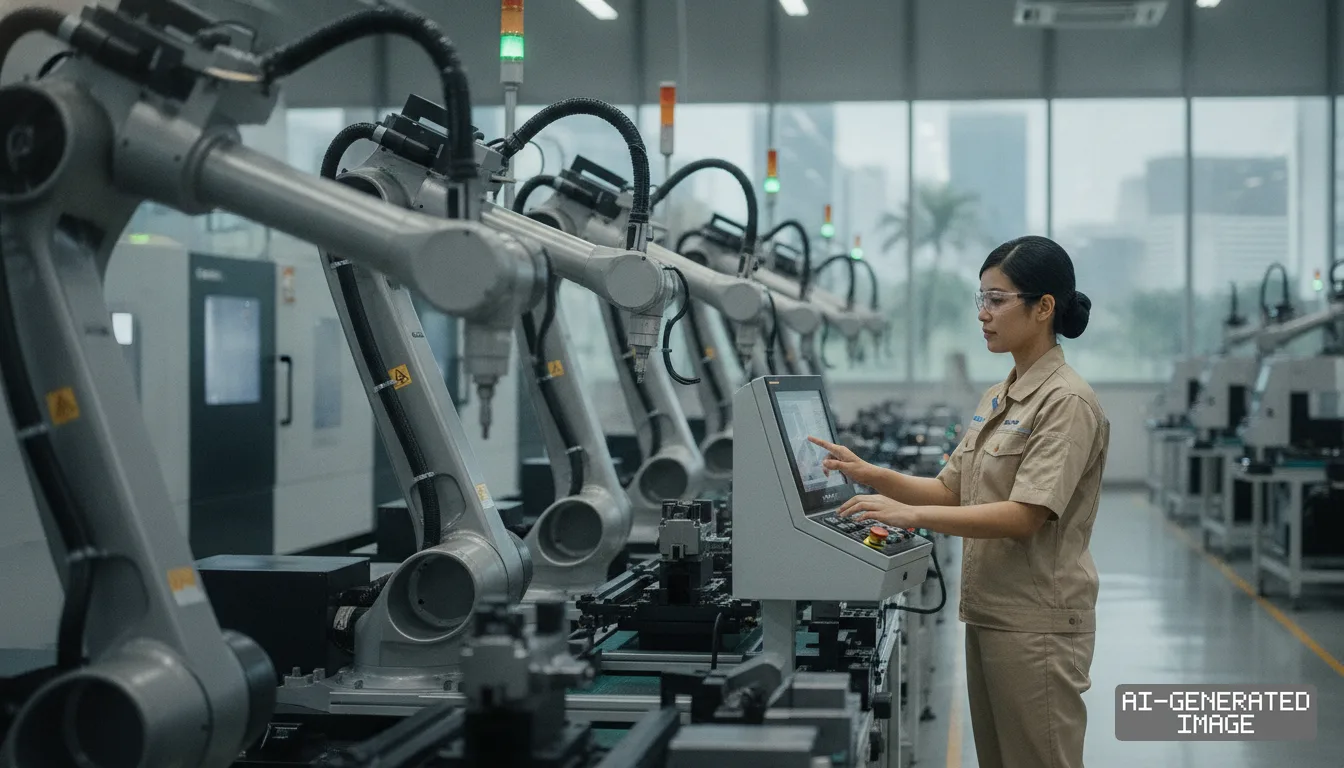
The manufacturer employs 1,700 workers across the Asia-Pacific network, with more than 500 engineers and technicians concentrated at its Jurong facility in western Singapore.
Makino Milling Machine books approximately 40% of its global revenue from Asia outside Japan, making the Southeast Asian assembly cluster its primary hedge against sluggish domestic demand.
Parent firm Makino Milling Machine trades on the Tokyo Stock Exchange under ticker 6135.T, relying on Asian operations to offset cyclical swings in Japanese auto tooling.
The Jurong plant also operates as a model smart factory, using chilled-water cooling loops to lower power consumption by 25% while lifting output per employee by 60%.
Onsite rooftop solar panels supply a fifth of the factory's electricity demand, lowering operational overhead as regional utility tariffs climb.
The facility supplies six secondary assembly plants and 13 technology centers scattered across China, India, Vietnam, Malaysia and the Philippines.
Japanese capital goods makers have historically concentrated critical five-axis milling development in domestic prefectures like Kanagawa and Shizuoka to protect core motion-control intellectual property.
Rising geopolitical friction and freight costs have accelerated Makino's decentralization push, transforming Singapore into an autonomous design authority for emerging ASEAN hardware platforms.
Precision engineering contributes over 10% of Singapore's total manufacturing value-added, anchored by government co-funding initiatives under the national Industry Transformation Map.
Local tool production shields regional semiconductor subcontractors from lengthy shipping queues for Japanese machine castings and ball screws.
The Economic Development Board record does not state whether a separate subsidy grant accompanied the recent release, and the agency has not published new deployment schedules beyond the initial beta-testing phase.
Regional supply contracts signed under the expanded machining architecture face their next delivery review in December 2026, when component suppliers finalize annual tooling allotments.
Impact map
How this development propagates across the region and out to global buyers.
| Event | Korea | China | Japan | Global impact |
|---|---|---|---|---|
| Regional precision tool deployment | no direct impact, Korean memory packaging maintains established domestic tool lines | Makino secondary plant in China faces competition from domestic CNC builders | Makino Milling Machine captures 40% of revenue outside domestic Japanese base | ASEAN semiconductor packaging backends shorten precision tooling lead times |
In this story
- Companies
- Makino AsiaMakino Milling Machine
- Tickers
- 6135.T
- Policy
- Subsidies
- Impact
- Supply ChainCapexOrder Book
Track every Subsidies development →
Related briefings
- Makino plans Karnataka expansion to boost Indian CNC tool manufacturing Also on Makino Milling Machine, Subsidies
- Proposed 15% US tariff spares Taiwan machine tools from heavy blow Also on Makino Milling Machine, Order Book
- Okuma opens $22M Charlotte hub to recondition CNC machine tools Also on Makino Milling Machine, Order Book
- Okuma pairs 5-axis machining tools with robots in 5.7m² cell Also on Makino Milling Machine
Sources
Reporting
Confidence: high — how we grade this
The documents behind this briefing are linked above. East Asia Brief produces its English text with AI assistance under human editorial review, and does not translate or republish other outlets' articles. See our methodology and AI policy. Spotted an error? Tell us.
The Morning Brief
What changed in Korean, Chinese and Japanese industry overnight — and what it means for your supply chain. One email, weekday mornings, US time. Free.
The Morning Brief is in preparation. Leave your address and we will write to you once — when the first issue is ready. Nothing before that.