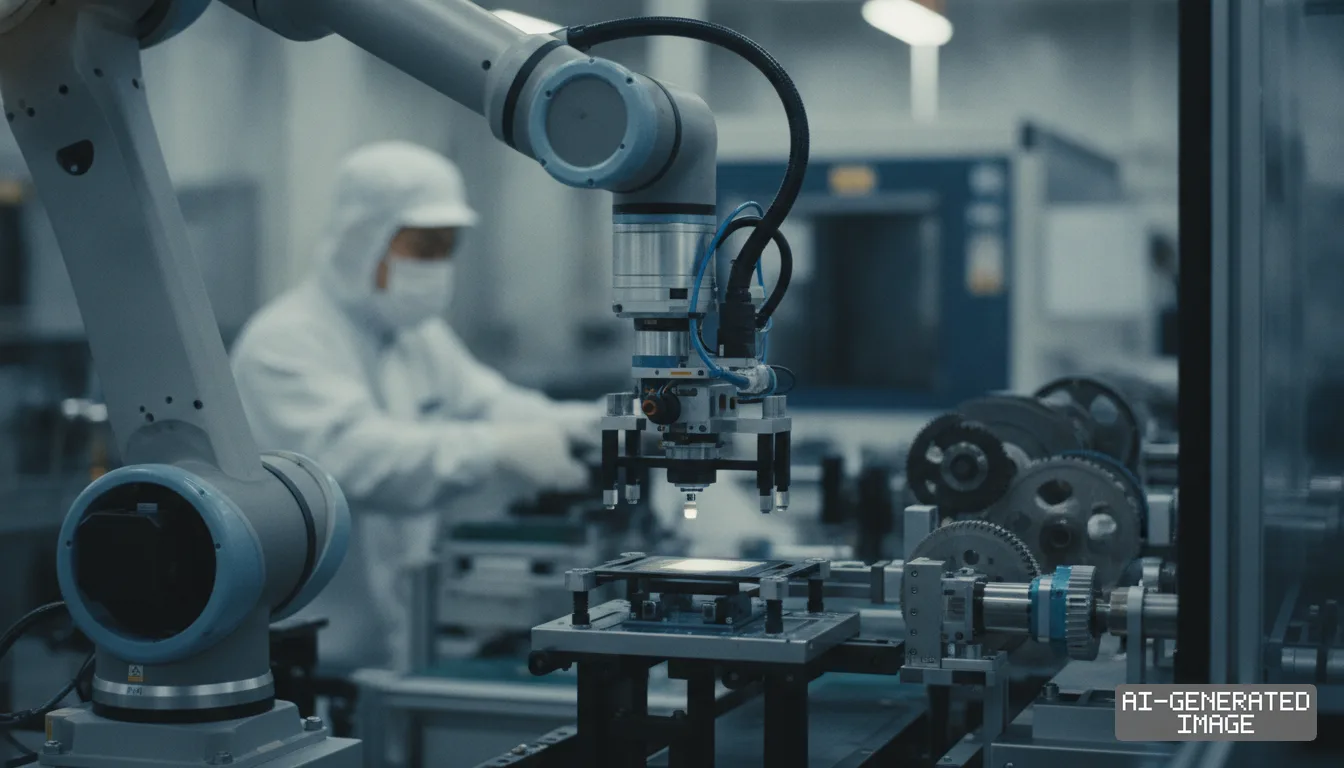
China updates robot reducer standards to replace foreign components
The SAMR guidelines target harmonic drive gears making up 35% of arm costs, raising fatigue thresholds ahead of an April 2027 enforcement deadline.
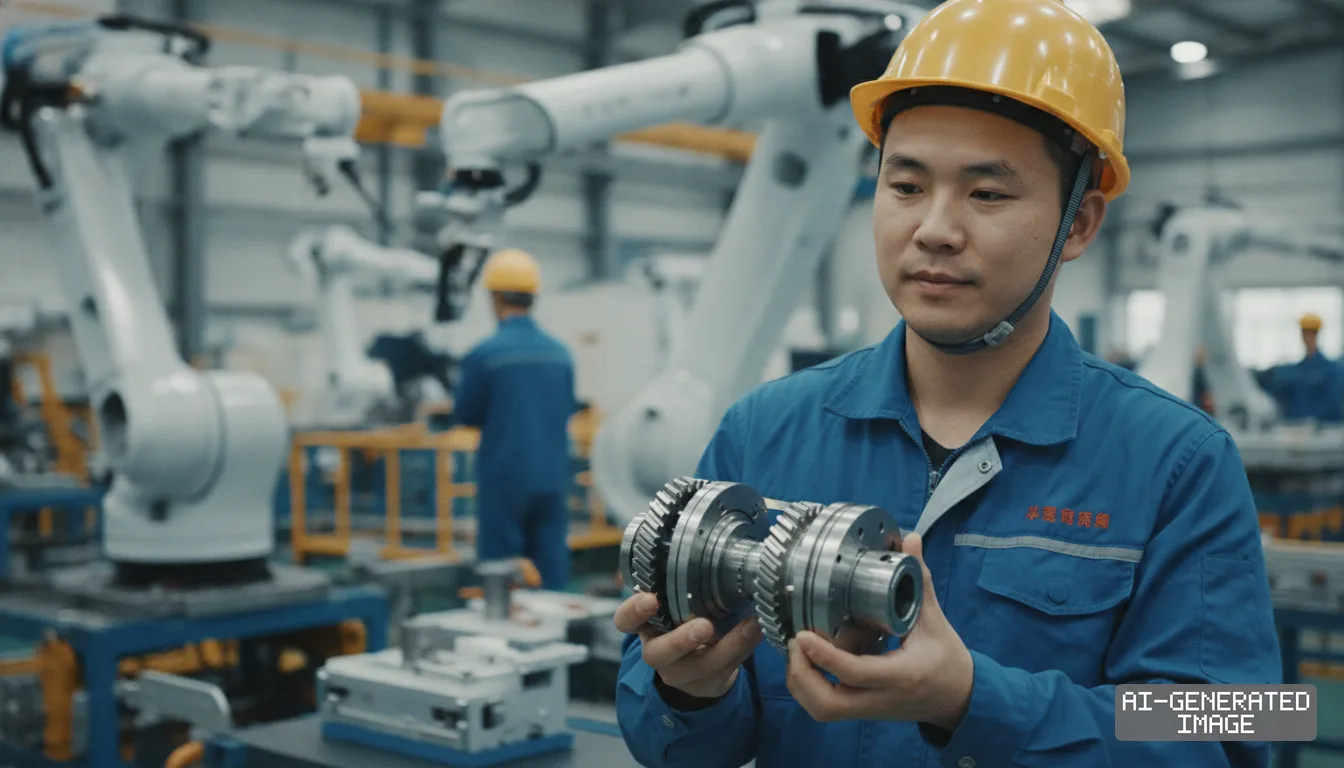
China's national standardization authorities released technical implementation guidelines on Nov. 11 for overhauled precision reducer standards governing industrial robot joints, the first regulatory update to the equipment rules in more than 30 years.
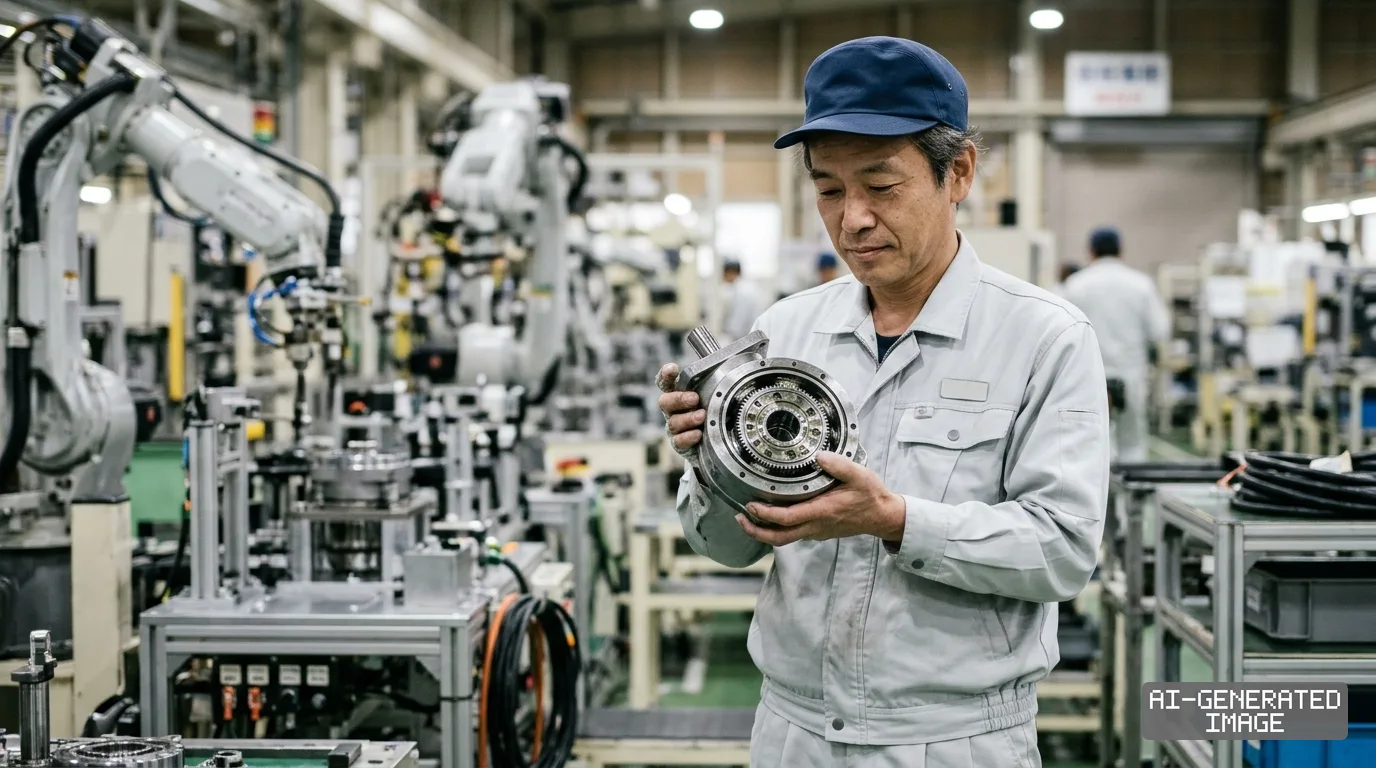
The updated framework targets harmonic drive gear systems, which represent roughly 35% of the bill of materials in multi-axis robotic arms. The State Administration for Market Regulation and the Standardization Administration of China promulgated the revised codes to accelerate domestic substitution of critical motion-control hardware.
The measures replace legacy guidelines dating back to 1990 and 1993. They raise lifetime fatigue requirements, transmission accuracy baselines and torsional rigidity thresholds across all robotic joint gearboxes sold in China.
China manufactures more than 50% of the world's industrial robots, but domestic robot builders still source high-end joint components from Japanese suppliers. The new testing regime forces robotics integrators to qualify local tier-1 precision components before the standards become mandatory on April 1, 2027.
Under the published specifications, harmonic gear drives must endure continuous dynamic load cycles without exceeding backlash drift limits of two arcminutes. The technical guidelines also establish unified interface dimensions for humanoid robot rotary actuators.
Leader Harmonious Drive Systems, which controls approximately 40% of China's domestic harmonic reducer market, helped draft the revised specifications alongside the National Reducer Standardization Technical Committee. The company generates more than 85% of its revenue from harmonic speed reducers supplied to industrial machinery and robotics builders.
Zhejiang Laifual Harmonic Drive, which accounts for roughly 12% of domestic harmonic reducer shipments and operates an annual capacity of 300,000 units, also participated in formulating the technical parameters. Both domestic manufacturers have expanded testing facilities to align production lines with the elevated national benchmark.
Foreign component suppliers face immediate qualification hurdles. Harmonic Drive Systems, the Japanese manufacturer that supplies roughly 30% of high-precision reducers used in Chinese automation factories, must recalibrate its testing documentation to match China's state-administered GB/T certification protocol.
Nabtesco, which holds over 50% of China's heavy-payload cycloidal RV reducer market, faces parallel pressure as domestic customers require component suppliers to present local standard verifications to preserve state procurement eligibility.
Chinese industrial automation buyers frequently bundle joint components into factory automation upgrade subsidies. The new standards require municipal procurement agencies to give preference to equipment certified under the revised codes.
Standardization working groups concluded technical review sessions in Shengzhou, Zhejiang Province, setting certification templates for automated test benches. Beijing University of Technology participated in validating the computational modeling methods used to calculate gear tooth fatigue limits under the new code.
The Ministry of Industry and Information Technology has not published a separate unilateral decree dated Nov. 11, and official regulatory filings do not list revised national standards for servo motors alongside the gear transmission rules. The published documents also do not specify whether imported replacement components cleared through customs before April 2027 will receive grace periods for non-compliant warranty repairs.
Compliance verification audits for component testing laboratories begin on Jan. 15, 2027, ahead of full enforcement on April 1, 2027.
Impact map
How this development propagates across the region and out to global buyers.
| Event | Korea | China | Japan | Global impact |
|---|---|---|---|---|
| China robot reducer standards overhaul | domestic automation lines review joint certifications for robotics exported to Chinese factories | Leader Harmonious and Laifual position to capture share from foreign precision gear suppliers | Harmonic Drive Systems and Nabtesco face higher compliance friction and re-testing costs in China | robotics supply chains diverge as Chinese factories enforce localized mechanical standards |
In this story
- Companies
- Leader Harmonious Drive SystemsZhejiang Laifual Harmonic Drive
- Tickers
- 688017.SH03952.HK
- Exposed
- Harmonic Drive SystemsNabtesco
- Policy
- StandardsProcurement Rules
- Impact
- Supply ChainOrder BookCompliance
Track every Standards development → Track every Procurement Rules development →
Related briefings
- Harmonic Drive lifts operating profit forecast to 10.2 billion yen Also on Leader Harmonious Drive Systems, Harmonic Drive Systems, Order Book
- SRI says robot harmonic drive reducer sales will hit $3.5B Also on Leader Harmonious Drive Systems, Harmonic Drive Systems
- Chinese precision reducer makers push into Southeast Asia to supply electronics assembly lines Also on Leader Harmonious Drive Systems, Harmonic Drive Systems
- Sumitomo Heavy completes ¥10B buyback early in robot precision pivot Also on Nabtesco, Harmonic Drive Systems, Order Book
Sources
Primary documents
Reporting
Confidence: high — how we grade this
The documents behind this briefing are linked above. East Asia Brief produces its English text with AI assistance under human editorial review, and does not translate or republish other outlets' articles. See our methodology and AI policy. Spotted an error? Tell us.
The Morning Brief
What changed in Korean, Chinese and Japanese industry overnight — and what it means for your supply chain. One email, weekday mornings, US time. Free.
The Morning Brief is in preparation. Leave your address and we will write to you once — when the first issue is ready. Nothing before that.