China Pushes 100,000 Humanoids as Magnet Supply Pinches in 2026
Expanding actuator production requires up to 3.5 kilograms of neodymium magnets per machine, spreading heavy rare earth refinery pressure beyond electric vehicles into industrial robotics.
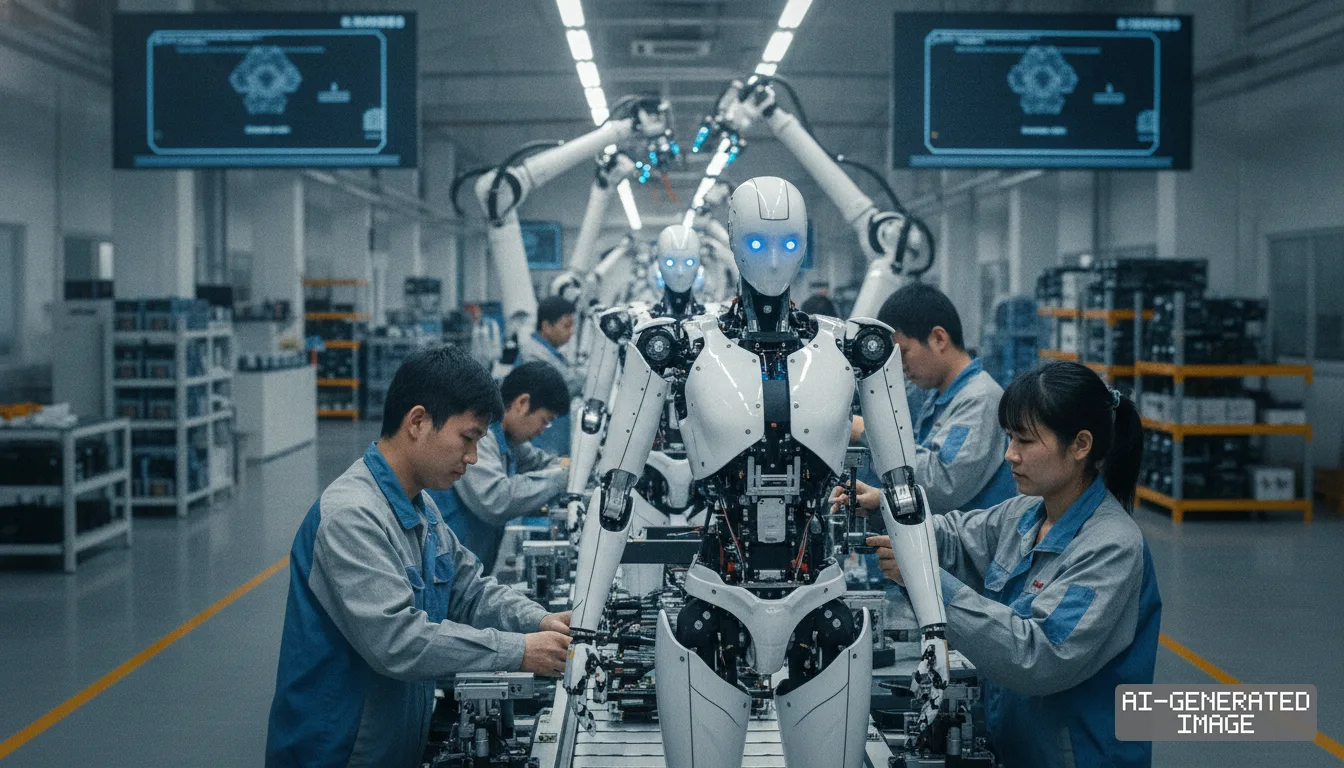
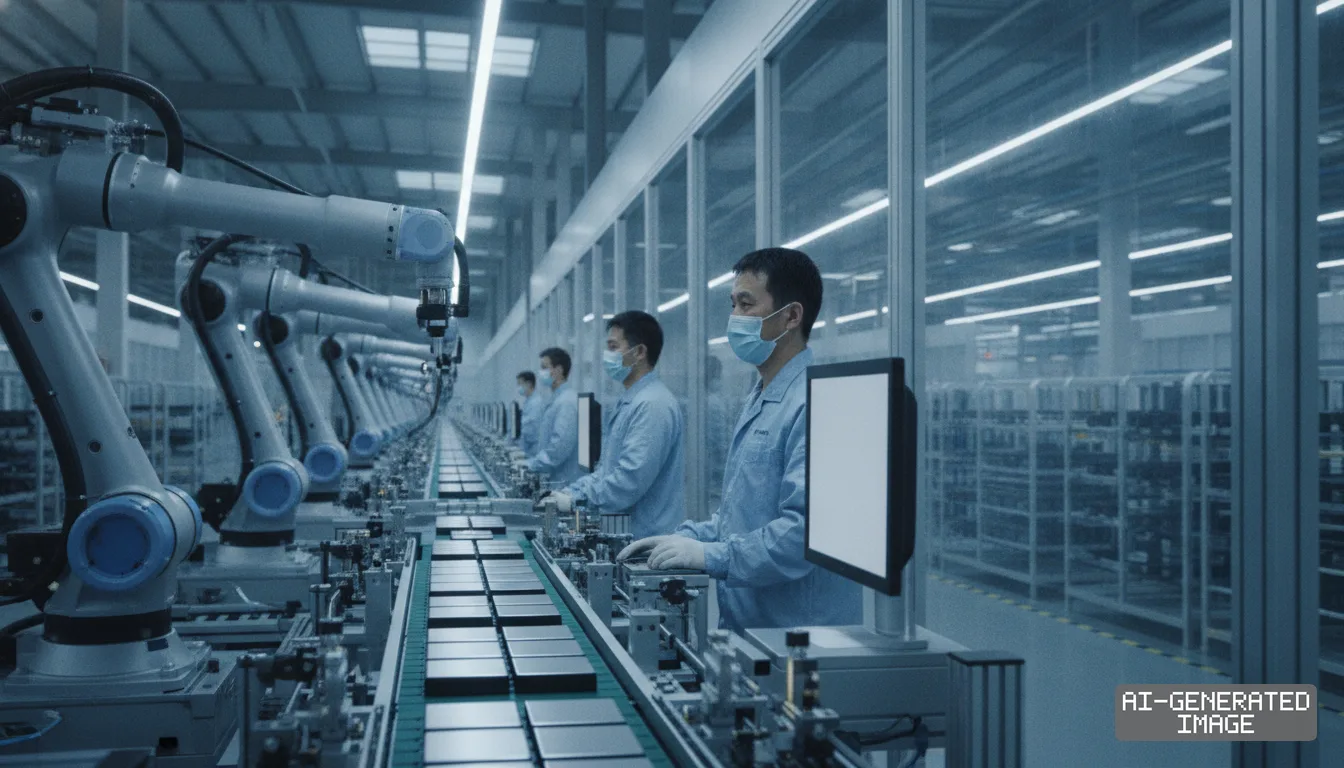
China's Ministry of Industry and Information Technology said Oct. 20 that domestic factory lines will build more than 100,000 humanoid robots during 2026, accelerating industrial pilot deployments across the country.
The volume milestone follows a pilot surge during the first six months of the year. Chinese manufacturers released more than 400 complete robot models and assembled over 40,000 units in the first half.
Industrial operators have already placed those pilot machines into active validation across more than 300 designated logistics, warehousing and manufacturing facilities. Government planners intend to use factory data to calibrate commercial mass assembly.
Each humanoid robot requires between 30 and 40 individual joint actuators to mimic human motion. That mechanical density requires 1.3 to 3.5 kilograms of high-performance neodymium-iron-boron permanent magnets per finished machine.
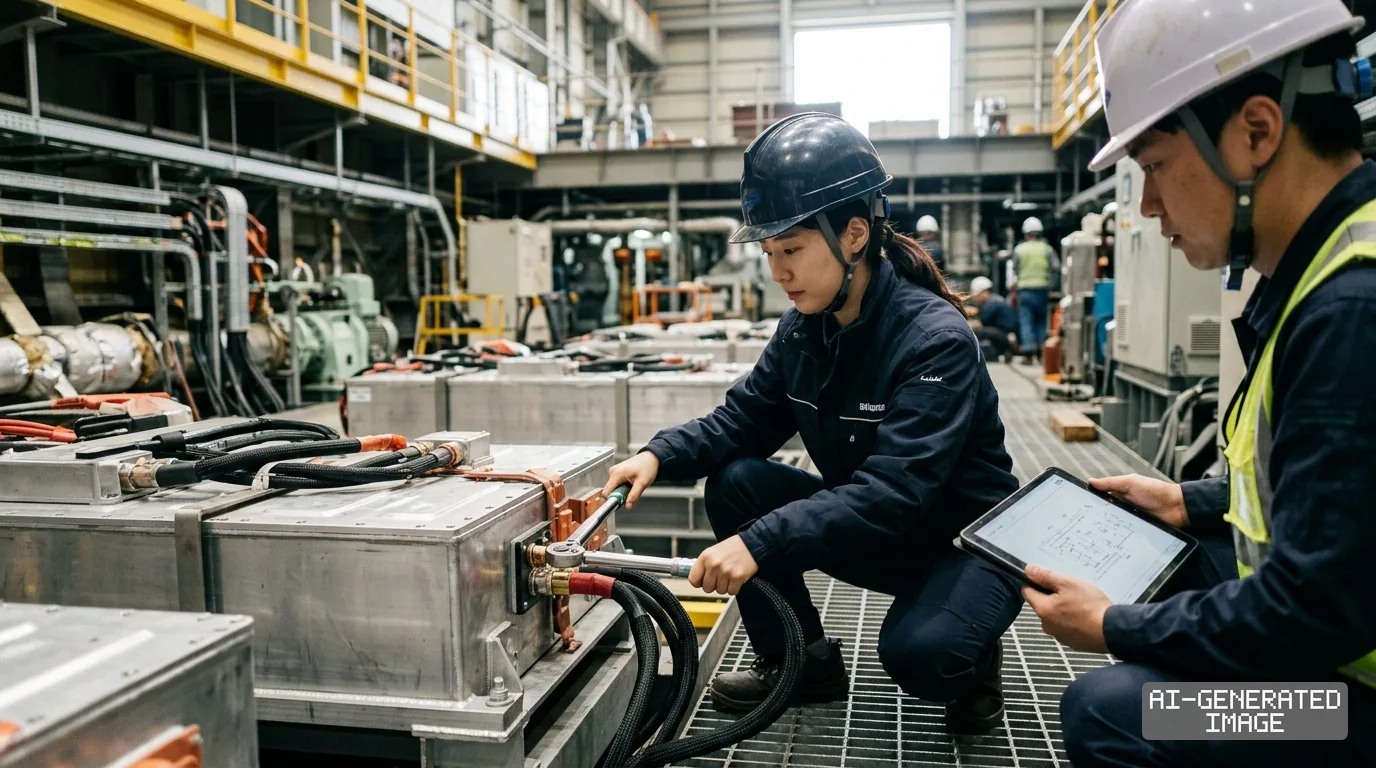
Permanent-magnet synchronous motors inside the joints generate continuous torque within confined limbs. The high operational heat of joint assemblies requires permanent magnets alloyed with dysprosium and terbium to prevent thermal demagnetization during factory shifts.
Heavy rare earth additions ensure that magnetic actuators maintain strength under prolonged motor loading. Without dysprosium, joint motors risk permanent field decay when internal operating temperatures climb inside sealed mechanical enclosures.
China controls virtually all global separation capacity for heavy rare earths. The concentration gives domestic magnet producers immediate access to refined dysprosium while leaving overseas motor builders exposed to raw material availability.
Electric vehicle traction motors previously formed the primary industrial growth driver for heavy rare earth magnets. A standard passenger electric car consumes roughly two to three kilograms of sintered neodymium magnets within its drive units.
Humanoid robot production now establishes a competing manufacturing channel for the exact same sintered rare earth grades. Expanding humanoid assembly lines absorb refined alloy volumes that would otherwise flow directly into vehicle propulsion programs.
Policy coordination in Beijing is accelerating that internal resource reallocation. The State Council Information Office published the robotics manufacturing data alongside a multi-agency commerce guideline approved by nine ministries, including the Ministry of Commerce.
The joint initiative deploys a 60 billion yuan ($9 billion) National AI Industry Investment Fund to finance commercial automation rollouts. The fund subsidizes procurement and factory line integration for early industrial adopters.
German automotive and industrial supplier Schaeffler responded directly to that production surge. Schaeffler opened a 7,500-square-meter lighthouse robot factory in Taicang, China, on Oct. 20.
The German supplier booked roughly 400 million euros ($435 million) in cumulative humanoid robotics component orders through the third quarter. Schaeffler is manufacturing linear and rotary actuator modules at the Taicang complex.
Six humanoid machines already work across five assembly stations on the Taicang line. The robots handle parts sorting, component joining and inspection tasks to build joint modules for external robotics customers.
Western material processors are attempting to establish parallel magnet capacity outside Chinese processing corridors. Canadian processor Neo Performance Materials signed an agreement Oct. 20 under the European Union's Innovation Fund.
The European Climate, Infrastructure and Environment Executive Agency awarded Neo a grant of up to 126 million euros ($141 million). The capital supports the GAUSS supply-chain project based in eastern Estonia.
Neo plans to expand its permanent magnet manufacturing capacity in Narva, Estonia, by up to 3,000 metric tons per year. The expansion lifts total annual site capacity from 2,000 tons toward 5,000 metric tons.
The Estonian project integrates heavy rare earth separation at Neo's Silmet facility in Sillamäe with downstream magnet sintering in Narva. That integration aims to supply European robot motor builders without relying on Chinese processing plants.
European automation integrators face a multi-year gap before those regional processing assets reach commercial volume. Western actuator manufacturers remain dependent on imported Chinese sintered magnet blocks to build precision rotary drives.
Japanese precision motion suppliers face similar margin exposure. Japanese builders of harmonic reducers and servo motors depend on Chinese refiners for refined heavy rare earth feedstocks, leaving their component costs tied to domestic Chinese pricing.
South Korean robot developers import finished permanent magnets for joint actuators, having no domestic heavy rare earth separation refineries. Rising raw material procurement costs compress margins for Seoul-based robotics integrators competing against vertically integrated Chinese assembly lines.
The notice does not state total consumption volumes of dysprosium and terbium for robotics, and the ministry has not published specific rare earth quota allocations for humanoid makers.
China's Ministry of Industry and Information Technology scheduled the formal release of the National Humanoid Robot Industry Standard System Construction Guidelines before the end of December 2026.
Industrial pilot sites across 10 Chinese provinces continue reporting operational workload and component degradation metrics under daily factory shifts.
Sources
Primary documents
Reporting
The documents behind this briefing are linked above. East Asia Brief produces its English text with AI assistance under human editorial review, and does not translate or republish other outlets' articles. See our methodology and AI policy. Spotted an error? Tell us.
The Morning Brief
What changed in Korean, Chinese and Japanese industry overnight — and what it means for your supply chain. One email, weekday mornings, US time. Free.
The Morning Brief is in preparation. Leave your address and we will write to you once — when the first issue is ready. Nothing before that.