# US blocks covert AI chip routes after $4.1B China diversion
*The Bureau of Industry and Security barred remote data-center access on Nov. 19 after an intermediary routed 17,454 GB300 systems through Southeast Asia.*
**Published:** November 22, 2026
**By:** Hao Feng
**Section:** Trade & Industrial Policy — China
**Format:** Policy Tracker
**Confidence:** high
**Source:** https://eastasiabrief.com/trade-policy/us-blocks-covert-ai-chip-routes-4-1b-china-1666
**Publisher:** East Asia Brief (https://eastasiabrief.com/)
---
## What to know
- Bureau of Industry and Security rule cuts remote compute access from Nov. 19
- Megaspeed imported $4.13 billion in Nvidia systems across Southeast Asia
- House committees set transcribed compliance interview for Dec. 1
China's Ministry of State Security ran a dedicated unit under Minister Chen Yixin to acquire restricted artificial intelligence semiconductors through overseas intermediaries, government security officials said on Nov. 22.
The civilian security ministry coordinated the acquisition effort across international transshipment hubs. The two-year campaign focused on procuring advanced graphic processors that accelerate neural network training for strategic computing programs.
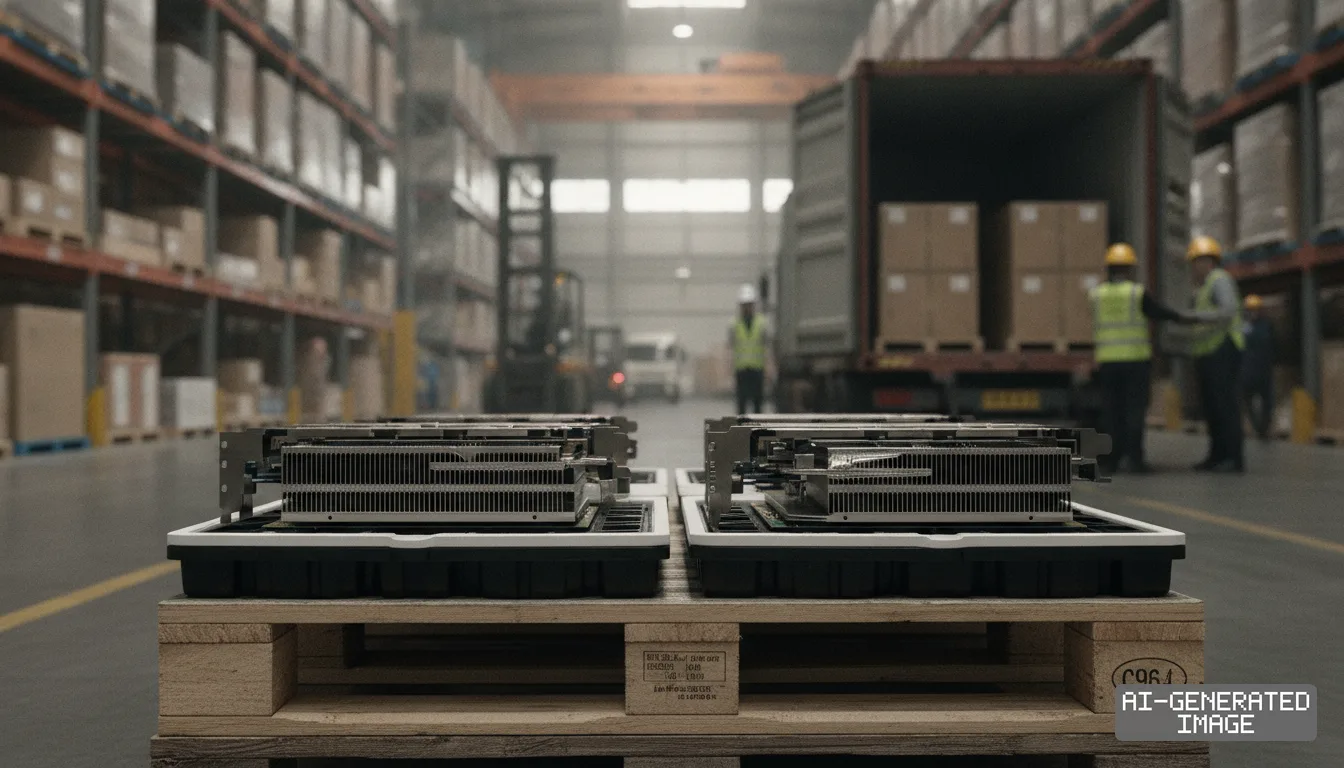
Megaspeed International, a computing broker registered in Singapore, imported $4.13 billion of Nvidia hardware between May 2024 and February 2026. The purchases included 17,454 units of GB300 systems valued at $787 million in November 2025.
The distributor originally operated as 7 Road International before renaming itself in 2023. The company shifted from digital gaming services to high-performance computing infrastructure, securing large allocations of restricted accelerator boards.
Singapore law enforcement authorities charged Chinese national Li Ming with fraud in connection with the procurement ring. Investigators identified Li as a key coordinator managing shell companies that moved hardware toward Chinese end users.
Former Megaspeed executive Alice Huang managed supplier accounts before Singapore police seized her travel credentials. Regulators subsequently prohibited Huang from re-entering the country after joint inquiries revealed unapproved hardware diversions.
The U.S. Department of Commerce and Singapore police inspected Megaspeed distribution warehouses in June 2025. Auditors identified an inventory discrepancy of roughly 50,000 chips between Nvidia sales manifests and physical warehouse shelves.
Nvidia placed Megaspeed on its internal restricted sales list in June 2025, terminating all pending component deliveries. The U.S. Department of Justice subsequently assumed direct control of a federal criminal investigation into the network.
The Bureau of Industry and Security published an interim final rule on Nov. 19 titled Addressing Remote Access to Advanced Semiconductors. The federal regulation took effect immediately upon publication.
The regulation prohibits foreign data centers from providing remote cloud compute access to entities based in China. The measure closes an enforcement gap that allowed overseas facilities to host models for restricted clients.
Commercial cloud facilities situated in Singapore, Malaysia, Thailand, Indonesia and Brazil must now enforce Know-Your-Customer identity mandates. Facility operators must document the geographic origin of server traffic before granting remote GPU access.
The Commerce Department also enacted extraterritorial licensing requirements on contract silicon fabricators. Foreign semiconductor foundries using American manufacturing equipment or electronic design software must obtain U.S. export licenses before processing advanced wafers for Chinese firms.
Taiwan Semiconductor Manufacturing Co. and Samsung Electronics suspended fabrication orders for multiple Chinese chip design firms following the rule. Both foundries instructed design customers that sub-seven-nanometer production runs require explicit U.S. regulatory clearance.
Nvidia announced on Nov. 17 that its board of directors established a National Security and Export Control Oversight Committee. Independent director Suzanne Nora Johnson chairs the newly appointed board committee.
The panel also includes Nvidia board members Stephen C. Neal and John O. Dabiri. The committee meets quarterly to review trade compliance standards and evaluate international customer vetting procedures.
Nvidia restructured internal management lines so that its National Security and Global Trade Compliance teams report directly to the committee and interim chief executive Colette Kress. Management retained outside legal advisors to support the committee.
Southeast Asian data-center operators have begun severing compute access for Chinese enterprise customers. Regional hosting brokers in Malaysia and Singapore are remarketing B300 and H100 clusters to Western buyers to replace lost lease revenue.
Enterprise server integrators including Dell Technologies, Hewlett Packard Enterprise, Lenovo Group and Super Micro Computer face rising regulatory compliance overhead. The manufacturers are auditing signed server contracts to incorporate end-user identity screening costs.
Cross-border freight inspection has expanded along the logistics corridor connecting Singapore and Malaysia. Enforcement agencies in both nations are auditing server shipments across the Johor Strait to prevent illicit hardware re-export.
The Chinese government has published no official documents regarding covert semiconductor procurement, and U.S. indictments have not confirmed whether Chen Yixin directly authorized Megaspeed's purchasing contracts.
Three committees of the U.S. House of Representatives scheduled a transcribed interview regarding corporate export compliance for Dec. 1. Regional cloud data centers must submit initial customer identity compliance filings by Dec. 31.
## Impact map
| Event | Korea | China | Japan | Global impact |
| --- | --- | --- | --- | --- |
| Remote compute export controls | Samsung Electronics halts sub-7nm foundry runs for Chinese fabless accounts | AI developers lose overseas data-center access and Megaspeed procurement channels | Server component suppliers absorb customer identity compliance screening delays | Enterprise server assemblers reprice signed contracts as cluster leasing tightens |
## In this story
- **Companies:** Nvidia, Megaspeed International
- **Tickers:** NVDA
- **Exposed:** Taiwan Semiconductor Manufacturing Co., Samsung Electronics, Dell Technologies, Hewlett Packard Enterprise, Lenovo Group, Super Micro Computer
- **Policy:** Export Controls
- **Impact:** Supply Chain, Compliance, Order Book
## Primary sources
1. doc.gov
2. sbs.co.kr
3. businesskorea.co.kr
4. cbsnews.com
5. explainx.ai
---
Cite as: East Asia Brief, "US blocks covert AI chip routes after $4.1B China diversion," November 22, 2026. https://eastasiabrief.com/trade-policy/us-blocks-covert-ai-chip-routes-4-1b-china-1666