# CBP ends sub-$800 duty exemptions as Chinese air cargo falls
*A proposed customs bond mandate follows the termination of tariff-free entry for shipments valued under $800, forcing platforms to build domestic warehousing hubs.*
**Published:** October 10, 2026
**By:** Hao Feng
**Section:** Trade & Industrial Policy — China
**Format:** Policy Tracker
**Confidence:** high
**Source:** https://eastasiabrief.com/trade-policy/cbp-ends-sub-800-duty-exemptions-chinese-air-cargo-637
**Publisher:** East Asia Brief (https://eastasiabrief.com/)
---
## What to know
- CBP proposed mandatory customs bonds for low-value imports following the complete suspension of the $800 de minimis threshold
- PDD Holdings confirmed large supply chain investments in SEC filings as direct shipping costs increased
- Public comments on the bond mandate close Dec. 7, 2026, while Entry Type 13 test entries run in ACE
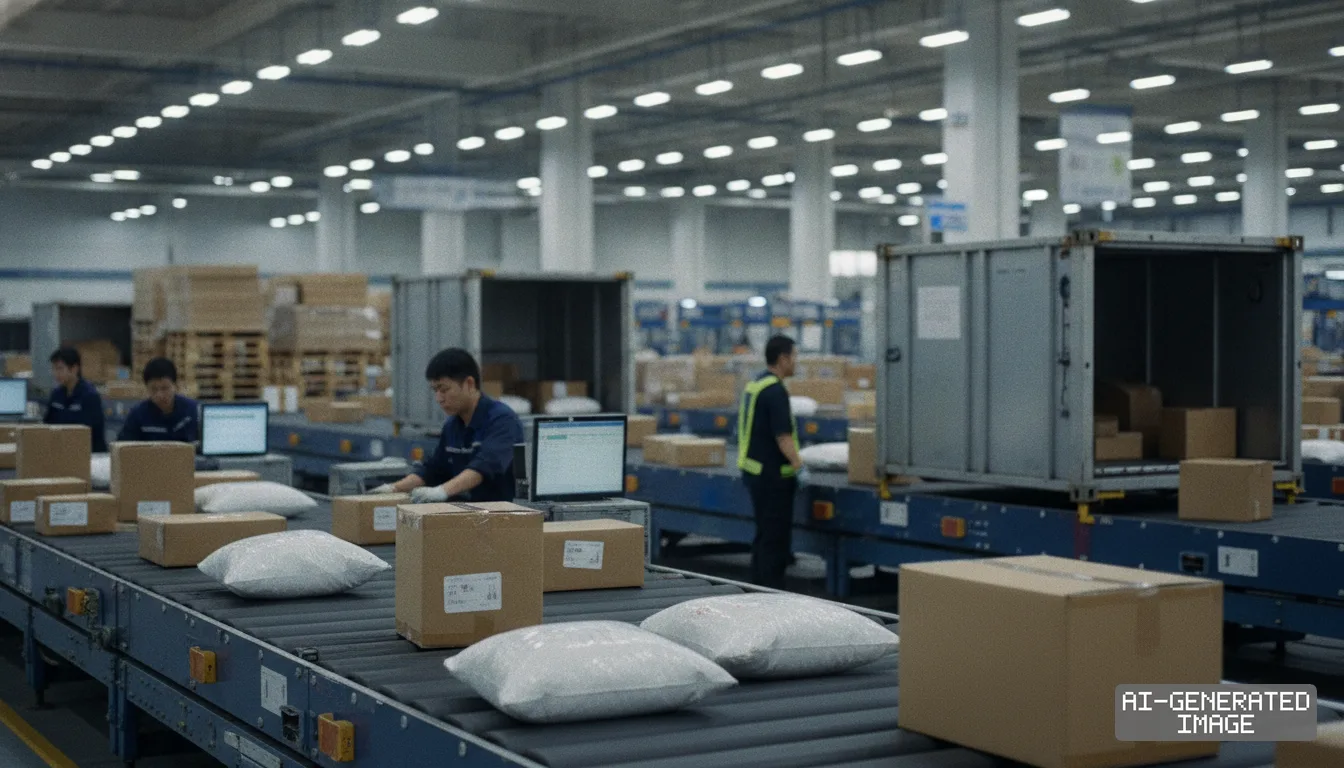
*Workers sort parcels and boxed goods on a conveyor system inside a logistics facility processing cross-border shipments. (AI-generated image)*
U.S. Customs and Border Protection recorded a sharp contraction in Chinese cross-border parcels on Oct. 9, following cumulative federal trade rules that eliminated duty-free import thresholds. The drop in air freight volume reflects the practical closure of direct dispatch channels used by low-cost e-commerce platforms.
Section 321 of the Tariff Act of 1930 previously exempted shipments valued at $800 or less from tariffs and formal entry declarations. That statutory provision covered roughly 1 billion direct parcels arriving in the United States each year, insulating direct retail imports from border duties.
CBP published a notice of proposed rulemaking on Oct. 8 to mandate customs bonds and advance electronic data for all sub-$800 informal entries. The agency action under docket RIN 1685-AA38 removes the remaining administrative flexibility enjoyed by consolidated cross-border freight.
Federal authorities dismantled the duty-free channel through a series of escalating administrative decrees. The White House terminated de minimis eligibility for merchandise originating in China and Hong Kong on May 2, 2025.
Presidential Executive Order 14324 broadened the import restriction on July 30, 2025. The directive ended commercial de minimis eligibility for goods arriving from all countries starting Aug. 29, 2025, closing alternative rerouting hubs across Southeast Asia.
CBP published regulatory notice 91 FR 37789 on June 24, 2026, to codify the indefinite suspension of de minimis exemptions across mail and cargo streams. The notice established Entry Type 13 to process international mail items valued at $2,500 or less through structured electronic filings.
The trade agency fully deployed the Entry Type 13 mechanism inside the Automated Commercial Environment on Sept. 22, 2026. The digital system requires international postal consignees to appoint licensed customs brokers and post financial surety bonds before goods clear inspection.
Legal challenges brought by commercial shippers failed to overturn the federal import curbs. The U.S. Court of International Trade ruled on Aug. 13, 2026, that the president possesses statutory authority under the International Emergency Economic Powers Act to suspend tariff exemptions.
The judicial ruling confirmed that executive emergency powers override general statutory exemptions granted under the Tariff Act of 1930. The legal victory allowed customs officers to enforce strict border declarations on every arriving air package without judicial interference.
The regulatory enforcement directly targets low-cost retail platforms that expanded by shipping individual parcels directly from Chinese factories. Temu operator PDD Holdings and fast-fashion retailer Shein built high-frequency logistics chains relying almost entirely on Section 321 clearances.
PDD Holdings acknowledged the operational strain in a Form 6-K regulatory filing submitted to the U.S. Securities and Exchange Commission on May 27, 2026. The marketplace operator said it is expanding investments in local supply chain infrastructure to offset surging individual shipping expenses.
Shein also accelerated lease commitments for regional distribution centers across North America. Both companies faced immediate price increases after courier handling fees and formal entry documentation raised landed delivery costs by several dollars per unit.
Transpacific aviation operators absorbed an immediate reduction in chartered capacity. Dedicated air cargo freighters operating between Southern China manufacturing centers and American gateways lost the predictable baseline parcel volumes that supported high charter rates throughout 2024.
Logistics consolidators shifted away from point-to-point air shipments toward ocean container shipping. Merchants increasingly pack goods into bulk sea containers, clear formal customs entries at seaports, and fulfill customer orders through domestic fulfillment facilities.
European regulators instituted parallel import controls that compounded operational pressures on Chinese cross-border sellers. The European Union eliminated its 150-euro duty-free import limit on July 1, 2026, applying a flat three-euro administrative charge on small packages alongside standard value-added tax.
The simultaneous European restriction prevented platforms from diverting excess Chinese factory inventory into European postal lanes. Global parcel dispatchers lost their two largest low-friction direct delivery destinations within a single operating cycle.
Public comments on the proposed customs bond and electronic data mandate remain open through Dec. 7, 2026. Logistics operators and customs brokers must submit procedural feedback on compliance costs before CBP prepares a final binding regulation.
Agency dockets do not publish a single-day cargo tally for Oct. 9, and CBP has not issued a dedicated volume report separating parcel flows for Temu and Shein. Private logistics tracking indexes confirm aggregate transpacific express flight departures declined steadily across late September and early October.
Customs brokers continue filing Entry Type 13 test entries in the Automated Commercial Environment while preparing bonding facilities for commercial air freight. Cross-border merchants operate under strict electronic filing requirements that treat small postal parcels as formal commercial imports.
## Impact map
| Event | Korea | China | Japan | Global impact |
| --- | --- | --- | --- | --- |
| Section 321 de minimis suspension | Incheon air cargo transshipment volume drops as direct China-to-US express parcels divert | PDD Holdings and Shein shift from direct air parcels to ocean freight and bonded hubs | Narita cross-border e-commerce air parcel transits decline on reduced transpacific routing | Air cargo spot rates fall on transpacific lanes while US warehousing lease demand rises |
## In this story
- **Companies:** PDD Holdings, Shein
- **Tickers:** PDD
- **Policy:** Tariffs, Compliance
- **Impact:** Supply Chain, Cost Structure
## Primary sources
1. whitehouse.gov
2. cbp.gov
3. pddholdings.com
4. customsandinternationaltradelaw.com
5. cello-square.com
---
Cite as: East Asia Brief, "CBP ends sub-$800 duty exemptions as Chinese air cargo falls," October 10, 2026. https://eastasiabrief.com/trade-policy/cbp-ends-sub-800-duty-exemptions-chinese-air-cargo-637