# Wonik IPS order backlog jumps 57% to KRW 630B on memory tool demand
*Third-quarter operating profit surged 142% to 66.7 billion won as atomic layer deposition shipments rebounded across Korean memory fabs.*
**Published:** November 22, 2026
**By:** Ji-woo Han
**Section:** Semiconductors & AI Hardware — South Korea
**Format:** Company Watch
**Confidence:** medium
**Source:** https://eastasiabrief.com/semiconductors/wonik-ips-order-backlog-jumps-57-krw-630b-memory-1684
**Publisher:** East Asia Brief (https://eastasiabrief.com/)
---
## What to know
- Backlog climbed 57.4% to 630.1 billion won on memory line retooling
- Samsung Electronics and SK hynix generate over 80% of company shipments
- Annual audited accounts due March 31, 2027 will confirm fourth-quarter tool handovers
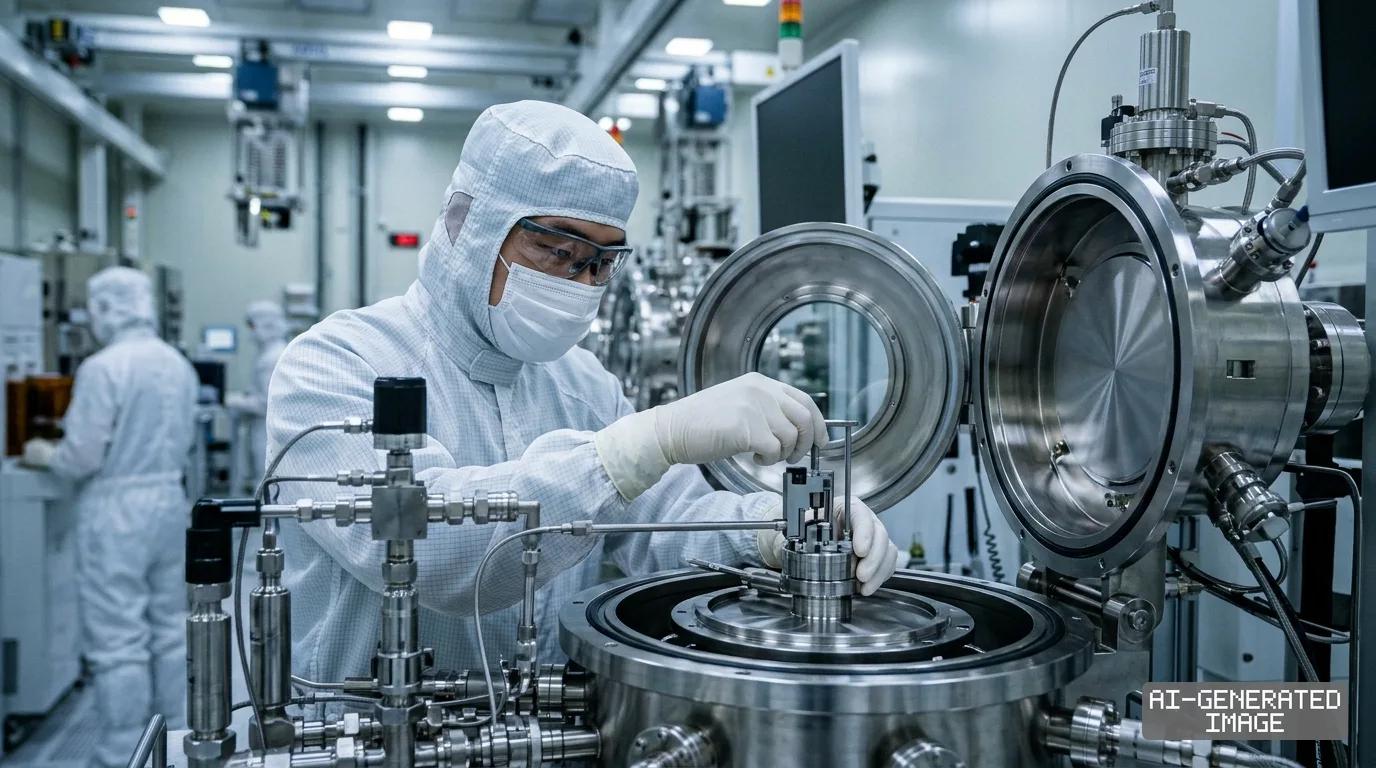
Wonik IPS reported an equipment order backlog of 630.1 billion won ($456 million) on Nov. 18, 2026, marking a 57.4% jump from the first quarter on recovering memory tool demand.
The Pyeongtaek-based manufacturer builds atomic layer deposition — known as ALD — and chemical vapor deposition machines for Korean memory lines. Those systems deposit microscopic chemical films with single-atom precision across silicon wafers.
Third-quarter revenue reached 337.8 billion won ($244 million), climbing 25.8% from a year earlier, according to company financial statements. Operating profit surged 142.0% to 66.7 billion won ($48.2 million), lifting operating margin to 19.7%.
Net income fell 88.2% to 3.3 billion won ($2.4 million) over the same period, financial records showed. Company filings attributed the drop to non-operating losses, including currency shifts and financial valuation adjustments.
The 630.1 billion won order book reflects an addition of roughly 229.7 billion won since the first quarter, when backlog stood at 400.4 billion won. The expansion tracks renewed capital spending by South Korean memory manufacturers.
Samsung Electronics and SK hynix account for more than 80% of Wonik IPS equipment shipments. Both chipmakers cut fabrication tool spending throughout 2023 and early 2024 to balance memory inventory during the cyclical downturn.
Capital expenditure is now shifting toward high-bandwidth memory — or HBM — and advanced DRAM nodes, corporate filings confirmed. Producing 1b and 1c DRAM nodes requires thinner dielectric barriers to prevent electrical leakage across shrinking capacitors.
Process engineers require film thickness control within fractions of an angstrom to maintain uniform memory cell performance. The company's ALD tools use self-limiting surface chemical reactions to achieve uniform coverage on vertical channel walls.
Foreign competitors Applied Materials and Tokyo Electron historically supplied more than 70% of high-end ALD tools for Korean memory lines. Wonik IPS has expanded into those stages through its GEMIPRO and HyEta deposition platforms.
The GEMIPRO system applies plasma-enhanced ALD to form patterning spacers and fill narrow gaps in high-aspect-ratio wafer structures. Its HyEta platform deposits zirconium oxide and aluminum oxide films across DRAM capacitors without thermal distortion.
NAND flash memory manufacturing provides a second demand stream for the company's deposition equipment. Memory producers are migrating legacy production lines toward architectures carrying more than 200 layers and developing 300-layer cell stacks.
Rising high-aspect-ratio etching and deposition steps in 3D NAND expand tool chamber requirements per wafer run. Each additional layer stack increases the total time wafers spend inside ALD chambers, driving memory makers to add deposition capacity.
Stacking hundreds of memory cells multiplies the vertical aspect ratio, making chemical vapor deposition vulnerable to substrate warpage. Wonik IPS supplies its CUARTO and CLARO systems to deposit uniform oxide and nitride layers within those deep cell holes.
The rebound in semiconductor equipment orders offset persistent softness in the company's display manufacturing division. Display panel makers reduced panel equipment orders throughout 2026, holding the display segment below company sales targets.
Certain foundry tool deliveries slipped into the fourth quarter, dampening quarterly top-line revenue against earlier equity analyst projections. Company disclosures indicated that deferred fab deliveries will register as recognized revenue during the final three months of the year.
Unlike foreign equipment makers facing component bottlenecks, Wonik IPS procures most fabricated modules from domestic suppliers. Affiliated entities including Wonik QnC and Wonik Materials supply quartz ware and specialized process gases used during system validation.
Wonik IPS first mass-produced 200-millimeter ALD equipment in 1998, establishing an early domestic patent footprint in thin-film machinery. The company holds more than 700 registered patents covering vapor deposition and thermal processing systems.
Memory makers now prioritize converting existing fab cleanrooms rather than constructing greenfield wafer facilities. That brownfield conversion strategy favors specialized deposition tool vendors capable of fitting new chambers into existing line footprints.
The quarterly filing does not disclose customer-specific order totals or delivery timetables, withholding individual backlog figures for Samsung Electronics and SK hynix under commercial trade secret provisions.
Wonik IPS faces its next statutory reporting deadline on March 31, 2027, when audited annual accounts will confirm fourth-quarter delivery volumes. Memory producers plan to qualify converted DRAM capacity ahead of mid-2027 volume ramp schedules.
## Impact map
| Event | Korea | China | Japan | Global impact |
| --- | --- | --- | --- | --- |
| Advanced memory deposition orders | Wonik IPS backlog hits 630.1 billion won on DRAM node upgrades | Memory makers test domestic tools amid strict US equipment licensing rules | Tokyo Electron defends incumbent share on Korean advanced memory lines | Front-end deposition tool lead times steady as Korean vendors gain share |
## In this story
- **Companies:** Wonik IPS
- **Tickers:** 240810.KQ
- **Exposed:** Samsung Electronics, SK hynix, Tokyo Electron, Applied Materials
- **Impact:** Order Book, Capex, Supply Chain
## Primary sources
1. edaily.co.kr
2. tossinvest.com
3. alphasquare.co.kr
4. ips.co.kr
5. bloter.net
---
Cite as: East Asia Brief, "Wonik IPS order backlog jumps 57% to KRW 630B on memory tool demand," November 22, 2026. https://eastasiabrief.com/semiconductors/wonik-ips-order-backlog-jumps-57-krw-630b-memory-1684