# Qualcomm keeps TSMC for 2nm processors, shutting out Samsung Foundry
*The mobile chipmaker affirmed its exclusive production tie to TSMC despite wafer costs topping $30,000, leaving Samsung with sub-60% yields on its 2-nanometer lines.*
**Published:** September 27, 2026
**By:** Ji-woo Han
**Section:** Semiconductors & AI Hardware — South Korea
**Format:** Company Watch
**Confidence:** medium
**Source:** https://eastasiabrief.com/semiconductors/qualcomm-keeps-tsmc-2nm-processors-shutting-out-samsung-foundry-397
**Publisher:** East Asia Brief (https://eastasiabrief.com/)
---
## What to know
- TSMC secures 100% of Qualcomm 2nm flagship orders despite wafer prices exceeding $30,000
- Samsung Foundry 2nm yields of 50-60% trail Qualcomm's 70% threshold for high-volume allocation
- Qualcomm reviews next-stage foundry procurement in late 2027 ahead of TSMC's 2027 N2P production ramp
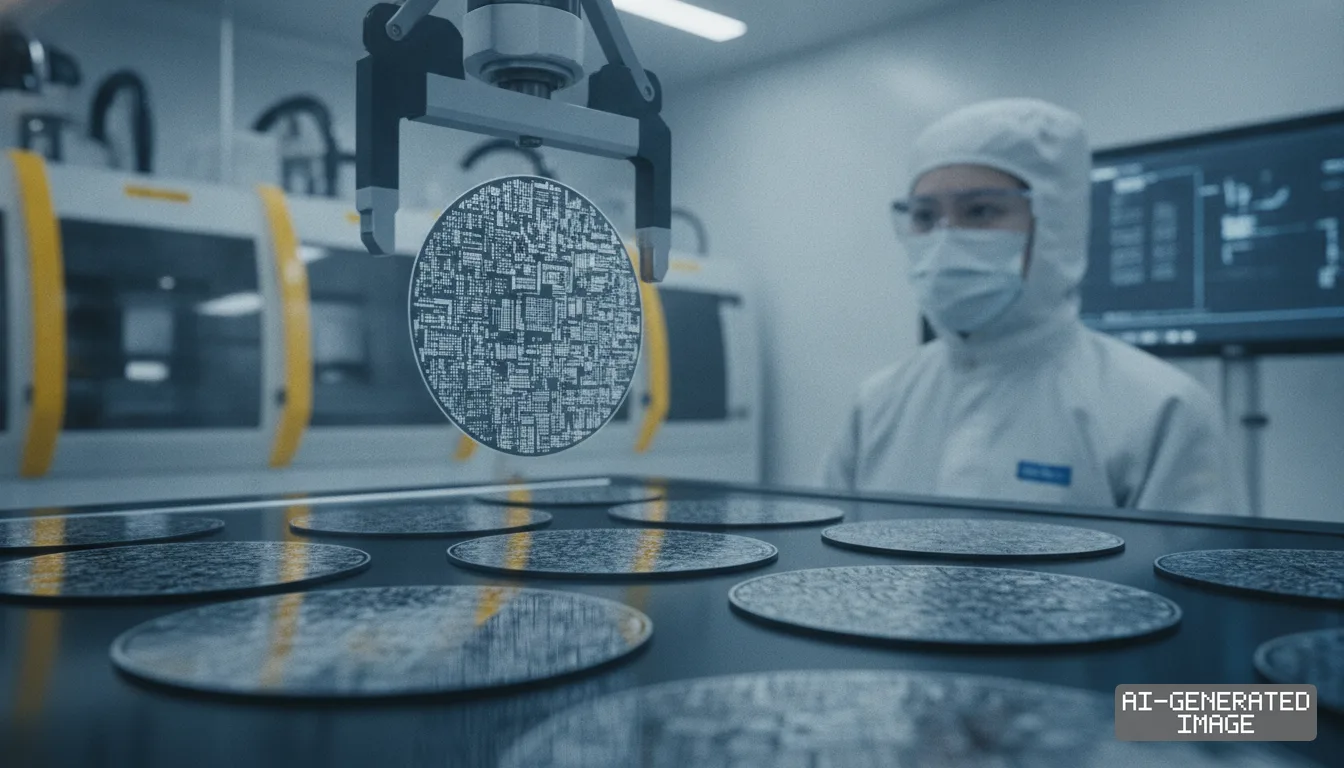
*A robotic arm handles a patterned silicon wafer inside a semiconductor manufacturing cleanroom as a technician looks on. (AI-generated image)*
Qualcomm decided Sept. 26 to retain Taiwan Semiconductor Manufacturing Co.'s 2-nanometer N2P process for its next-generation flagship smartphone processors, bypassing Samsung Electronics for advanced contract manufacturing.
The choice leaves TSMC as the sole fabricator for Qualcomm's premium Snapdragon silicon through the 2027 product cycle. Samsung Foundry had sought to win back the American chip designer to lift capacity utilization.
TSMC charges more than $30,000 per 2-nanometer wafer, while Apple has secured more than 50% of TSMC's initial 60,000 wafer-per-month capacity. Qualcomm accepted those tight production allocations to guarantee manufacturing yields.
Chris Patrick, Qualcomm senior vice president and general manager of mobile handsets, confirmed during the Snapdragon Summit in Hawaii that TSMC produces all announced 2-nanometer chips.
"All the 2-nm products we released are produced at TSMC," Patrick said Sept. 22 during an executive panel. He added that Qualcomm remains open to future foundry partnerships with Samsung Electronics.
Samsung Foundry has struggled to lift commercial yields at its 2-nanometer Gate-All-Around node above 50% to 60%. Qualcomm required production yields of at least 70% before committing flagship volume.
TSMC maintains 2-nanometer test yields between 60% and 70%, giving it an operational lead over South Korean fabrication lines. That gap proved decisive as Qualcomm finalized performance targets for its upcoming platforms.
Supply-chain reports on Sept. 26 indicated that Qualcomm's next flagship processor, code-named Honu with model number SM8A75, aims for maximum peak frequencies of 5.40 GHz on TSMC's N2P node.
The target frequency represents an incremental gain over the 5.0 GHz clock speed of the Snapdragon 8 Elite Extreme Gen 6. Core architectural instructions per cycle will improve by under 10%.
Qualcomm introduced an offset packaging design on its Extreme tier that positions memory adjacent to the die rather than solely stacking it on top. The arrangement dissipates heat faster during sustained gaming and on-device artificial intelligence workloads.
High operating frequencies generate severe thermal stress on mobile chip packages. Qualcomm switched its flagship orders from Samsung to TSMC in 2022 after the Snapdragon 8 Gen 1 suffered severe thermal throttling.
Samsung fabricated the Snapdragon 8 Gen 1 on its 4-nanometer node, but low production efficiency and high device temperatures forced Qualcomm to transfer refreshed chips to TSMC's N4 node.
Qualcomm has since awarded four consecutive generations of flagship Snapdragon processors exclusively to the Taiwanese foundry. That uninterrupted streak has deprived Samsung Foundry of its largest external customer for cutting-edge logic nodes.
Samsung Electronics had pitched its second-generation 2-nanometer SF2 process to Qualcomm earlier this year. Samsung executives highlighted power efficiency improvements and lower per-wafer manufacturing costs to counter TSMC's rising price structure.
TSMC lifted wafer prices on advanced nodes above $20,000 for 3-nanometer lines and $30,000 for 2-nanometer lines. Those price increases pushed Android smartphone brands to prepare for higher retail prices on premium handsets.
Qualcomm considered dual-sourcing production between TSMC and Samsung to balance procurement expenses and mitigate capacity constraints. However, maintaining separate physical design rules across two disparate foundries increased upfront mask and engineering expenses.
Samsung Foundry now faces lower utilization rates across its advanced manufacturing cleanrooms in Pyeongtaek. Without Qualcomm's commercial volume, the company must rely heavily on internal System LSI orders for its Exynos application processors.
Samsung's mobile communications business continues to evaluate whether to integrate the Exynos 2600 into the Galaxy S26 and S27 smartphone lineups. Past yield instability has repeatedly disrupted Samsung's internal mobile roadmap.
Samsung Foundry previously aimed to use Gate-All-Around nanosheet transistors to bypass TSMC's FinFET architecture. TSMC transitioned to nanosheets on its 2-nanometer family, neutralizing Samsung's architectural head start.
Taiwan Semiconductor Manufacturing Co. will begin commercial mass production on its baseline N2 node in late 2025 before ramping the N2P variant in 2027. MediaTek and Apple have also booked N2 capacity.
Qualcomm plans to review foundry procurement terms for 2028 flagship platforms in late 2027. Samsung Foundry will attempt to qualify its SF1.4 node, an advanced 1.4-nanometer process, during that contracting cycle.
Qualcomm and TSMC have not published regulatory filings or signed supply agreements for the SM8A75 processor, and Qualcomm has not confirmed the 5.40 GHz clock frequency in official documentation.
## Impact map
| Event | Korea | China | Japan | Global impact |
| --- | --- | --- | --- | --- |
| Qualcomm 2nm foundry decision | Samsung Foundry misses 2nm Snapdragon orders, reducing Pyeongtaek advanced fab utilization | Handset makers including Xiaomi face higher BOM costs from $30,000 TSMC wafers | Tool suppliers including Tokyo Electron maintain 2nm deposition deliveries to TSMC | Apple and Qualcomm absorb majority of TSMC 60,000 monthly 2nm wafer capacity |
## In this story
- **Companies:** Qualcomm, Samsung Electronics, TSMC
- **Tickers:** QCOM, 005930.KS, 2330.TW
- **Exposed:** Apple, MediaTek
- **Policy:** Economic Security
- **Impact:** Supply Chain, Capex, Pricing
## Primary sources
1. wccftech.com
2. trendforce.com
3. bangkokpost.com
4. digitimes.com
5. chosun.com
---
Cite as: East Asia Brief, "Qualcomm keeps TSMC for 2nm processors, shutting out Samsung Foundry," September 27, 2026. https://eastasiabrief.com/semiconductors/qualcomm-keeps-tsmc-2nm-processors-shutting-out-samsung-foundry-397