# Sojitz Secures Malaysia Yttrium Supply to Counter China Curbs
*The Japanese trading house expects shipments from Lynas Rare Earths to reach domestic chip equipment makers after Chinese exports halted in June.*
**Published:** October 31, 2026
**By:** Yui Kobayashi
**Section:** Energy & Critical Minerals — Japan
**Format:** Company Watch
**Confidence:** high
**Source:** https://eastasiabrief.com/energy-minerals/sojitz-secures-malaysia-yttrium-supply-counter-china-curbs-1023
**Publisher:** East Asia Brief (https://eastasiabrief.com/)
---
## What to know
- Sojitz secured 2027 yttrium supply from Lynas's 1,100-ton separation line in Malaysia
- JARE contract guarantees Japan up to 75% of Lynas heavy rare earths through 2038
- Commercial deliveries begin in second-half 2027 after China yttrium exports hit zero in June
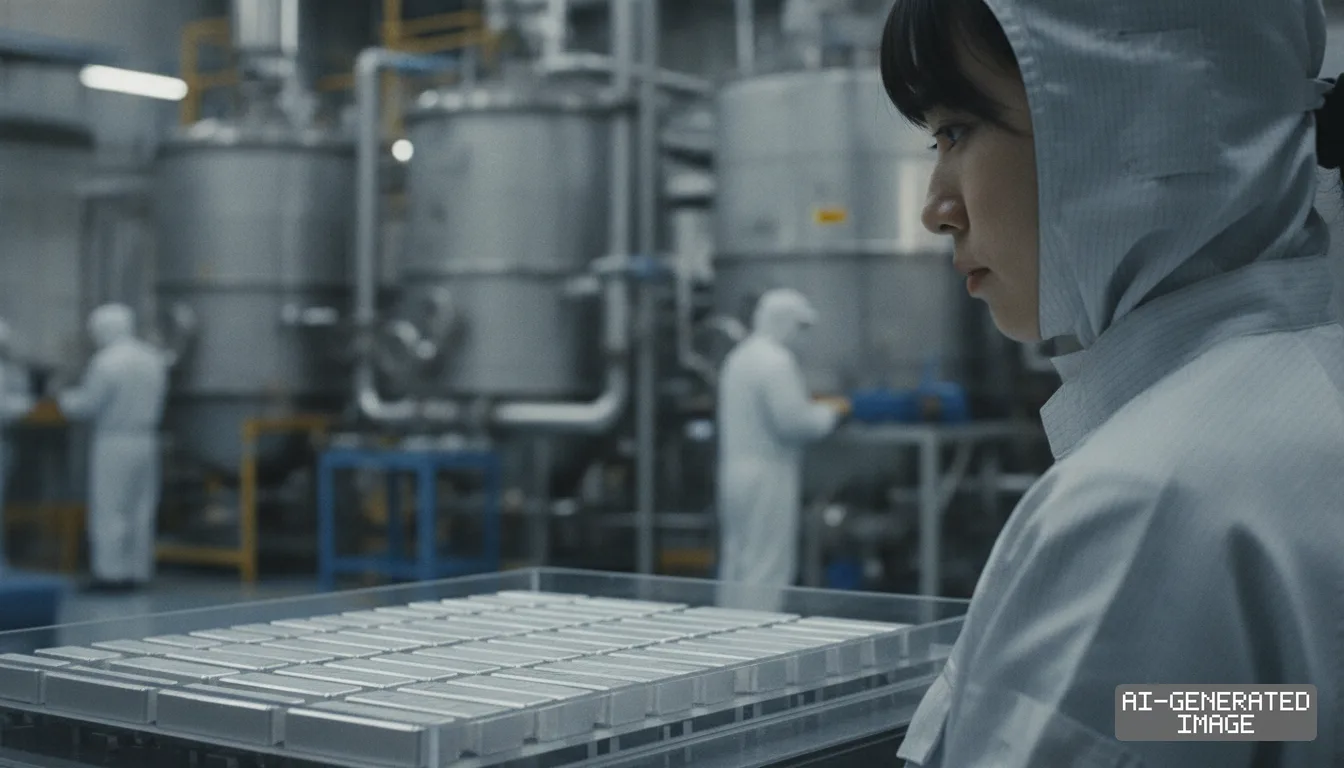
*A worker in protective clothing stands before a tray of metal bars inside an industrial processing facility with large stainless steel tanks. (AI-generated image)*
Sojitz Corporation secured supply visibility on Oct. 30, 2026 to import yttrium refined in Malaysia starting in 2027, creating an alternative to Chinese critical minerals for Japanese semiconductor equipment makers.
President Kosuke Uemura told an earnings briefing in Tokyo that partner Lynas Rare Earths will deliver the heavy rare earth as its Malaysian separation plant expands.
The procurement pipeline relies on an expanded separation facility designed to process 1,100 metric tons of yttrium oxide per year, the company said on Friday.
China halted yttrium shipments to Japan in June 2026, accelerating Tokyo's campaign to secure critical mineral supplies outside Beijing's restrictive export licensing system.
Japanese toolmakers consume yttrium primarily in high-purity yttria ceramic coatings, which shield etching chambers and plasma components from corrosive halogen gases during advanced wafer fabrication.
Tokyo Electron and precision ceramic suppliers rely on uninterrupted access to heavy rare earths to maintain scheduled deliveries to global chipmakers.
The commercial framework traces to a binding agreement signed March 13, 2026 between Lynas and Japan Australia Rare Earth, known as JARE.
JARE is a joint venture owned by Sojitz and the state-backed Japan Organization for Metals and Energy Security, widely known as JOGMEC.
The March pact extended JARE's supply arrangement with Lynas through 2038, guaranteeing Japan priority access to up to 75% of the refiner's heavy rare earth production.
That agreement expanded Japan's allocation from an earlier 65% ceiling established in March 2023, while adding four new processed elements to the bilateral pipeline.
Beside yttrium, the contract added samarium, gadolinium and lutetium to Lynas's export slate, complementing established flows of dysprosium and terbium.
Sojitz began importing Australian-origin samarium from Lynas in the first quarter of 2026 to support domestic permanent magnet fabricators.
The trading house previously started commercial imports of dysprosium and terbium in October 2025, which Japanese motor manufacturers blend into heat-resistant magnets for electric vehicles.
While market commentary describes the material as Malaysian yttrium, the mineral originates entirely from the Mount Weld deposit in Western Australia.
Lynas mines the ore at Mount Weld and trucks concentrate to Fremantle before shipping it across the Indian Ocean to its chemical processing complex in Gebeng, Malaysia.
The Gebeng plant, located in the eastern state of Pahang, operates solvent extraction lines that isolate individual heavy rare earth oxides from the Australian concentrate.
Lynas built the industrial complex in 2012 and remains the only commercial-scale separator of heavy rare earth elements outside China.
The separation process requires hundreds of liquid extraction stages to split chemically similar lanthanides, a technical barrier that concentrated global refining inside China for decades.
Beijing used that processing monopoly by requiring individual export permits for heavy rare earths, slowing cargo approvals and leaving Japanese buyers vulnerable to supply disruptions.
Zero shipments reached Japanese ports in June after Chinese customs authorities tightened documentation checks on medium and heavy rare earth consignments, trade data show.
Uemura said Sojitz cannot offer an immediate spot replacement today, but the expansion at Gebeng guarantees reliable commercial volumes for contracted industrial users starting next year.
Sojitz and JOGMEC also established an exploration steering committee with Lynas in March to identify prospective rare earth deposits outside Australia.
The committee is evaluating hard-rock and ionic-clay targets across Southeast Asia and North America to diversify feed sources feeding the Gebeng plant.
The Malaysian government has surveyed domestic ion-adsorption clay deposits estimated at 16.1 million metric tons, seeking foreign capital to develop local refining infrastructure.
Kuala Lumpur enforced a moratorium on raw mineral exports in September 2023 to force mining companies to build value-added processing facilities inside the country.
Lynas chief operating officer Pol Le Roux said in April that engineering work at Gebeng will enable full-suite separation of all demanded heavy rare earths by late 2027.
Lynas expanded its capital base through an 932 million Australian dollar ($610 million) equity raising in early 2026 to finance the Malaysian refinery expansion and mine expansions.
Sojitz has distributed Lynas products in Japan since 2011, when Tokyo funneled public loans through JOGMEC after a maritime standoff halted Chinese shipments.
Commercial shipments of Malaysia-refined yttrium to Japanese customers are scheduled to begin in the second half of 2027, with the long-term JARE agreement running through 2038.
The announcement did not disclose specific customer volume allocations, fixed pricing mechanisms, or whether Lynas will process domestic Malaysian clay feedstocks at Gebeng.
## Impact map
| Event | Korea | China | Japan | Global impact |
| --- | --- | --- | --- | --- |
| Lynas Malaysia yttrium supply | Samsung and SK hynix monitor Japanese ceramic tool component supply chains | MOFCOM export licensing on heavy rare earths faces non-China refining competition | Sojitz and toolmakers secure non-Chinese yttrium from 1,100-ton Gebeng line | Chip equipment supply chains gain first commercial non-China yttrium stream |
## In this story
- **Companies:** Sojitz Corporation, Lynas Rare Earths
- **Tickers:** 2768.T, LYC.AX
- **Exposed:** Tokyo Electron
- **Policy:** Export Controls
- **Impact:** Supply Chain, Pricing
## Primary sources
1. jfs.or.jp
2. jogmec.go.jp
3. biggo.jp
4. sojitz.com
5. rareearthexchanges.com
---
Cite as: East Asia Brief, "Sojitz Secures Malaysia Yttrium Supply to Counter China Curbs," October 31, 2026. https://eastasiabrief.com/energy-minerals/sojitz-secures-malaysia-yttrium-supply-counter-china-curbs-1023