# LKAB Faces Refining Deficits at Kiruna Rare Earth Deposit
*The Swedish state miner holds 2.2 million tons of rare earth oxides at Per Geijer, but absent domestic separation lines keep European industry dependent on Chinese supply chains.*
**Published:** October 18, 2026
**By:** Mina Okoro
**Section:** Energy & Critical Minerals — Cross-border
**Format:** Why It Matters
**Confidence:** medium
**Source:** https://eastasiabrief.com/energy-minerals/lkab-faces-refining-deficits-kiruna-rare-earth-deposit-783
**Publisher:** East Asia Brief (https://eastasiabrief.com/)
---
## What to know
- Per Geijer holds 2.2 million tonnes of rare earth oxides but lacks domestic separation capacity
- LKAB committed 6 billion Swedish kronor ($640 million) to Malmberget sorting ahead of 2028
- LKAB reports third-quarter financial results on Oct. 28, 2026
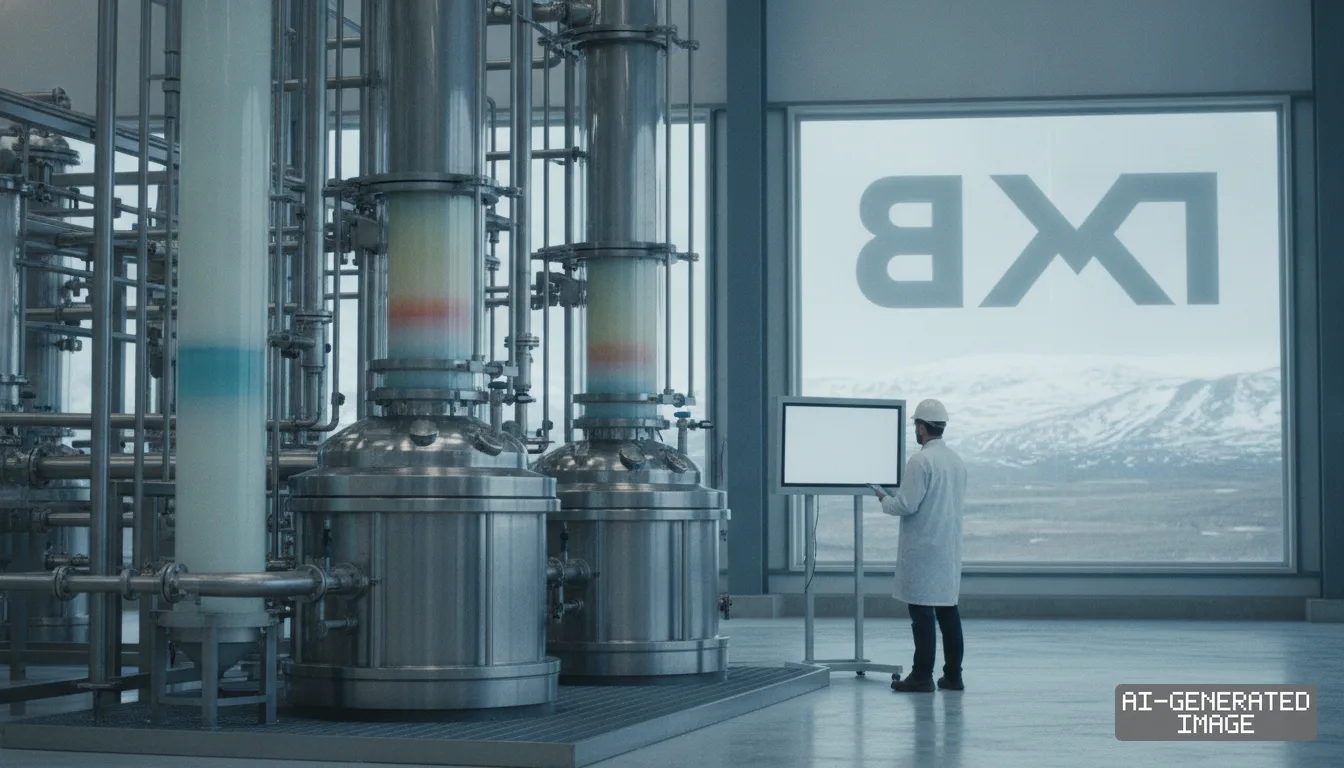
*A worker in a lab coat stands before a monitor near industrial separation columns inside an LKAB facility. (AI-generated image)*
Luossavaara-Kiirunavaara AB faced renewed European scrutiny on Oct. 17, 2026, over chemical refining deficits that prevent its 2.2-million-ton Per Geijer rare earth deposit from bypassing Chinese separation facilities.
The state-owned Swedish miner holds 2.2 million tonnes of rare earth oxides in situ near Kiruna. That volume represents roughly 18% of projected long-term demand across the European Union.
Extracting crude ore does not produce usable magnetic materials without chemical cracking and solvent extraction. Europe lacks industrial-scale separation plants capable of isolating individual elements like neodymium and praseodymium from heavy apatite tailings.
LKAB is exposed to heavy processing capital costs, having committed 6 billion Swedish kronor ($640 million) to a preparatory sorting facility at Malmberget. The sum represents a major share of its current northern mining infrastructure outlays.
Crews began foundation work on the Malmberget plant in August, aiming for completion in 2028. The 620,000-cubic-meter facility will crush and sort 25 million tonnes of crude ore annually, separating apatite-rich streams for downstream transport.
Feedstock from Malmberget must move south to Luleå, where LKAB is building an 800 million kronor ($80 million) demonstration facility. The board approved the pilot project in October 2024 to validate phosphorus and rare earth extraction.
The Land and Environmental Court granted an environmental permit for the Luleå industrial site on May 26, 2026. Commissioning of the testing equipment is scheduled to begin before the end of this year.
Commercial separation will not arrive quickly. LKAB executives confirmed that full-scale chemical refining will remain in development through the 2030s, leaving intermediate concentrates without a domestic buyer during the current decade.
Self-sufficiency has become central to European industrial planning as geopolitical tensions disrupt international supply chains, LKAB Critical Minerals Business Manager Ulrika Håkansson said at an industry summit in Luleå.
Western manufacturers spent decades outsourcing mineral purification to Chinese state refiners, Håkansson said. China currently controls more than 90% of global chemical separation capacity for rare earth magnet metals.
The European Union designed the Critical Raw Materials Act to reduce this vulnerability. The regulation mandates that member states extract 10% and refine 40% of strategic materials within the bloc by 2030.
European industrial targets collide with chemical realities on the ground. Mining permits do not solve the deficit in acid leaching and multi-stage solvent extraction, which require deep chemical engineering expertise and patient capital.
Building hydrometallurgical separation units carries higher operational costs than mining raw rock. Private chemical operators in Europe hesitate to commit billions to commercial plants without long-term price floors against cheaper Chinese exports.
Beijing has reinforced its industrial moat by restricting outbound transfers of rare earth extraction and separation technology. European companies cannot simply import turnkey Chinese chemical equipment to accelerate project schedules.
Swedish Deputy Prime Minister Ebba Busch declared critical mineral extraction a national security priority on July 24, 2026. The policy aims to accelerate mining approvals and mobilize public financing for strategic deposits.
National security status does not eliminate domestic friction over chemical processing. Local communities and environmental regulators in northern Sweden continue to question the high freshwater consumption and chemical waste streams tied to commercial refining.
Without operational domestic separation lines, European miners must export semi-processed concentrates to Chinese plants for cracking and reduction. The dynamic preserves Beijing's pricing power over permanent magnets used in electric vehicles and wind turbines.
European automakers remain directly exposed to this processing bottleneck. Car manufacturers require thousands of tonnes of sintered neodymium-iron-boron magnets each year, leaving their electrification plans vulnerable to Chinese export licensing rules.
Industrial users in Japan and South Korea face comparable exposure. Japanese and South Korean magnet producers continue to diversify upstream raw material sourcing while relying on a narrow tier of non-Chinese chemical refiners.
LKAB holds an economic advantage because rare earths occur as byproducts within its existing iron operations. Co-locating mineral recovery with operating iron pits allows the company to share crushing and logistics overhead.
Yet byproduct economics do not remove downstream financial risks. Separating 17 individual elements from apatite requires hundreds of sequential solvent extraction stages, generating capital expenditures that bulk iron cash flows cannot easily absorb.
LKAB has not published total capital expenditure forecasts for a full-scale commercial chemical plant in Luleå. The company also withheld projected commercial recovery rates for magnet-grade neodymium and praseodymium oxides.
LKAB, the Swedish government and the European Commission did not release any regulatory filings or milestone announcements on Oct. 17. The commercial timeline for Per Geijer remains anchored to multi-year environmental reviews.
LKAB is scheduled to publish its third-quarter financial report on Oct. 28, 2026. Process engineers will continue installing extraction hardware at the Luleå demonstration facility through December ahead of initial trial operations.
## Impact map
| Event | Korea | China | Japan | Global impact |
| --- | --- | --- | --- | --- |
| European rare earth refining deficit | Automakers remain exposed to Chinese-refined NdFeB magnet supplies | State refiners retain over 90% of global heavy rare earth separation capacity | Auto suppliers maintain long-term Australian and domestic refining pacts | EU 2030 processing target stalls as Per Geijer refining delays extend to the 2030s |
## In this story
- **Companies:** LKAB
- **Policy:** Standards
- **Impact:** Supply Chain, Capex
## Primary sources
1. rareearthexchanges.com
2. theguardian.com
3. lkab.com
4. chemxplore.com
5. im-mining.com
---
Cite as: East Asia Brief, "LKAB Faces Refining Deficits at Kiruna Rare Earth Deposit," October 18, 2026. https://eastasiabrief.com/energy-minerals/lkab-faces-refining-deficits-kiruna-rare-earth-deposit-783