# Honda electrifies Yorii painting lines to halve assembly emissions
*Replacing industrial gas burners with electric heat pumps at the 250,000-vehicle Saitama facility created the automaker's first net-zero assembly hub.*
**Published:** November 16, 2026
**By:** Ryo Matsuda
**Section:** Energy & Critical Minerals — Japan
**Format:** Breaking
**Confidence:** high
**Source:** https://eastasiabrief.com/energy-minerals/honda-electrifies-yorii-painting-lines-halve-assembly-emissions-1500
**Publisher:** East Asia Brief (https://eastasiabrief.com/)
---
## What to know
- Honda cuts 2,600 tons of CO2 annually by electrifying Yorii paint lines
- Onsite energy backed by 12.4 MW solar and 66 MWh storage battery
- Honda targets net zero across all global assembly plants by 2050
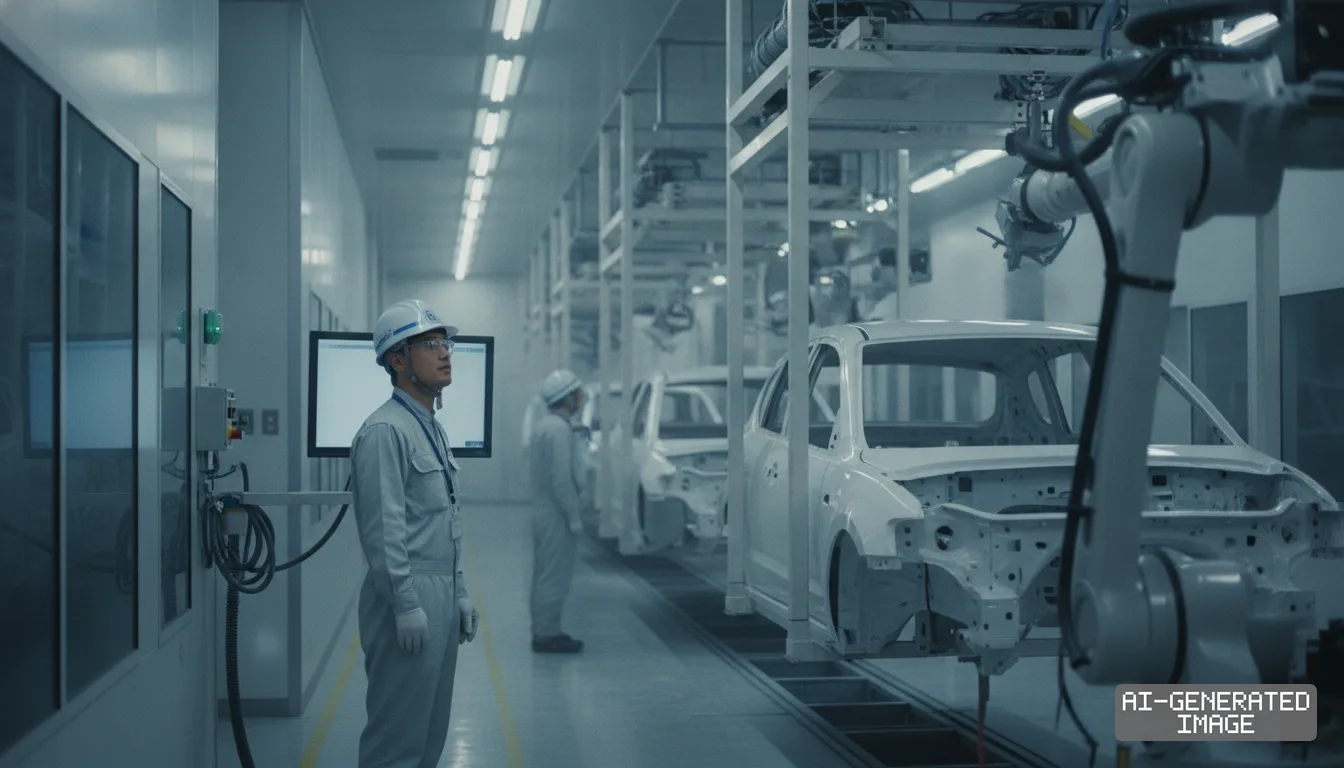
*Technicians stand near vehicle bodies and robotic machinery along an automated line at Honda's Yorii assembly plant. (AI-generated image)*
Honda Motor Co. unveiled Nov. 16, 2026 the complete electrification of automotive painting lines at its Yorii assembly plant, eliminating 2,600 metric tons of carbon dioxide emissions annually.
The reduction lowers the plant's overall manufacturing emissions by more than 50%. The facility operates as Honda's domestic mother factory in Saitama Prefecture, holding an annual production capacity of 250,000 finished vehicles.
The automaker completed the technical switch in March 2026 before presenting the hardware to reporters at the factory site. The conversion marks the first finished-vehicle assembly plant in Honda's network to operate at net-zero carbon status.
Vehicle painting generates more than half of the direct carbon emissions in an automotive assembly plant. Traditional paint curing and volatile organic compound deodorizing ovens run between 180 and 850 degrees Celsius.
Those thermal processes historically relied on direct city-gas combustion to maintain high air temperatures. Japanese carmakers long treated gas-fired drying tunnels as an unavoidable source of factory-level Scope 1 greenhouse gas output.
Honda eliminated city-gas burners by installing commercial heat pumps alongside newly developed, large-capacity electric flow heaters. The electric systems generate the high-temperature airflow needed to bake automotive topcoats without burning fossil fuel.
The electrified paint shop draws power from a 12,400-kilowatt onsite solar panel array. To balance intermittent solar output, the plant added a 66,000-kilowatt-hour sodium-sulfur energy storage system on site.
The battery installation absorbs midday surplus power and discharges continuously during overnight production shifts. Honda balances any residual grid emissions at the facility through carbon offset credits to satisfy Scope 1 and Scope 2 accounting.
Direct process electrification allows automakers to shield finished vehicles from carbon border adjustments and corporate buyer audits. European and North American supply chain regulations increasingly penalize high embedded factory emissions in vehicle imports.
Japanese manufacturers face elevated domestic thermal power costs, making fuel switching to grid electricity economically sensitive. Replacing city gas with electrified heat pumps reduces fuel price volatility over multi-year manufacturing cycles.
The technological transition at Yorii will serve as a technical blueprint for Honda's overseas assembly facilities. The company operates major vehicle manufacturing complexes across North America, China and Southeast Asia.
The company established a corporate target to reach carbon neutrality across all industrial operations and vehicle lifecycles by 2050. It plans to shift 100% of its global vehicle sales to battery-electric and fuel-cell models by 2040.
Honda did not state the total capital expenditure invested in the Yorii plant electrification retrofit.
Industrial testing at Yorii will continue through the current fiscal year as engineers evaluate long-term maintenance cycles on the high-voltage flow heaters. Honda plans to begin exporting the electric drying specifications to its secondary domestic lines by late 2027.
## Impact map
| Event | Korea | China | Japan | Global impact |
| --- | --- | --- | --- | --- |
| Automotive paint line electrification | Hyundai Motor assesses electric flow ovens to protect EU export carbon compliance | BYD and CATL expand onsite renewables while relying on lower-cost provincial grids | Honda deploys flow heaters at Yorii, benchmarking Scope 1 cuts for domestic peers | Automotive OEMs accelerate paint shop electrification to curb Scope 1 factory emissions |
## In this story
- **Companies:** Honda Motor Co.
- **Tickers:** 7267.T
- **Policy:** Standards
- **Impact:** Capex, Supply Chain, Cost Structure
## Primary sources
1. global.honda
2. mag-x.jp
3. biggo.jp
4. hankyung.com
5. yahoo.co.jp
---
Cite as: East Asia Brief, "Honda electrifies Yorii painting lines to halve assembly emissions," November 16, 2026. https://eastasiabrief.com/energy-minerals/honda-electrifies-yorii-painting-lines-halve-assembly-emissions-1500