# POSCO Future M plans domestic LFP precursor supply by 2029
*The battery materials maker is using steelmaking waste acid to forge non-Chinese lithium iron phosphate cathode inputs after securing $5.3 billion in domestic contracts.*
**Published:** October 12, 2026
**By:** Seung-min Park
**Section:** Batteries & Electric Vehicles — South Korea
**Format:** Policy Tracker
**Confidence:** high
**Source:** https://eastasiabrief.com/batteries-ev/posco-future-m-plans-domestic-lfp-precursor-supply-2029-685
**Publisher:** East Asia Brief (https://eastasiabrief.com/)
---
## What to know
- POSCO Future M will internalize iron phosphate precursor output by 2029 using steel plant byproducts
- The technology backs $5.3 billion in LFP cathode contracts with Samsung SDI and SK On
- Deliveries start Jan. 1, 2027, to satisfy US Inflation Reduction Act clean energy subsidy standards
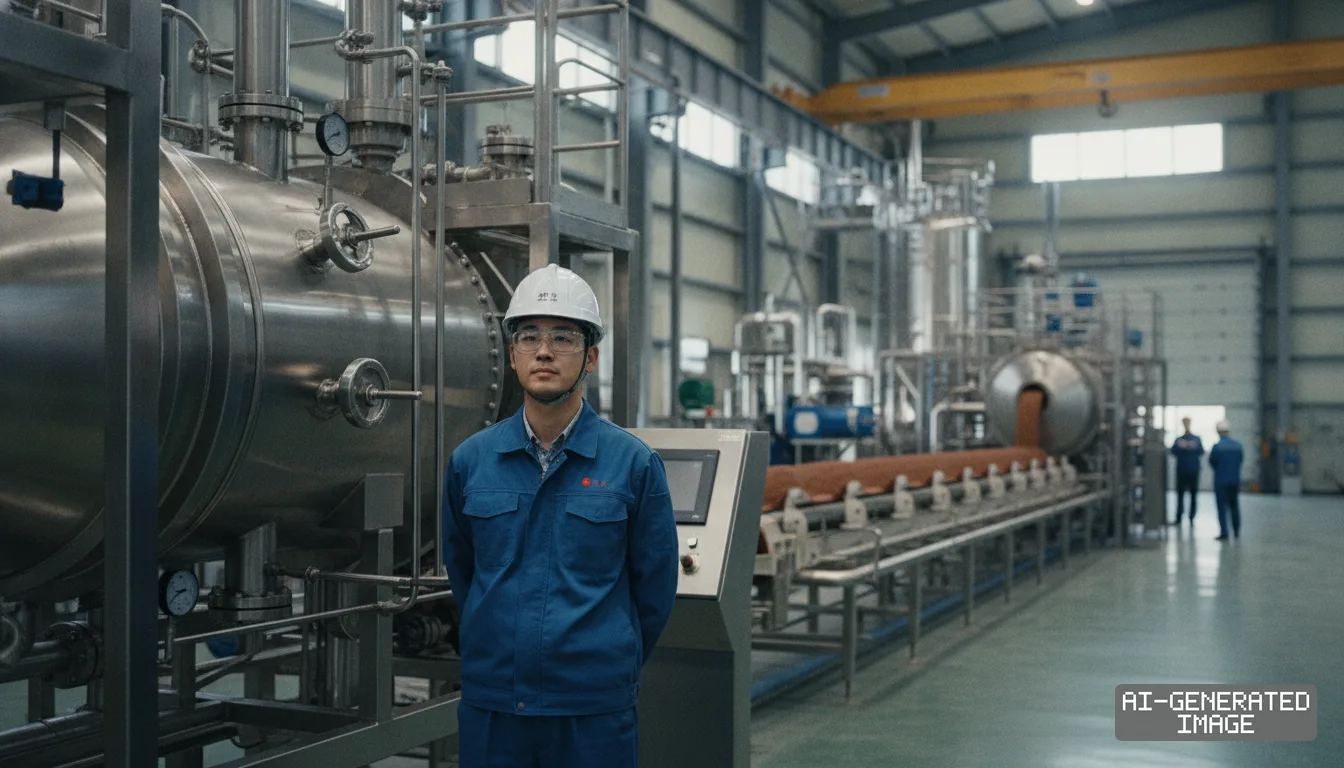
*A worker in protective gear stands beside industrial equipment and a conveyor line inside a battery materials facility. (AI-generated image)*
POSCO Future M disclosed plans on Oct. 12, 2026, to domesticate iron phosphate precursors using steel plant byproducts, eliminating Chinese raw materials across its lithium iron phosphate battery value chain by 2029.
The initiative directly underpins 7.15 trillion won ($5.3 billion) in newly signed supply agreements. That total includes an expanded 6.05 trillion won ($4.48 billion) contract with Samsung SDI and a 1.1 trillion won ($815 million) deal with SK On.
Those commitments represent roughly 380,000 metric tons of finished cathode materials for Samsung SDI alone. Deliveries will feed American battery manufacturing sites for grid energy storage while meeting United States clean energy subsidy requirements.
Cathodes determine roughly 40% of the total manufacturing cost of a battery cell. In turn, precursors — the chemical intermediates required before adding lithium — make up approximately 70% of cathode production expenses.
Chinese chemical refiners currently dominate global supply of iron phosphate precursors. China controls roughly 47% of global phosphate rock extraction and generates inexpensive ferrous sulfate as an industrial byproduct of titanium dioxide processing.
South Korean cathode manufacturers have avoided local precursor refining because traditional ferrous sulfate methods carry prohibitive raw material costs. Operating standard precipitation lines in South Korea without cheap local feedstock yields persistent operating losses.
POSCO Future M plans to replace standard methods with a proprietary iron chloride process, company officials said. The technique reacts hydrochloric acid pickling waste liquor from parent steelmaker POSCO with phosphoric acid under high furnace temperatures.
The recycling route eliminates multiple chemical steps including coprecipitation, washing and drying. That structural shortcut compresses processing expenses and shields the company from Chinese intermediate suppliers.
The company refined the process to remove residual chlorine ions without adding extra rinsing cycles, engineers said. POSCO Future M plans to transition entirely to proprietary processes, including direct synthesis methods that bypass precursors entirely, by 2029.
Upstream mineral integration reinforces the chemical route. Parent group POSCO Holdings will supply lithium carbonate refined from its Argentine brine operations to feed the Pohang production lines from 2027 onward.
The supply security arrives as South Korean battery makers assemble dedicated non-Chinese supply lines. Under United States Inflation Reduction Act rules, cells containing components from prohibited foreign entities lose federal commercial incentives.
Samsung SDI amended an earlier contract on Oct. 6, 2026, to establish a comprehensive multi-chemistry supply pact. The deal raised overall contractual value to 21.25 trillion won ($15.8 billion) through 2032.
Lithium iron phosphate materials constitute 6.05 trillion won ($4.48 billion), or 28% of the broader agreement. The volume more than doubles a tentative 190,000-ton supply commitment reached between the two companies in August.
Samsung SDI will deploy the phosphate cathodes into utility-scale storage systems. Surging data center power consumption from artificial intelligence hardware deployments has created a backlog of grid battery installations in North America.
The expanded contract also broadens cooperation to include lithium manganese oxide cathodes and artificial graphite anodes. The addition lifts Samsung SDI's total projected material receipts from the supplier by roughly 45%.
SK On signed its own three-year, 1.1 trillion won ($815 million) phosphate cathode contract on Sept. 22, 2026. Deliveries run from 2027 through 2029, with an option to extend terms for two additional years.
SK On will route the finished cathode active materials to its battery cell plant in Georgia. That production will serve stationary power storage platforms rather than passenger electric vehicle programs.
POSCO Future M is expanding physical plant capacity across multiple sites to support the off-take pacts. The supplier converted an idle high-nickel production line at its Pohang site, with commercial volume scheduled for late 2026.
In addition, joint venture CNP New Material Technology broke ground on a greenfield plant on May 28, 2026. The entity pairs POSCO Future M with Chinese precursor partner CNGR and its Korean affiliate FINO.
The joint complex in Pohang's Yeongilman 4 Industrial Complex is designed to scale to 50,000 metric tons of annual cathode capacity. Initial commercial runs will commence in the second half of 2027.
POSCO Future M aims to hold 55,000 metric tons of annual capacity by late 2028, internal roadmaps show. That footprint splits between 30,000 tons of proprietary output and 25,000 tons of dedicated joint-venture volume.
Early plant runs will rely on imported precursor feedstocks from CNGR before internal recycling routes scale. Commercial deliveries to Samsung SDI begin Jan. 1, 2027, following initial line modifications in Pohang.
The company has not disclosed the capital expenditure required for the iron chloride conversion facility, and corporate filings do not specify pricing formulas for external phosphate procurement.
South Korean cathode rivals LG Chem and EcoPro BM are monitoring the program as they evaluate market entry timelines for stationary storage chemistries. Domestic precursor self-sufficiency remains unproven outside high-nickel chemistries.
The Ministry of Trade, Industry and Energy continues to audit supply chain resilience among domestic battery material processors as foreign entity rules tighten.
## Impact map
| Event | Korea | China | Japan | Global impact |
| --- | --- | --- | --- | --- |
| LFP precursor localization | POSCO Future M builds 55,000 tons LFP cathode capacity for Samsung SDI and SK On | CNGR faces phased replacement as Korean lines shift from ferrous sulfate imports to local iron chloride | Stationary storage integrators secure compliant non-Chinese cell options | North American battery platforms bypass foreign entity restrictions for IRA clean energy tax credits |
## In this story
- **Companies:** POSCO Future M, Samsung SDI, SK On
- **Tickers:** 003670.KS, 006400.KS
- **Exposed:** CNGR Advanced Material, EcoPro BM, LG Chem
- **Policy:** Economic Security, Subsidies
- **Impact:** Supply Chain, Capex, Compliance
## Primary sources
1. posco.com
2. thelec.kr
3. newspim.com
4. heraldcorp.com
5. etnews.com
---
Cite as: East Asia Brief, "POSCO Future M plans domestic LFP precursor supply by 2029," October 12, 2026. https://eastasiabrief.com/batteries-ev/posco-future-m-plans-domestic-lfp-precursor-supply-2029-685