# Panasonic locks in $1B Sila silicon anode deal for US plants
*The multi-year agreement supplies Moses Lake Titan Silicon to Panasonic facilities as Sila expands beyond its initial 2 GWh capacity.*
**Published:** November 23, 2026
**By:** Haruto Nakamura
**Section:** Batteries & Electric Vehicles — Japan
**Format:** Breaking
**Confidence:** medium
**Source:** https://eastasiabrief.com/batteries-ev/panasonic-locks-1b-sila-silicon-anode-deal-us-plants-1554
**Publisher:** East Asia Brief (https://eastasiabrief.com/)
---
## What to know
- Sila signs offtake deal potentially exceeding $1 billion with Panasonic Energy
- Agreement supports Moses Lake plant expansion from 2 GWh and adds 500 local jobs
- Commercial shipments begin after qualification milestones scheduled across 2027
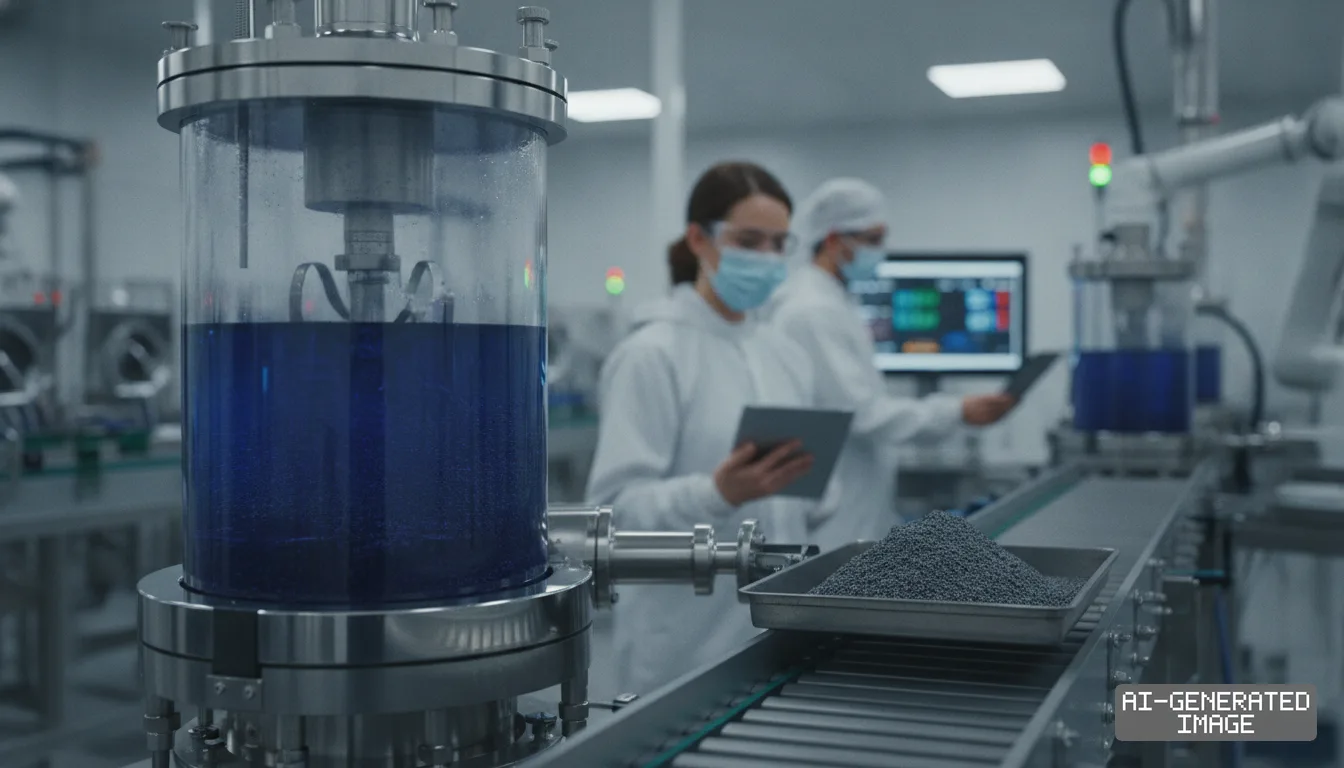
*Technicians in protective gear monitor equipment and dark granular material along a cleanroom battery component production line. (AI-generated image)*
Sila Nanotechnologies signed a multi-year commercial offtake contract on Nov. 18, 2026, with Panasonic Energy Corporation of North America to supply advanced silicon anode materials from Washington state.
The agreement carries a potential transaction value exceeding $1 billion over the life of the commercial relationship.
Under the contract terms, Sila will supply its proprietary Titan Silicon anode material from its manufacturing plant in Moses Lake, Washington. Deliveries will feed Panasonic Energy battery cell manufacturing facilities located across the United States.
The supply commitment supports an expansion of Sila's Moses Lake facility from an initial capacity of 2 gigawatt-hours toward tens of gigawatt-hours. Sila estimates that scaling production for Panasonic and other buyers will add approximately 500 manufacturing and construction jobs at the site.
Titan Silicon is a nano-composite silicon-carbon material engineered to replace conventional graphite inside lithium-ion battery anodes. Sila manufactures the powder to integrate directly into existing cell manufacturing lines without redesigning factory equipment.
Silicon theoretically stores roughly 10 times more lithium ions by weight than battery-grade graphite. Pure silicon particles expand by up to 300% during charging cycles, which historically caused electrode fracture, capacity loss and cell degradation.
The proprietary composite particle structure constrains volumetric expansion while maintaining electrical conductivity. Sila designed the material to increase volumetric energy density by 20% to 40% and reduce charging times to 20 minutes.
The contract formalizes an initial joint procurement agreement that the two companies first executed on Dec. 11, 2023. That preliminary agreement established material testing protocols but left purchase volumes, delivery dates and pricing uncommitted.
The binding commercial commitment follows a conditional loan award granted to Sila in August 2026. The U.S. Department of Defense Office of Strategic Capital approved up to $1.4 billion in debt financing to expand domestic battery component manufacturing.
Sila previously secured $375 million in a Series G equity funding round in 2024 to complete civil engineering work at Moses Lake. Sila also signed a long-term supply contract with REC Silicon in 2024 to procure high-purity silane gas, the primary precursor chemical for silicon deposition.
Panasonic Energy operates a joint-venture battery factory in Sparks, Nevada, with an annual capacity of 38 gigawatt-hours. The company is completing construction of an independent $4 billion cylindrical cell factory in De Soto, Kansas, scheduled to begin commercial operations with 30 gigawatt-hours of initial capacity.
Panasonic Energy supplies cylindrical lithium-ion cells to electric vehicle manufacturers, serving as the lead cell vendor for Tesla assembly lines in North America. Securing domestic anode capacity protects Panasonic against federal tax credit disqualifications under the U.S. Inflation Reduction Act.
Inflation Reduction Act rules require an increasing share of critical battery minerals to be extracted or processed within North America or countries with a U.S. free-trade agreement. The rules deny $7,500 consumer tax credits to vehicles that contain minerals processed by designated foreign entities of concern.
Refiners in China control more than 90% of global spherical graphite processing and produce nearly all commercial synthetic graphite anode material. Commercializing localized silicon-carbon materials provides battery producers an operational bypass around Chinese graphite supply channels.
Panasonic Energy targets a 25% increase in volumetric energy density across its 2170 and 4680 cylindrical cell lines by 2030. Incorporating silicon-carbon material forms the central pillar of that performance roadmap.
Panasonic Energy has multi-sourced silicon material technologies across independent developers rather than relying on a single supplier. Panasonic signed a parallel material purchase agreement with Britain-based Nexeon in December 2023 to supply silicon anode powder to its Kansas manufacturing plant.
Commercial cells currently incorporate silicon as a low-percentage additive, blending 5% to 10% silicon into synthetic graphite matrices to prevent excessive mechanical swelling. Sila engineered Titan Silicon to replace graphite partially or entirely, targeting substitution levels between 50% and 100% in subsequent cell iterations.
Washington state has emerged as an industrial cluster for synthetic battery materials due to low-cost hydroelectric power generated by the Columbia River basin. Group14 Technologies also operates a commercial silicon-carbon anode manufacturing plant in Moses Lake.
Sila fortified its intellectual property position in July 2026 when the U.S. Patent and Trademark Office completed an ex parte re-examination of patent 10,374,221. The office confirmed all patent claims covering Sila's silicon-carbon composite architecture without modifications.
Sila holds nearly 300 granted patents and pending patent applications worldwide covering composite anode synthesis and battery integration. Establishing enforceable patent protection enables the company to license production processes to international battery cell joint ventures.
Beyond Panasonic Energy, Sila secured a commercial supply partnership with Mercedes-Benz in 2022. The German automaker plans to integrate Titan Silicon anodes into optional long-range battery packs for its electric G-Class vehicle platform.
The commercial announcement does not state the specific date for initial mass shipments, the exact annual supply volumes, or the contract termination year. Sila and Panasonic Energy withheld those delivery details under non-disclosure agreements.
Commercial shipments from Moses Lake will commence following final cell qualification at Panasonic Energy manufacturing facilities, with qualification testing and facility ramp milestones scheduled across 2027.
## Impact map
| Event | Korea | China | Japan | Global impact |
| --- | --- | --- | --- | --- |
| Silicon anode offtake deal | POSCO Future M and L&F face higher performance benchmarks to sell silicon composites into U.S. cell lines | Graphite refiners lose long-term volume as North American cell makers substitute Chinese graphite | Panasonic Energy secures localized U.S. anode supply to shield Tesla cell output from IRA exclusions | Electric vehicle manufacturers accelerate silicon-dominant anodes to lift cell density and cut charging times |
| Silicon anode offtake deal | POSCO Future M and L&F face higher performance benchmarks to sell silicon composites into U.S. cell lines | Graphite refiners lose long-term volume as North American cell makers substitute Chinese graphite | Panasonic Energy secures localized U.S. anode supply to shield Tesla cell output from IRA exclusions | Electric vehicle manufacturers accelerate silicon-dominant anodes to lift cell density and cut charging times |
## In this story
- **Companies:** Panasonic Energy, Sila Nanotechnologies
- **Tickers:** 6752.T
- **Exposed:** Tesla, Mercedes-Benz, REC Silicon, Nexeon
- **Policy:** Local Content Rules, Subsidies
- **Impact:** Supply Chain, Capex, Order Book
## Primary sources
1. battery-tech.net
2. morningstar.com
3. geekwire.com
4. panasonic.com
---
Cite as: East Asia Brief, "Panasonic locks in $1B Sila silicon anode deal for US plants," November 23, 2026. https://eastasiabrief.com/batteries-ev/panasonic-locks-1b-sila-silicon-anode-deal-us-plants-1554