# Japan certifies $2.4 billion in battery subsidies to lock in solid-state cell capacity
*The Ministry of Economy, Trade and Industry approved funding for 12 manufacturing projects by Toyota, Nissan, and Panasonic to expand domestic cell production to 120 gigawatt-hours.*
**Published:** August 28, 2026
**By:** Haruto Nakamura
**Section:** Batteries & Electric Vehicles — Japan
**Format:** Policy Tracker
**Confidence:** medium
**Source:** https://eastasiabrief.com/batteries-ev/japan-certifies-2-4-billion-battery-subsidies-lock-solid-65
**Publisher:** East Asia Brief (https://eastasiabrief.com/)
---
## What to know
- Japan's Ministry of Economy, Trade and Industry (METI) has formalized national supply assurance certifications and capital subsidy allocations totaling up to 350 billion yen ($2.
- In the largest project allocation under the certification package, METI authorized up to 156.
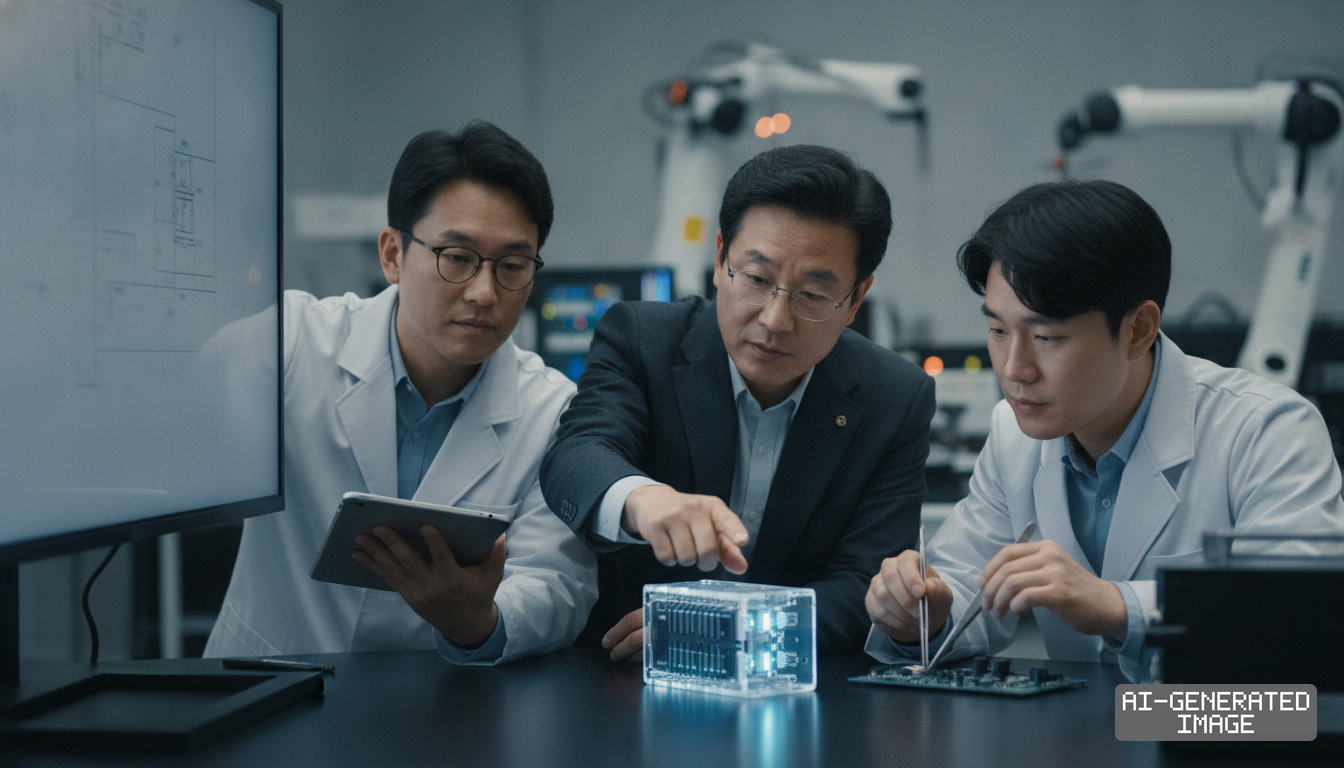
*Engineers and a colleague examine an illuminated battery module and circuit board in a development laboratory. (AI-generated image)*
Japan's Ministry of Economy, Trade and Industry (METI) has formalized national supply assurance certifications and capital subsidy allocations totaling up to 350 billion yen ($2.44 billion) under the Economic Security Promotion Act to establish domestic manufacturing lines for solid-state and high-density electric vehicle battery cells. The state funding anchors a broader 1.07 trillion yen public-private capital investment package across 12 industrial projects designed to raise Japan's domestic storage battery manufacturing capacity from 80 gigawatt-hours to 120 gigawatt-hours annually.
The statutory mechanism designates storage batteries as specified critical products under Japan's economic security framework, establishing legally binding supply and capital deployment commitments between the ministry, automotive original equipment manufacturers, and tier-one chemical component suppliers. By underwriting cell fabrication and upstream material synthesis within national borders, the Japanese government aims to insulate domestic vehicle manufacturing from overseas supply disruptions while securing technical sovereignty over commercial-scale all-solid-state battery architectures.
Under the certified investment plans, Toyota Motor Corporation and its battery manufacturing units, Prime Planet Energy & Solutions and Toyota Battery Company, are executing a 245 billion yen capital deployment supported by 85.6 billion yen in state funding. The capital allocation finances the construction and outfitting of dedicated cell fabrication facilities in Hyogo and Fukuoka prefectures. These facilities are engineered to deliver 9 gigawatt-hours of combined annual domestic capacity, covering both next-generation liquid-electrolyte performance cells and pilot-to-commercial all-solid-state battery lines.
In the largest project allocation under the certification package, METI authorized up to 156.4 billion yen in state subsidies for a 463 billion yen capital expenditure program led by Panasonic Energy in partnership with Subaru Corporation and Mazda Motor Corporation. The project finances the construction of a cylindrical lithium-ion battery plant in Gunma Prefecture targeting 16 gigawatt-hours of annual domestic capacity by 2030, alongside dedicated cell delivery corridors from Panasonic's manufacturing base in Osaka Prefecture scheduled to commence distribution to Subaru in 2027.
The certification program simultaneously targets structural cost vulnerabilities in entry-level vehicle segments by establishing domestic lithium iron phosphate (LFP) cell production. Nissan Motor received certification for a 153.3 billion yen industrial program backed by up to 55.7 billion yen in government grants to construct a dedicated 5 gigawatt-hour domestic manufacturing facility. The facility will produce proprietary LFP cells tailored for electric minivehicles, with volume production scheduled to begin in fiscal year 2028 to reduce procurement dependence on external cell imports.
Beyond cell assembly plants, the subsidy framework channels direct capital support into upstream chemical refinement and proprietary solid-state precursor manufacturing. Coordinated alongside research programs under the New Energy and Industrial Technology Development Organization (NEDO), the government mechanism funds commercial-scale production lines for sulfide-based solid electrolytes and lithium sulfide feedstocks operated by specialized material processors including Idemitsu Kosan, Sumitomo Metal Mining, and Mitsui Kinzoku.
For global automotive original equipment manufacturers and procurement strategists, the Japanese subsidy framework creates a captive, vertically integrated battery base that operates independently of merchant cell vendors. By pairing state capex grants with binding production covenants, METI is locking Japanese vehicle platforms into localized supply chains for high-nickel, lithium iron phosphate, and sulfide solid-state chemistries. This structure lowers domestic fab amortization costs while guaranteeing that next-generation cell patents translate directly into domestic manufacturing capacity.
The operational schedule certified by METI mandates that initial cell deliveries from subsidized next-generation liquid lines begin in November 2026, followed by pilot batch integrations for all-solid-state vehicle architectures across participating domestic assembly plants ahead of broad commercialization scheduled for 2028.
## Impact map
| Event | Korea | China | Japan | Global impact |
| --- | --- | --- | --- | --- |
| Japan battery subsidy package | cell makers face solid-state competition | LFP supply dominance challenged in Japan | domestic cell capex locked in | procurement alternatives for solid-state cells |
## In this story
- **Companies:** Toyota Motor, Nissan Motor, Panasonic Holdings, Subaru Corporation, Mazda Motor
- **Tickers:** 7203.T, 7201.T, 6752.T, 7270.T, 7261.T
- **Exposed:** Idemitsu Kosan, Sumitomo Metal Mining, GS Yuasa
- **Policy:** Subsidies, Economic Security
- **Impact:** Capex, Supply Chain, Order Book
## Primary sources
1. cbtnews.com
2. arabnews.jp
3. global.toyota
4. japan-forward.com
5. internationalfinance.com
---
Cite as: East Asia Brief, "Japan certifies $2.4 billion in battery subsidies to lock in solid-state cell capacity," August 28, 2026. https://eastasiabrief.com/batteries-ev/japan-certifies-2-4-billion-battery-subsidies-lock-solid-65