# Hungary halts CATL and BYD plant work as environmental rules tighten
*Worker nickel exposure at Debrecen and toxic soil probes in Szeged disrupt Beijing's European EV supply chain after Hungary's government change.*
**Published:** September 2, 2026
**By:** Lian Chen
**Section:** Batteries & Electric Vehicles — China
**Format:** Policy Tracker
**Confidence:** medium
**Source:** https://eastasiabrief.com/batteries-ev/hungary-halts-catl-byd-plant-work-environmental-rules-tighten-160
**Publisher:** East Asia Brief (https://eastasiabrief.com/)
---
## What to know
- The two Chinese manufacturers picked Hungary as their primary industrial bridgehead into the European Union to bypass trade tariffs on direct vehicle imports and supply European automakers locally.
- The Hajdú-Bihar County Government Office announced on Aug.
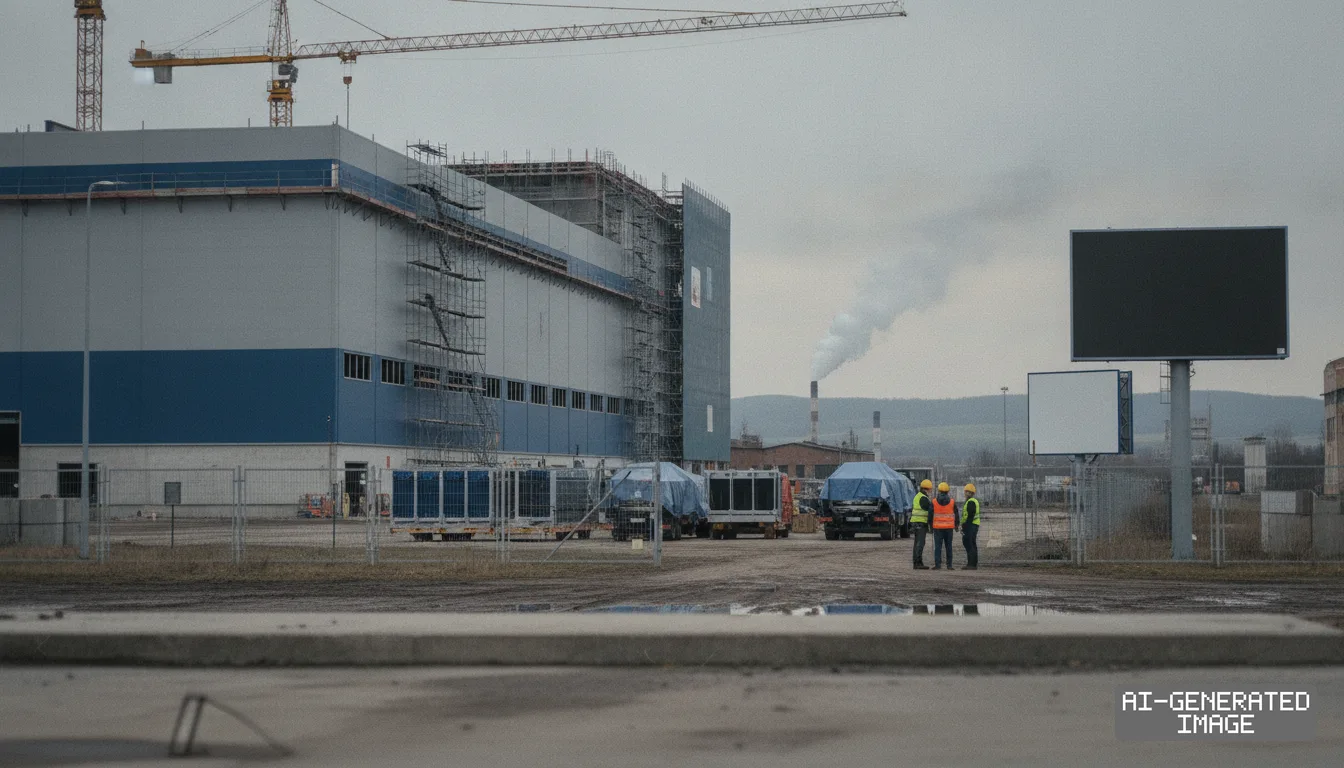
*Workers in hard hats stand outside a battery manufacturing facility under construction at an industrial site in Hungary. (AI-generated image)*
Hungarian regulatory authorities said on Sept. 2, 2026, that mandatory safety stoppages and environmental permit reviews have delayed commercial production at battery and electric vehicle plants built by CATL and BYD.
The two Chinese manufacturers picked Hungary as their primary industrial bridgehead into the European Union to bypass trade tariffs on direct vehicle imports and supply European automakers locally.
The Hajdú-Bihar County Government Office announced on Aug. 31 that Contemporary Amperex Technology Co. Limited, known as CATL, must complete remedial safety work before starting commercial cell output in Debrecen.
Regulators ordered work halted on Aug. 25 across three key processing workshops, covering laser cutting of positive and negative foils, electrode winding and cell drying.
The suspension followed biological monitoring results from early August that detected elevated blood nickel concentrations in nine factory technicians. More than 400 site workers underwent mandatory screening, regional inspectorate documents showed.
CATL introduced routine biological exposure monitoring for Debrecen personnel in early June. The company reported seven elevated nickel cases to authorities on Aug. 10, followed by two additional cases on Aug. 13.
Hajdú-Bihar County occupational safety inspectors conducted three on-site inspections between Aug. 11 and Aug. 25. The inspections revealed that technicians lacked adequate personal protective equipment during test runs with nickel-rich cathode materials.
While county officials permitted CATL to continue equipment debugging, commercial cell manufacturing remains strictly barred until the company proves that safety defects have been corrected.
The stoppage compounds permitting setbacks at the €7.34 billion ($8.6 billion) Debrecen complex, which holds a planned total annual capacity of 100 gigawatt-hours.
The county government office granted an occupancy permit for the first-phase cell building on Aug. 25. That permit covers two production lines within a 350,000-square-meter facility rated for 40 gigawatt-hours annually.
Authorities denied an occupancy permit application for the second construction phase on Aug. 19. Planning officials cited inaccurate representations and incorrect labeling of completed buildings on the general site plan.
CATL started running a separate 5-gigawatt-hour module assembly line in Debrecen in May 2026. That line uses imported cells shipped from Chinese factories, leaving Debrecen unable to produce cells domestically.
BYD faces parallel administrative enforcement at its passenger electric vehicle assembly plant under construction in Szeged. The facility represents the automaker's first dedicated car manufacturing facility within the trade bloc.
Hungary's Ministry of the Environment penalized BYD Auto Hungary with a 10 million forint ($27,000) fine in May. Environment Minister László Gajdos said the automaker breached obligations under its environmental permit during ground preparation.
The Csongrád-Csanád County Government Office filed a formal complaint on May 19, prompting the Csongrád-Csanád County Police Headquarters to launch a criminal investigation.
Investigators examined allegations that soil excavated during site preparation contained aromatic compounds above legal thresholds. Authorities alleged the contaminated earth was dumped at unapproved external locations around Szeged.
BYD Executive Vice President Stella Li rejected the allegations during a press conference on June 20. Li said the company complied with Hungarian environmental rules and retained legal counsel to contest the claims.
The automaker also instructed subcontractors in Szeged to sign written declarations committing to Hungarian labor laws, covering working hours, wages and visa verification for foreign workers.
BYD previously aimed to launch vehicle manufacturing in early 2026. Li said in London that the Szeged plant would begin full vehicle assembly in the fourth quarter of 2026.
Li said Hungary remains the automaker's top manufacturing priority in Europe. The company paused work on a planned $1 billion assembly plant in Turkey without establishing a construction timeline.
The administrative barriers reflect a wider political realignment in Budapest following national elections in April 2026. Prime Minister Péter Magyar took office on May 8, dismantling the permissive industrial policies of former Prime Minister Viktor Orbán.
Hungary captured 44% of all Chinese foreign direct investment entering Europe in 2023 under Orbán. Magyar campaigned on stricter enforcement, warning that factories violating environmental and labor laws would face mandatory closure.
The Magyar administration submitted a bill to the Hungarian parliament in July to establish an independent industrial monitoring agency. The proposed regulator receives powers to scrutinize industrial water consumption, chemical handling and site emissions.
The resulting delays complicate European localization strategies for both Chinese manufacturers as the European Commission enforces tariffs on electric vehicle imports from China.
European vehicle manufacturers relying on localized cell supplies from Debrecen face postponed delivery timelines. German automotive assembly lines scheduled to receive Hungarian cells must depend on imported battery packs through late 2026.
CATL must submit verified occupational safety documentation to the Hajdú-Bihar inspectorate before requesting a reinspection. BYD continues equipment installation in Szeged while county prosecutors assess evidence in the soil investigation.
## Impact map
| Event | Korea | China | Japan | Global impact |
| --- | --- | --- | --- | --- |
| Hungary regulatory crackdown | | delayed cell and car manufacturing | | European automakers await localized supply |
## In this story
- **Companies:** Contemporary Amperex Technology, BYD
- **Tickers:** 300750.SZ, 002594.SZ
- **Exposed:** BMW, Mercedes-Benz, Volkswagen
- **Policy:** Economic Security, Environmental Regulation
- **Impact:** Supply Chain, Capex, Compliance
## Primary sources
1. carnewschina.com
2. thenextweb.com
3. seedone.co.kr
4. theguru.co.kr
5. businesspost.co.kr
---
Cite as: East Asia Brief, "Hungary halts CATL and BYD plant work as environmental rules tighten," September 2, 2026. https://eastasiabrief.com/batteries-ev/hungary-halts-catl-byd-plant-work-environmental-rules-tighten-160