# CATL validates 20Ah solid-state battery for 2027 pilot run
*The world's largest EV battery maker scaled sulfide prototypes to 20 ampere-hours with a 500 Wh/kg target, keeping its 2027 pilot schedule on track.*
**Published:** November 6, 2026
**By:** Lian Chen
**Section:** Batteries & Electric Vehicles — China
**Format:** Company Watch
**Confidence:** medium
**Source:** https://eastasiabrief.com/batteries-ev/catl-validates-20ah-solid-state-battery-2027-pilot-run-1178
**Publisher:** East Asia Brief (https://eastasiabrief.com/)
---
## What to know
- CATL validates 20Ah sulfide cells targeting 500 Wh/kg
- Small-batch pilot output begins in 2027 ahead of 2030 mass scale
- Pilot line capacity, yield targets and launch partners remain undisclosed
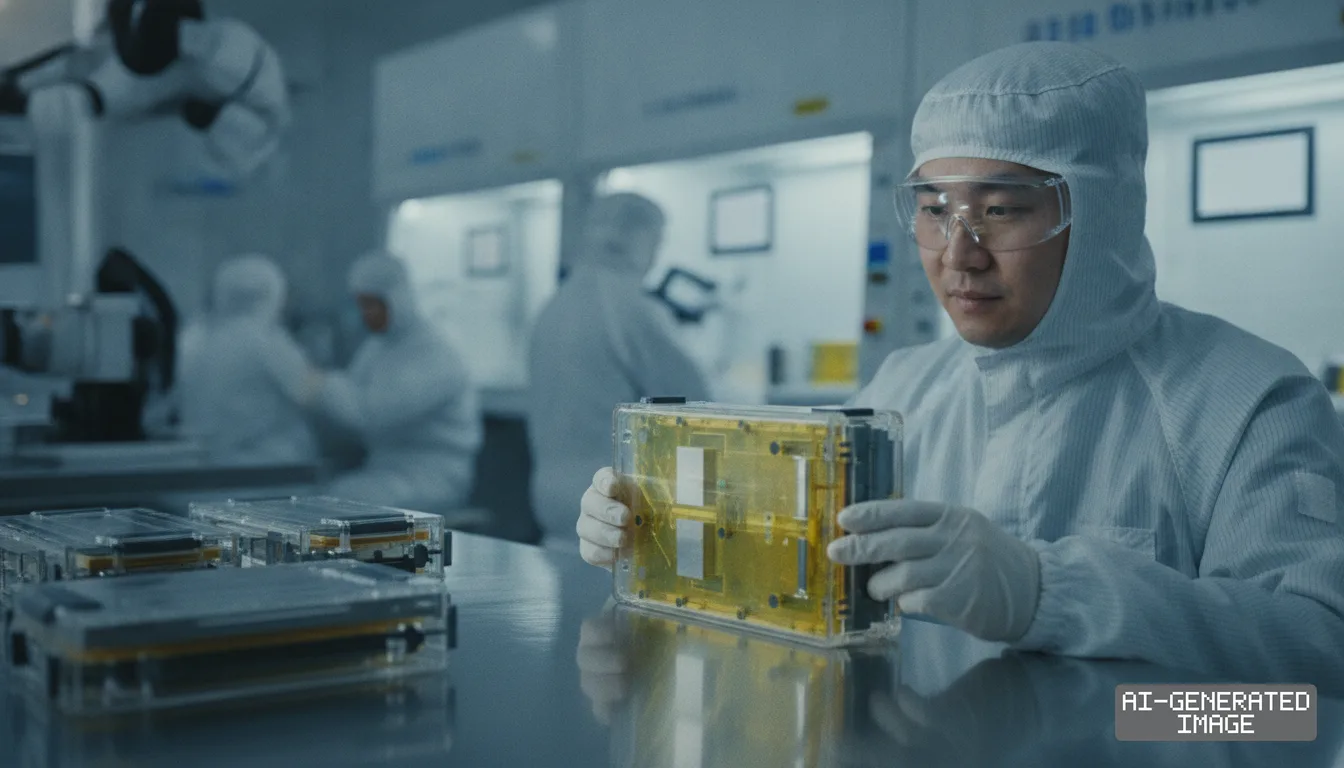
*A technician in cleanroom attire inspects an advanced battery cell sample inside a research laboratory. (AI-generated image)*
Contemporary Amperex Technology Co., Limited confirmed Nov. 6 that its sulfide-based all-solid-state battery program has entered 20-ampere-hour sample validation, keeping the battery maker on schedule for pilot production in 2027.
The transition to 20-ampere-hour cells moves the technology beyond laboratory coin cells into automotive trial formats. CATL supplied 39.9% of the world's electric vehicle batteries in the first half of 2026, according to SNE Research.
The engineering program targets an energy density of 500 watt-hours per kilogram. That level represents more than double the energy density of standard lithium iron phosphate cells currently powering mass-market electric cars.
The company moved to 20-ampere-hour cells after completing validation on a 10-ampere-hour platform. The larger pouch format allows vehicle manufacturers to test thermal dissipation, mechanical swelling and structural integration inside battery packs, the company said.
CATL selected a sulfide-based solid electrolyte system for the project. Sulfide compounds offer high ionic conductivity and mechanical ductility, allowing lithium ions to travel between electrodes as quickly as they do in liquid electrolytes.
Reaching 500 watt-hours per kilogram requires combining sulfide electrolytes with high-nickel cathode materials and lithium metal anodes. Conventional graphite anodes max out at lower theoretical capacities, making advanced chemistry pairings essential for energy density targets.
Maintaining uniform physical contact between solid particles remains the main engineering obstacle. Battery electrodes expand and contract during charge cycles, creating microscopic gaps at solid interfaces that increase electrical resistance and degrade cell lifespan over time.
Manufacturing solid-state pouch cells requires ultra-high-pressure isostatic pressing to keep solid layers in continuous contact. Standard lithium-ion calendering equipment cannot apply the multi-hundred-megapascal pressures needed to eliminate voids within sulfide electrolyte separators.
Sulfide electrolytes also carry chemical risks when exposed to moisture. Ambient humidity reacts with sulfide materials to generate toxic hydrogen sulfide gas, requiring sealed dry rooms and specialized ventilation that increase factory tooling capital expenditures.
Initial sample validation focuses on cycle stability at room temperature. Early sulfide laboratory cells frequently suffered capacity drops after fewer than 500 charge cycles, and engineers must prove the 20-ampere-hour cells maintain stable capacity across 1,000 cycles.
Chairman Robin Zeng said at the Summer Davos Forum that solid-state technology rates at Level 4 on a nine-level development scale. That rating means fundamental material validation is finished, but high-volume manufacturing engineering remains incomplete.
CATL deployed more than 1,000 research engineers to solve solid-state interface resistance and production yield hurdles. The company spent 22.147 billion yuan ($3.1 billion) on overall research and development in 2025, up 19% from 2024.
Small-batch pilot production will begin in 2027, the company said in an investor filing on the Shenzhen Stock Exchange. Commercial mass production remains scheduled for approximately 2030 once automated production equipment achieves acceptable component yields.
The 2027 pilot target puts CATL on an identical timeline with South Korean rival Samsung SDI. Samsung SDI is commissioning its pilot line in Suwon, targeting commercial mass production in the second half of 2027.
Samsung SDI positions all-solid-state cells as its premium automotive tier, pairing sulfide electrolytes with an anode-less architecture. The company has shipped prototype pouch cells to European automakers for vehicle integration testing throughout 2026.
Other South Korean cell manufacturers follow longer commercial schedules. LG Energy Solution is developing sulfide and polymer solid batteries with mass production slated for 2030, while SK On targets commercial-grade validation around 2029.
In Japan, Toyota Motor and petroleum refiner Idemitsu Kosan are building pilot capacity for sulfide electrolytes to support vehicle launches in 2027 and 2028. Toyota holds more than 1,000 solid-state battery patents, leading global automakers.
Domestic rival BYD has also targeted 2027 for small-scale solid-state vehicle trials. BYD captured roughly 16% of the global electric vehicle battery market in 2025, intensifying competitive pressure on CATL to maintain its technological lead.
Solid-state cells currently cost more than three times as much to produce as liquid lithium-ion cells. Automotive brands plan to restrict initial 2027 pilot packs to luxury flagship models that can absorb higher initial cell bills of materials.
CATL has not disclosed the planned nameplate capacity for its 2027 pilot line, targeted production yield rates or the automotive customers chosen to receive trial packs.
The company will conclude bench validation of the 20-ampere-hour samples in 2026 before installing automated manufacturing equipment for the 2027 pilot run.
## Impact map
| Event | Korea | China | Japan | Global impact |
| --- | --- | --- | --- | --- |
| solid-state 20Ah validation | Samsung SDI targets H2 2027 commercial output from Suwon pilot line | CATL deploys 1,000 engineers for 2027 pilot run | Toyota and Idemitsu Kosan prepare sulfide electrolyte plant for 2027 vehicle rollout | Automakers restrict high-cost solid-state packs to luxury vehicle segments |
## In this story
- **Companies:** Contemporary Amperex Technology
- **Tickers:** 300750.SZ
- **Exposed:** Samsung SDI, Toyota Motor, Idemitsu Kosan, BYD
- **Impact:** Capex, Supply Chain, Pricing
## Primary sources
1. batteriesnews.com
2. ofweek.com
3. sina.com.cn
4. g-enews.com
5. gasgoo.com
---
Cite as: East Asia Brief, "CATL validates 20Ah solid-state battery for 2027 pilot run," November 6, 2026. https://eastasiabrief.com/batteries-ev/catl-validates-20ah-solid-state-battery-2027-pilot-run-1178