# CATL adds sodium-ion batteries to swap stations across 200 cities
*The battery maker expects 10,000 to 20,000 electric vehicles to use the packs in 2026 as it expands its passenger swap network past 3,000 sites.*
**Published:** November 10, 2026
**By:** Mina Okoro
**Section:** Analysis & Comparison — Cross-border
**Format:** Why It Matters
**Confidence:** medium
**Source:** https://eastasiabrief.com/analysis/catl-adds-sodium-ion-batteries-swap-stations-across-200-1307
**Publisher:** East Asia Brief (https://eastasiabrief.com/)
---
## What to know
- CATL targets 10,000 to 20,000 sodium-powered EVs in 2026
- Swapping network to exceed 3,000 Chinese stations by Dec. 31
- Sodium cells cut exposure to imported lithium feedstocks
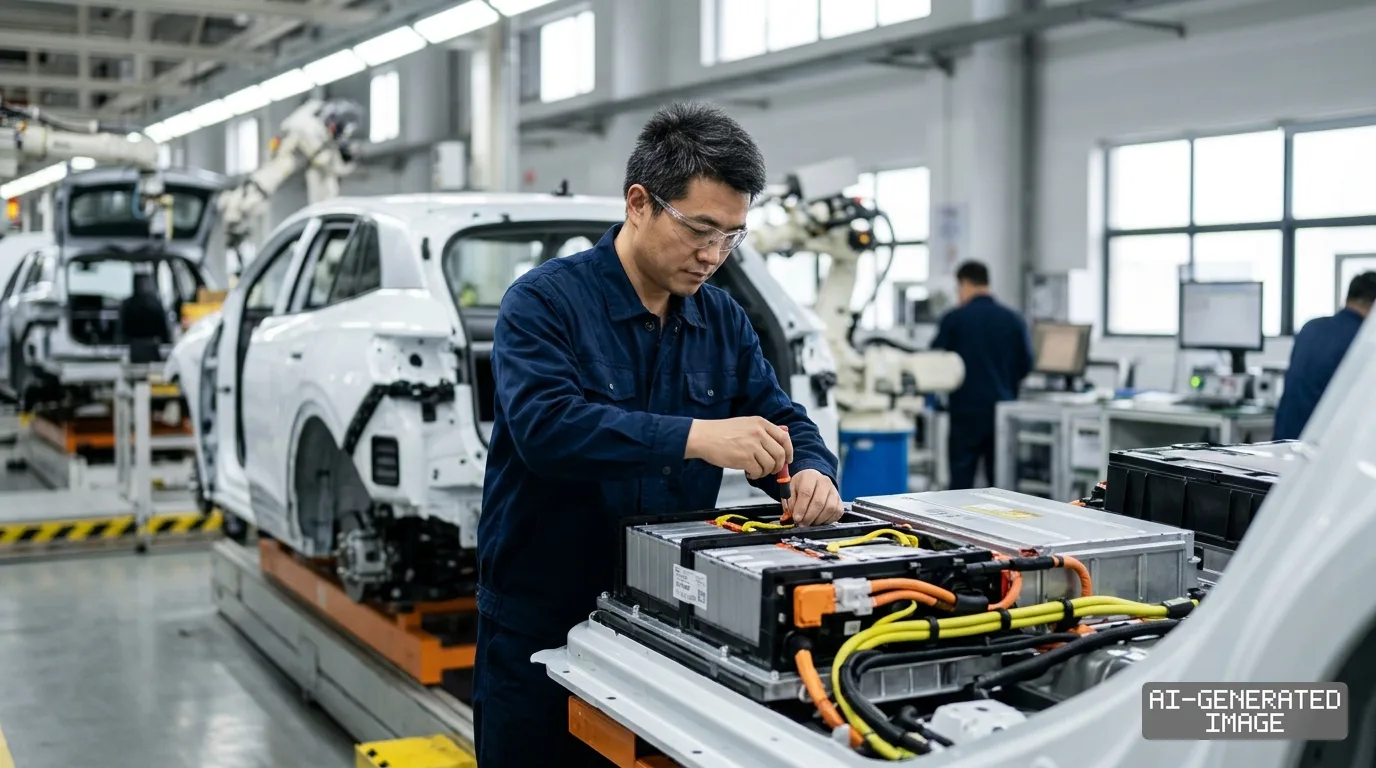
*A technician works on an electric vehicle battery pack on an assembly line at an automotive manufacturing plant. (AI-generated image)*
Contemporary Amperex Technology Co., Limited said Nov. 10 it will commercialize sodium-ion batteries by integrating the chemistry into its national network of passenger vehicle swap stations.
The battery manufacturer expects 10,000 to 20,000 electric vehicles to adopt its sodium-ion packs in 2026. That deployment represents less than 1% of the company's total annual passenger vehicle cell shipments.
CATL plans to expand its Chinese swap network to more than 3,000 passenger vehicle stations by Dec. 31. The infrastructure currently covers roughly 200 cities across China, according to company disclosures.
Robin Zeng, chairman of CATL, detailed the commercial rollout at an industry conference in Shanghai. Zeng said rapid battery swapping neutralizes range limitations that have historically slowed passenger car adoption of sodium cells.
Sodium-ion cells developed by CATL provide an energy density of 175 watt-hours per kilogram. Mainstream lithium iron phosphate cells currently reach between 190 and 210 watt-hours per kilogram on passenger vehicle production lines.
Zeng said built-in sodium pack capacity covers ordinary daily urban driving. Motorists undertaking longer trips can exchange depleted battery modules for fully charged blocks within minutes at roadside stations, Zeng said.
CATL operates its passenger swapping network under the EVOGO brand, launched in January 2022 by subsidiary Contemporary Amperex Energy Service Technology. The system uses standardized battery modules that drivers rent on subscription.
Each modular battery block uses cell-to-pack architecture to deliver roughly 200 kilometers of driving range. Vehicles can house one, two or three blocks depending on individual driving requirements and vehicle chassis design.
The commercial push into sodium aims to reduce manufacturing exposure to volatile lithium mineral prices. Sodium-ion cathodes use abundant domestic soda ash precursors rather than refined lithium carbonate or lithium hydroxide chemicals.
China relies on imported spodumene rock and brine for a significant portion of its raw lithium feedstocks. Sodium precursors, by contrast, are produced domestically in volumes exceeding tens of millions of metric tons each year.
Sodium-ion chemistry offers superior cold-weather stability compared with lithium iron phosphate cells. The cells retain more than 80% of rated discharge capacity at minus 20 degrees Celsius, curbing winter range loss.
Changan Automobile partnered with CATL to build mass-production passenger cars using sodium-ion batteries, unveiling the vehicle line in February. Changan represents the primary customer absorbing the initial 10,000 to 20,000 sodium-powered vehicle run.
Urban delivery fleets and two-wheeler operators represent the earliest volume buyers for sodium packs. These commercial operations follow predictable local routes and benefit from rapid swapping without bearing the capital cost of vehicle-owned packs.
The Chinese government certified CATL sodium-ion passenger cells under national traction battery standard GB 38031-2025 in September 2025. That certification cleared the cells for road use without requiring separate safety exemptions.
Initial manufacturing runs carry higher per-unit costs because commercial cathode and anode chemical supply chains remain narrow. CATL aims to bring unit costs below lithium iron phosphate once component production achieves high-volume manufacturing.
CATL operates a separate swap business for heavy commercial trucks under the Qiji Energy brand. That commercial fleet network maintains more than 300 operational stations and targets 900 heavy-truck stations by the end of 2026.
Cell manufacturers in South Korea and Japan have prioritized high-nickel ternary chemistries and solid-state development. Neither LG Energy Solution nor Panasonic produces commercial sodium-ion packs for passenger car swap grids.
Electric vehicle maker NIO operates China's largest passenger swap network with more than 2,400 stations. NIO relies on standard lithium-based chemistries and has not integrated sodium-ion modules into its automated stations.
Swap stations also serve as distributed storage assets that interact with municipal electricity distribution grids. Stations charge idle sodium blocks overnight during off-peak power hours, reducing localized power draw from daytime fast-charging equipment.
Sodium-ion batteries can be discharged to zero volts for shipping and storage without damaging cell electrodes. That property lowers transit fire risk and simplifies domestic warehouse handling compared with energized lithium-ion shipments.
CATL has not published separate leasing tariff rates for sodium-ion blocks. The company has also not disclosed what share of station battery inventory will be set aside for sodium modules across the 3,000-station network.
The company did not file a formal regulatory notice with the Shenzhen Stock Exchange regarding the conference remarks. The statements reflect executive keynote comments rather than statutory financial disclosures, company records show.
CATL faces a Dec. 31 deadline to meet its target of operating 3,000 passenger vehicle swap stations across China. Full-year production statistics will confirm total vehicle installation numbers during the first quarter of 2027.
## Impact map
| Event | Korea | China | Japan | Global impact |
| --- | --- | --- | --- | --- |
| Sodium battery swapping rollout | LG Energy Solution maintains NMC and LFP focus, no sodium swap program | CATL deploys sodium packs across 3,000 swap stations, Changan takes 10,000-vehicle run | Panasonic prioritizes 4680 cylindrical cells, skipping sodium for passenger cars | Battery supply chain gains non-lithium alternative for entry-level urban vehicles |
## In this story
- **Companies:** Contemporary Amperex Technology
- **Tickers:** 300750.SZ
- **Exposed:** Changan Automobile, LG Energy Solution, Panasonic, NIO
- **Policy:** Standards
- **Impact:** Supply Chain, Capex, Cost Structure
## Primary sources
1. share-talk.com
2. zaochenbao.com
3. ithome.com
4. news18a.com
5. catl.com
---
Cite as: East Asia Brief, "CATL adds sodium-ion batteries to swap stations across 200 cities," November 10, 2026. https://eastasiabrief.com/analysis/catl-adds-sodium-ion-batteries-swap-stations-across-200-1307